memoir writing, fiction writing, storytelling, writers, PDX, Portland Oregon 1970s, D Street Corral
Meet Mindy (Halleck) Meyers
Sometimes we open a wound not to watch it bleed, but to allow it to heal.
I just returned from a writer’s retreat wherein I was asked why I don’t write about the story seeds of the novel I’m currently crafting. That question opened a wound I didn’t realize I had. Bear with me ….
First, I’ll start with why I will now write under a pen name, a Nom de plume, or literary double, however you coin the term, it’s my new/old name. I’ll be writing under my mother’s name, Meyers, for many reasons. But the one HUGE reason is to honor my grandfather Frank Meyers who wanted to be a published author but never was. And the other, to honor my Jewish roots, denied to us because in the 1930s grandpa (non-religious) moved my mom and her siblings from the south to the west coast and immediately put them in Catholic schools. He also allowed my Irish/Scottish grandma to take them to Baptist churches: determined that his children would not experience the discrimination he did. His own father was murdered in front of him in New York, simply for his name. Meyers. So, I staunchly take the moniker and move it forward, in a time when our country seems to want to move backward.
Why does this matter now? The holocaust should never be forgotten. I’ve just completed one novel with a holocaust survivor as a protagonist and am now working on my next novel which––though not a war or holocaust story––is populated with holocaust survivor stories. Clearly, the holocaust may not be my story to tell, but I had a ringside seat to its aftermath. And it is in that 1950s and 1960s aftermath where my story seeds took root.
Last week at that writer’s retreat, a New York agent questioned my name, and then asked if I was a non-Jewish author writing unauthentically about the Jewish experience. I explained that though I grew up in a Christian household, my biological father was Jewish, and my mother’s father (Grandpa Frank’s) mother and father were Jewish. She asked what their family name was. I told her, and she exclaimed, I can sell a Mindy Meyers writing stories about victims of the holocaust. It rhymes, and it suits the stories you’re telling. Besides you have genealogy.
At first, I recoiled at the idea of a marketing platform based on something I thought I wasn’t. And deeper yet, genealogy is a wound of mine. Being born under the shadow of scandal, the feeling of being ‘illegitimate’ has always bloodied the waters. So, that night, I returned to my hotel room and cried, deeply, irrationally, as if mourning the departed or resurrecting a scarred over wound.
Then, about 3:00 am I realized the reverse was true; Mindy Meyers is who I’ve been all along. It was the first name on my birth certificate, before dad rushed in and married mom to give me legitimacy.
Heck, even at the Oregonian Newspaper in the 1950s, where grandpa worked, I had a name tag that read, Mindy ‘Minnie Mouse’ Meyers––Minnie Mouse was my very official nickname. So, making a LONG story short, Minnie Mouse is reclaiming her identity. Mindy Meyers is now my Nom de plume.
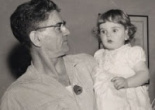
That was the first step toward telling my long-held stories. I’ll be blogging about them in the coming months. For now, I’ll share that in the early 1960s, when I was nine years old, I worked with my dad at his shoe repair shop in northwest Portland. I stood on a milk cate at the 1940s cash register, took in money and gave change. I was the official greeter, purveyor of cookies and tea for ladies who waited for dad’s popular 5-minute-heels, and I held down the fort when dad took a smoke break.
Dad’s shoe repair was in a building long rumored to be haunted. To nine-year-old me, it was a place of magic and mystical beings. At that time PDX was very international, multi-cultural, and filled with politics and fear of strangers, Nazis hiding in the shadows. There were Hasidic Jews with long black side curls called Payos, thick black beards and black hats, such a contrast to my ex-Air Force dad with his short hair and clean shaved face. There were palm-reading Gypsies, and the infamous King of the Gypsies who walked about the city with two large men behind him (bodyguards). He’d bring dad a cigar and have a laugh while those men waited at the door, keeping anyone else from entering. And then, the very cranky Rabbi who liked arguing with Dad about politics. And SO many other colorful people.
Occasionally it was my job to deliver shoes to a few of the customers who lived across the street in the (then) Nortonia Hotel. One was a woman who I thought was very shy. I’d knock on the door, listen as she unlocked seven locks, then crack the door open to where I could see only her eye and half her face. “Who are you?” she asked every time. “Oskar’s daughter,” I’d hold up the brown paper bag. “I have your shoes.” She’d quickly shut the door. I’d wait. She’d return with a fresh baked raspberry Rugelach cookie. To this day my favorite. She’d hand me the cookie that smelled of sweet burnt sugar and warm raspberry––through the narrow passage of the barely opened door. And then she’d say, “Sit, child eats’ das cookie while I inspect das shoes.” I would slide down the wall, sit on the floor and eat my cookie. She never looked at the shoes. Instead, she smiled the saddest smile I’d ever seen, while she watched me eat. When I finished, she handed me a napkin, “Vwipe face. Now hurry child, go to your papa, tell him all is goot. Do not talks to das strangers. Go now, hurry.” I’d rush down the hall while behind me the sounds of a bolting door, clanking chains, and the locking of seven locks echoed against my fleeing footsteps.

There were five women, holocaust survivors who lived in those apartments. My dad explained to nine-year-old me, that someone had hurt them in the war, and now they were a little frightened of people, and that they were lonely, so to spend time with them. Be kind, he’d said. Listen to their stories. So, I did.
As a child I grew to believe that like dad’s building, these people were haunted.
Now that hotel is the lovely Mark Spencer Hotel where I stay when I’m in Portland. To me, it’s a sacred place. I feel these women there. And I am comforted by their presence. I always grab a Rugalach at a local bakery to take to my room where despite the beautiful furnishings, I sit on the floor leaning against a wall, eating and remembering. Who’s haunted now ….

In the coming stories, blog posts, and novels, I honor these people who imprinted so deeply on nine through seventeen-year-old me, that they have become my ghosts, the spirits who walk with me. I’m honored to create stories around the essence of who they were to this child now woman who aches with their sorrow, and yet smiles when remembering their unique humor. In bringing them out of the shadows, I’m giving them an identity, while at the same time, reclaiming mine. In honoring them, through my storytelling, I am healing an old wound, mine and theirs.
Female Archetypes
Lately, in a desire to understand why I write certain types of female characters and yet struggle with writing others, I’ve launched into an in-depth examination of female Archetypes. One thing I have realized is that I don’t struggle to write the archetypes that are most consistent in my own nature, Artemis and Hestia, but do struggle with Persephone and anything Aphrodite-related. So it’s important to not simply mirror my own character aspects but to reach beyond them and write female characters whose archetypes might be foreign to me. I do believe all the archetypes are alive in my psyche at any given time, which is the case with most of us. And though we are not limited to our core archetype, it is generally the one that drives us. Especially when under stress. That’s a great thing to know when creating fictional characters.
I’m currently looking at the Greek Goddesses (archetypes):
The seven goddesses:
- Athena, goddess of wisdom.
- Artemis, goddess of the hunt.
- Hestia, goddess of the hearth.
- Persephone, goddess of the underworld.
- Demeter, goddess of grain and agriculture.
- Hera, goddess of marriage.
- Aphrodite, goddess of love.
I’ll be sharing my female archetypes educational journey here on my blog, and also on my Instagram account at @Femarchetype, so please follow me there.


If you liked it, please share @MindyHalleck
Tweet
Returning to the Writing life
Since last year I have abandoned my writing, my blog, my health, and much of my life. Not due to covid, though that has certainly made life more difficult. I’ve lost my mother and my two younger brothers in the last few months. It’s been a painful time. For me, pain does not inspire creative flow. For some writers it does. But not me.
I envy those writers who write through the storms of life, when I feel like all I can do is try to survive them. If you’re one of those writers, my hat is off to you, I curtsey, I bow, and I’ll even have a nip of scotch in your honor.
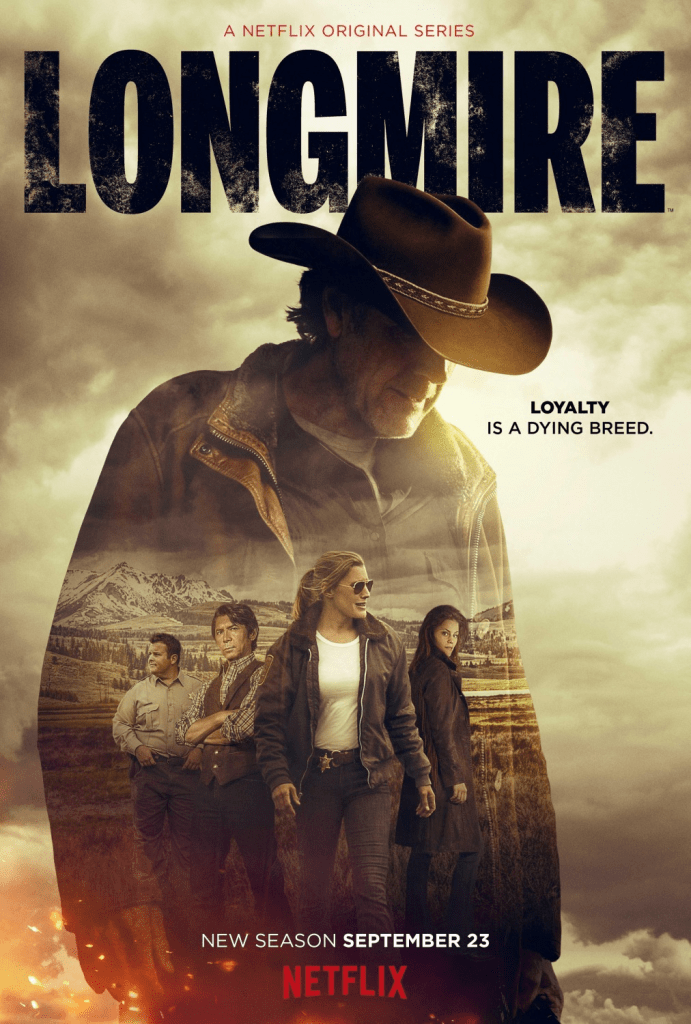
When life gets tough I tend not to write. I tend to binge on movies or Netflix and chill. Ozark was great, but while my brothers were sick in December and January, both passing 30 days apart, I binged Longmire, not just because I like the show, but it was their favorite also. We were in need of a hero like Walt Longmire.
Anyway, getting back to my writing life, rediscovering some creative energy is a life-saver. I, we are so lucky, so blessed to have writing as an outlet for our emotions, the good and the bad.
Since I hadn’t looked at my WIP (work in progress) in a good long time, I needed to review my notes and writing tools, to get back in the saddle, in Longmire speak.
After rereading my premise (a vital #writers tool) I started my rewrite. Below is from David Corbett’s book The Art of Character—another vital writer’s craft guide.

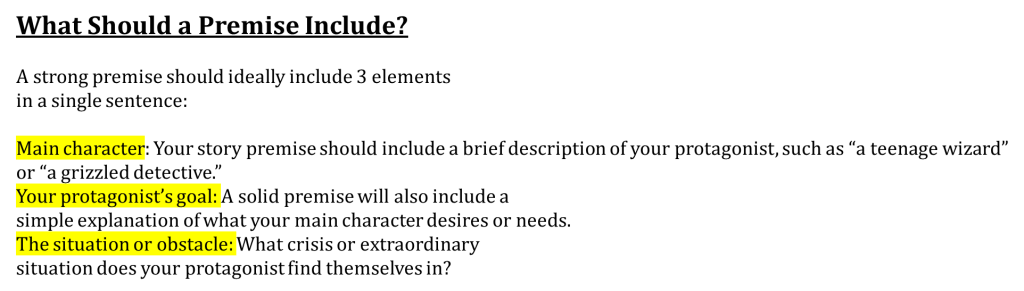

This premise example from The Hunger Games is great.
I’m back on track with my writing life now and it feels great. I still may watch the series, Longmire again, for the 4th time, just because it reminds me of my brothers. They’d like that. But meanwhile, I’m writing again, walking again, living again after holding my breath (so to speak) for over a year.
The Times They Are A Changin’
Words are powerful.
Bob Dylan, and other folk music prophets wrote/write what the eye of a seeker sees and what a hungry soul feels. Songs, poetry and all great stories are prophetic and deeply moving when they echo the past or are in tune with the times. It just feels like a great day to share Bob Dylan’s words in the midst of these changing times….
The Times They Are A Changing
Song by Bob Dylan & The Band Lyrics (you can read, and then listen below)
Come gather ’round, people
Wherever you roam
And admit that the waters
Around you have grown
And accept it that soon
You’ll be drenched to the bone
If your time to you is worth savin’
And you better start swimmin’
Or you’ll sink like a stone
For the times they are a-changin’
Come writers and critics
Who prophesize with your pen
And keep your eyes wide
The chance won’t come again
And don’t speak too soon
For the wheel’s still in spin
And there’s no tellin’ who
That it’s namin’
For the loser now
Will be later to win
For the times they are a-changin’
Come senators, congressmen
Please heed the call
Don’t stand in the doorway
Don’t block up the hall
For he that gets hurt
Will be he who has stalled
The battle outside ragin’
Will soon shake your windows
And rattle your walls
For the times they are a-changin’
Come mothers and fathers
Throughout the land
And don’t criticize
What you can’t understand
Your sons and your daughters
Are beyond your command
Your old road is rapidly agin’
Please get out of the new one
If you can’t lend your hand
For the times they are a-changin’
The line it is drawn
The curse it is cast
The slow one now
Will later be fast
As the present now
Will later be past
The order is rapidly fadin’
And the first one now
Will later be last
For the times they are a-changin’
Source: LyricFindSongwriters: Bob Dylan
Let Me Tell You a Story…
Writing a Memoir? Apply the essentials of fiction-writing to bring your story to life.
If you’re writing a memoir, make sure your story takes readers on a journey they won’t forget. Remember, to your readers your memoir is just a story, and YOU are just a character. A great memoir invites a reader into its story world just like fiction does. Readers will (or not) emotionally engage with the unique quest, struggle, ups and downs, and the wonderment of it all. Don’t embellish, don’t lie or mess with the facts, just tell your story honestly and in a way that only you can. Remember, the facts in the story are as you remember them, they may not, and usually don’t, encompass the entire truth, just your truth, and that’s what you’re writing.
One way to create your unique story world perspective is to introduce captivating setting details and develop an intriguing plot for your memoir. In the details is where even the most mundane can come to life. Remember, ‘show don’t tell’ your readers the places you describe and arouse emotions within them. They need to experience your story, almost as if it was their own. Pretend you are sitting at your kitchen table and you say to your readers, let me tell you a story…
For example, I’m working on a memory of mine;
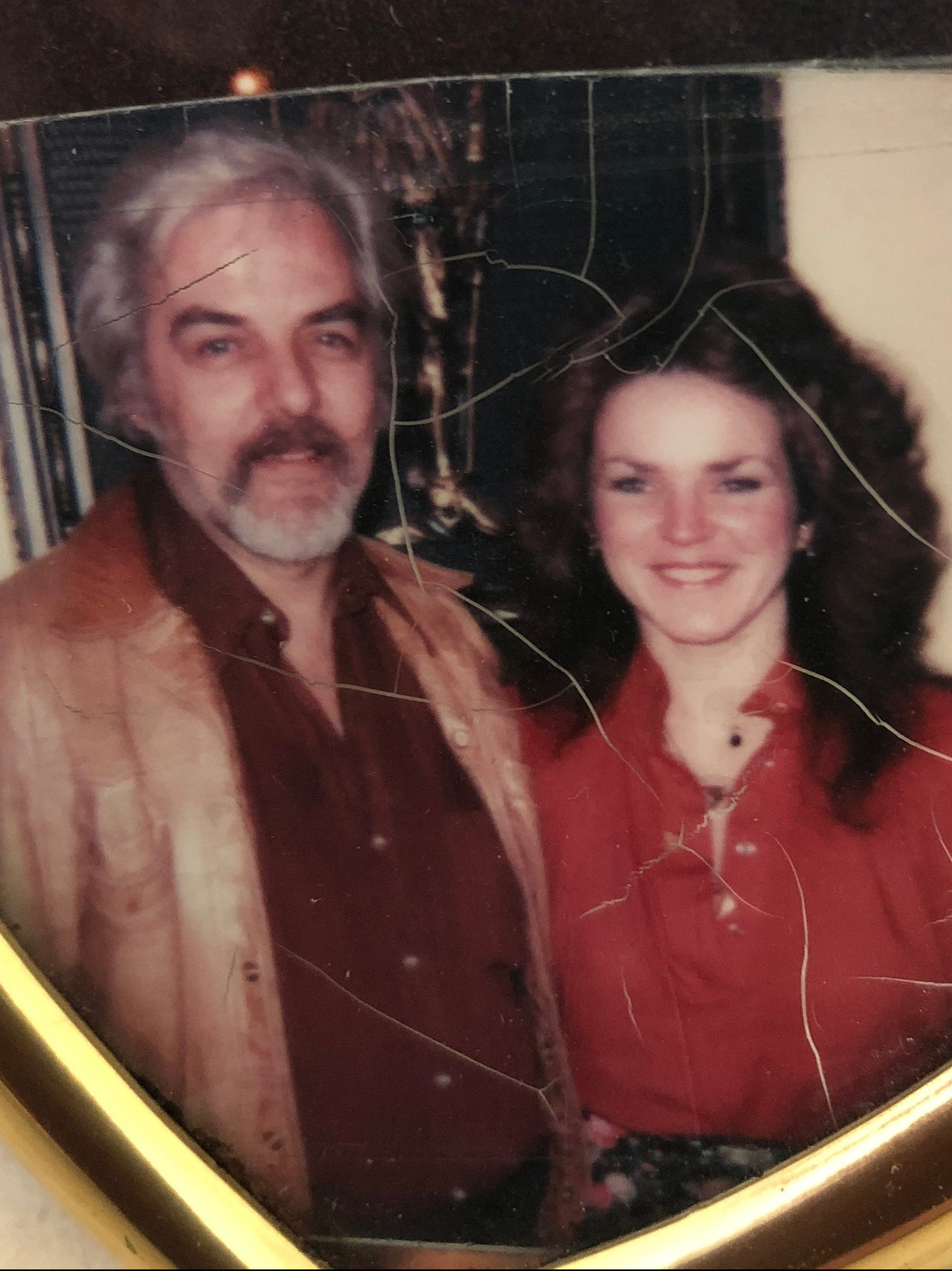
When I was seventeen, my dad took me to a dirt-floored nightclub in a barn on Division Street in Portland Oregon. It was called the ‘D Street Corral’. I remember staring at the entrance, an actual barn with barn-red doors and stacks of hay outside where people stood in line to get in. “Are we goin’ to a rodeo?” I asked. “Cause I don’t like rodeos.”
“You’ll like this one.” Dad said. He lit a filter-less Camel cigarette and we got out of the
car.
Inside it was dark, it looked like a rodeo place with all the stuffed deer, and huge bull horns hanging over the stage.
Hundreds of people gathered at the long bar, small round tables clustered near the stage where a man, a large black man was tuning his guitar, unmindful of the congregating crowd. Dad stepped over to the busy bar and got two bottles of Coke, because they didn’t’ sell alcohol. I remember the waitress, a pretty black-haired girl no more than twenty-three or four, flirting with him. He winked and returned to where I stood. Women and girls, flirted with dad all the time. It rolled off him like water. He’d give that wink, they’d smile, and in that innocent exchange both parties got what they desired, a blameless flirtation. I knew it then, I know it now, though my green-eyed mother never understood that he didn’t invite these flirtations: he was as oblivious to them as that man on stage tuning his guitar.
I wore my jeans, strappy platform shoes, my fringy-suede vest, and a flower-power blouse like I’d seen Julie (Peggy Lipton) on Mod Squad wearing – at seventeen, she was my fashion idol. And of course, my sunglasses stayed on top my head, holding my long hair back, just like Julie’s. On Fridays, I worked for Dad at our downtown Portland shoe shop. Sometimes after work, we stopped somewhere so he could have a quiet drink, me a coke, and maybe have something to eat before going home to a bucket of Kentucky fried chicken, my rambunctious three younger brothers and my mother’s impossible to anticipate, shifting, diet-pill induced moods.
Dad went up to a table right next to the stage where two guys were seated, he leaned down and said something to them, then took out his money clip and handed them a crisp ten-dollar-bill. They stood. At first, I thought they looked angry and that maybe dad was gonna get into a fight.
But then one said, “Your daughter, well…” they looked at me and smiled, “Happy twenty-first birthday.” And they left. We sat at the table right at the edge of the stage. Those peanut shells on the floor kept getting into my cool platform shoes and cutting at my feet. It hurt. I thought, what would Julie do? Yes, I was that corny and tragically trying to be cool at seventeen. Well, Julie would act like nothing was wrong, even if her foot was bleeding. So, I kicked off my shoes and propped my feet on the chair next to me. Dad smiled, we toasted, clinking our bottles together as the lights went down. The crowd hushed, and that large man on stage stepped up to the microphone and didn’t say a word, but the next few seconds I quickly recognized the beginning guitar notes of ‘The Thrill is Gone’. I leaned across the table to my dad who was nodding his head and had a smile on his face like I’d never seen on him before. I almost didn’t’ want to intrude, but then said, “Is that…?”
“Yep.” He said, still nodding, still smiling. “BB King.”
That was the night, the place, the song and the surprising blues-loving man I was with, when I was introduced to the blues.
Later, in my twenties I returned to ‘D Street’ on many Saturday nights to hear bands like Vegas and Paul Revere and the Raiders, because no matter how ‘Julie’ cool I tried to be, my favorites songs were ‘Kicks’ and ‘Indian Reservation.’ We danced our butts off. But there was never a night there more special than the one I spent with dad, sipping a beer and listening to BB King.
TELL your readers a story, don’t leave out the details like rocks in your shoes, smells, sights, sounds and sacred memories.
If you liked this post, please FOLLOW my blog (see sign up at the right) and please share on social media. Thanks, Mindy


- ← Previous
- 1
- 2
- 3
 Mindy Meyers-Halleck
Leave a comment