memoir writing, fiction writing, storytelling, writers, PDX, Portland Oregon 1970s, D Street Corral
Lilith’s Midnight Walks
Okay, so I wrote an October Poem ….
Lilith’s Midnight Walks
Banished in the disenchantment of Eden’s twilight
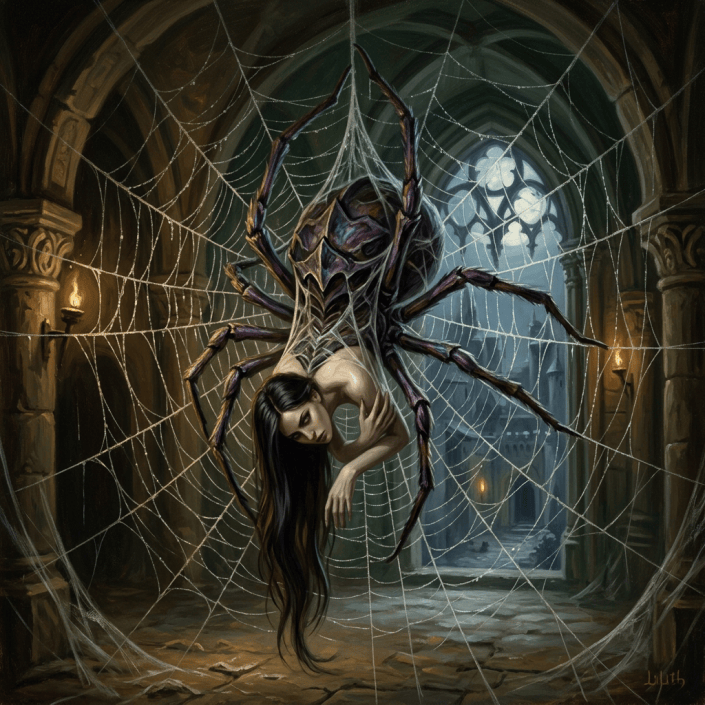
The dark demon Lilith’s
Once iridescent wings
Now dull as charcoal
Flutter in the darkness of time.
My room––her skirring ground
Where time is a frozen breath––
Holds her suspended
In her silken helix spun of spidery glue.
I am her haunted house
Teeming with the ghosts of all loved and lost.
The creaking floors
My bones
Resonate with Lilith’s midnight walks.
This seductress of thought and will
Brings chaos to my nights.
I am her haunted house
The oxygen in my lungs
Draws her trickster,
El Broosha to crawl out from the desolate wilderness
Of night’s monsters
And search the frigid corridors
My body my home
Thieving breath to make her own.
Lilith, the lurking wind spirit of ancient storms
Drifts in the inky shadows of my room
Wings aquiver
Rasping inhalations
She reeks of decaying flesh
Eden’s rotting apple.
One final deep breath
The drawn-out hissing cry of a screech owl
Lilith, rebel of dominion
Lunges
Diving from her netting
She plucks my soul
Condemning me to doom.
I am Lilith’s haunted house
––and she wants this room.
Mindy Meyers-Halleck 2026
What Is Home?
Thomas Wolfe’s novel, posthumously published in 1940, was titled, You Can’t Go Home Again. This title has become a warning and an often-deployed platitude. Books have been written, movies made with that question at their core, can she/he/they/them go home again––because the question is universal and timeless.
Many of those movies portray a family in a splendid home with enough bedrooms for all the bickering adult siblings, maybe an attached winery, horse barn, cattle ranch or at least a guest house by the pool. None of that privilege was my experience.
Nonetheless, can we really go home again? And what is home?
Is home a place, sound, taste, or feeling?
For example, an elderly neighbor of mine, in her 90s, walks by my house every day and admires my roses. Today she saw our newly placed realtor’s ‘For Sale’ sign.
“You are to move from das house?” she asked in broken English.
“Yes,” I said, standing up from weed pulling. “We are moving home to Oregon.”
“Home,” she said. “Home vwould be nice ….” Her gaze drifted to the sky. Her thoughts seemed to drift as well. She’d been having memory issues lately, likely dementia. “No …” she whispered to the sky. “Vwe can never go home.”
“Poland, right?” I asked, recalling one of our many previous conversations. “When did you leave?”
She glanced up and down the street, then cast her eyes downward to her mismatched shoes, and grumbled, “Stalin.”
I felt her anger and deep sorrow. “Oh … I’m sorry. Those were terrible years.”
“Yes,” she met my gaze for a long moment. Then she lifted her arthritic fingers to her mouth. “I taste mama’s potato pierogis.” She gently tapped her lips. “Das vwas home, das taste.” She closed her eyes, smiled, and then laid her hand over her heart. “Go home for me who cannot.” She walked away, lost in fading memories.
As she continued her walk, I knew she’d already forgotten our conversation. But I won’t forget her reminder of how tastes and smells are portals to memory, maybe especially when endangered memories vanish as quickly as that elusive word lost at the edge of your tongue.
As I watched her amble down the road, I summoned the familiar senses that remind me of home;
Coffee. Shoe wax. Bacon. Mom’s Emeraude perfume.
Each of those smells arouses a unique memory, conjures images and evokes emotion, connecting me to so many stories.
Coffee: mornings with dad, either at our home in Portland, or most favorably sitting by the campfire in Nehalem or on the beach in Manzanita. Dad’s old percolator pot on its makeshift wire rack above the fire, gurgling to life, generating the smell that has lingered in my senses for a lifetime.
Shoe wax: Saturdays, since I was nine years old, working with my dad at his shoe repair. Then, as a teen 3-4 days a week. That waxy smell always transported me into our secret world where mom and my brothers never interfered. A world of dad’s jazz music, or Dean Martin, playing in the background, and dad whistling along. And the sound of the eight-foot-long, five-foot-tall shoe repair and brush machines where he was putting a final waxy shine on boots, high heels, and leather loafers. And of course, the smell of coffee from his back shop burner. My roll top desk was always littered with sketch pads and writing paper in the back of the shop. With three younger brothers at home, quiet time was rare, so in between customers, this was precious writing, drawing, and coffee time. And a time when dad and I could just hang out, quietly absorbed in our music or art, refilling coffee cups and enjoying the peace. The waxy smell of a shoe repair makes me feel calm––said no one ever!
Bacon: Bacon was Dad’s favorite breakfast food, but he rarely made it, and Mom didn’t cook. If I woke up and smelled bacon, it generally meant Grandma was there, living with us for a while to help manage ‘the kids’ and poor mom’s wickedly hormonal mood swings. Life was great with our stabilizer, Grandma Ollie. And my dad adored her. Grandma brought peace, stopped my parents’ non-stop fighting, soothed the day for mom, and made my brothers behave. It was heaven, and at the core of that heaven was the smell of bacon. The smell of bacon makes me feel safe and protected.
Emeraude Perfume: Mom’s favorite perfume in the late 1950’s and 60s. When she wore it, it meant she felt pretty, and if mom felt pretty, the universe took notice. I mean literally: newspaper interviews, stage performances, and being at the center of a prestigious social circle. All of this meant she was in a good mood, and in a good mood, Mom was delightful, charming, loving, and caring to the extent she was capable. The smell of Emeraude Perfume makes me feel cheerful, but also reminds me there is a shadow side to that transitory cheer.
More than a house, nostalgia, and memories, home is a deeply spiritual experience. When I was young, we moved around Portland too many times to count, so home is not a specific house for me. Though my family was troubled––my father and two of my three brothers’ lives mired in alcoholism and drug addiction, and my mom’s mental health issues haunted every aspect of our lives–there was love.
And it is that love that anchors my feelings about home.
I’ll continue this exploration of what is home in the next post. Meanwhile, what is home for you?
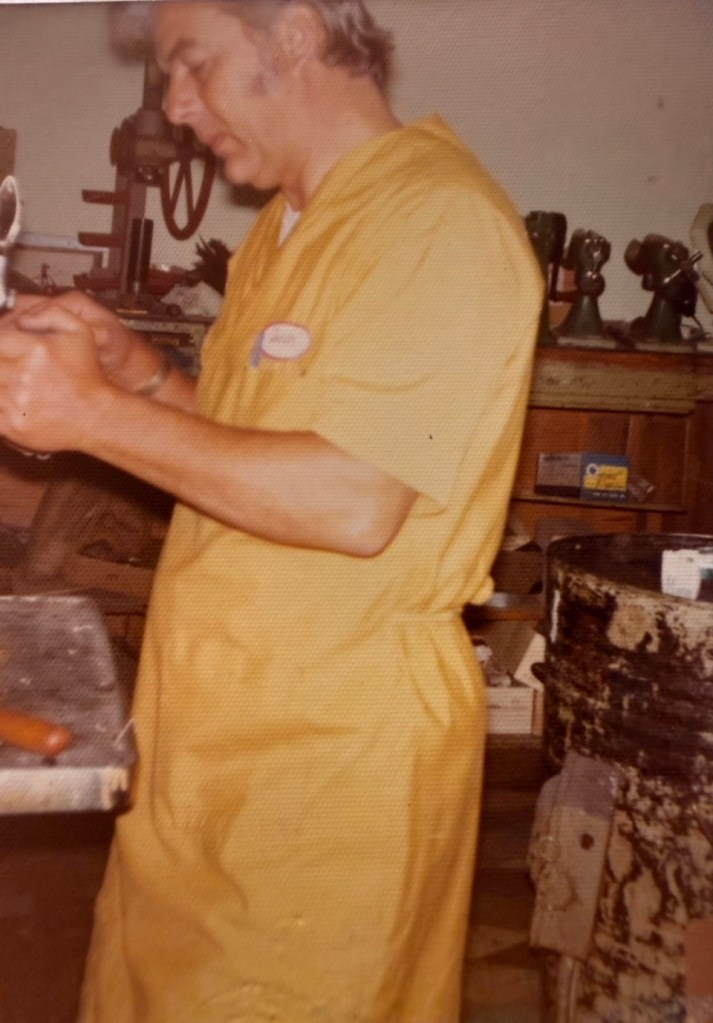
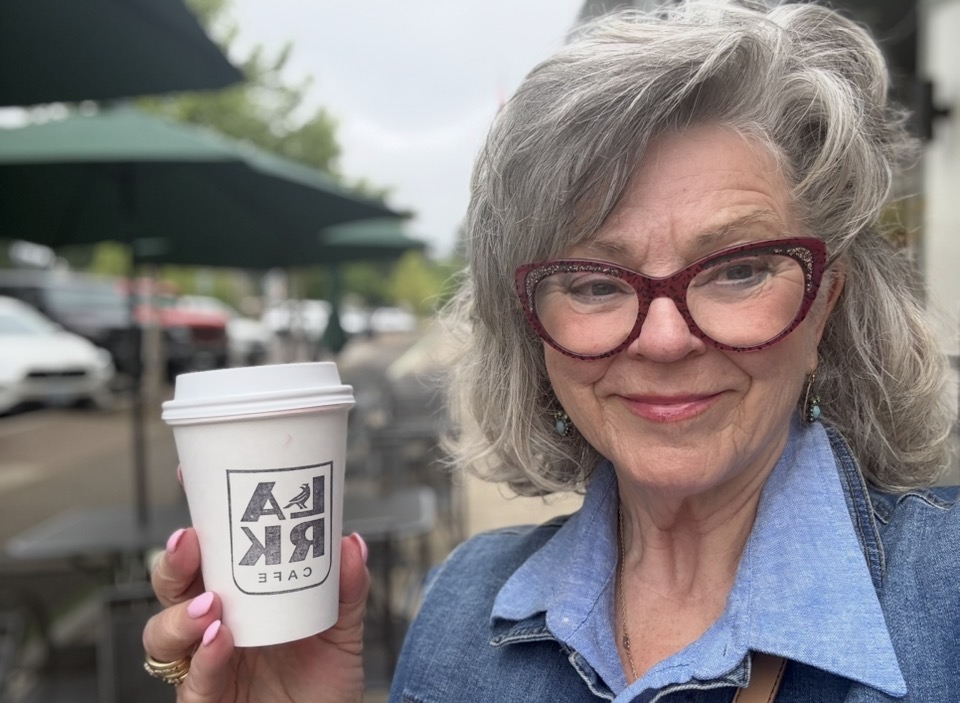
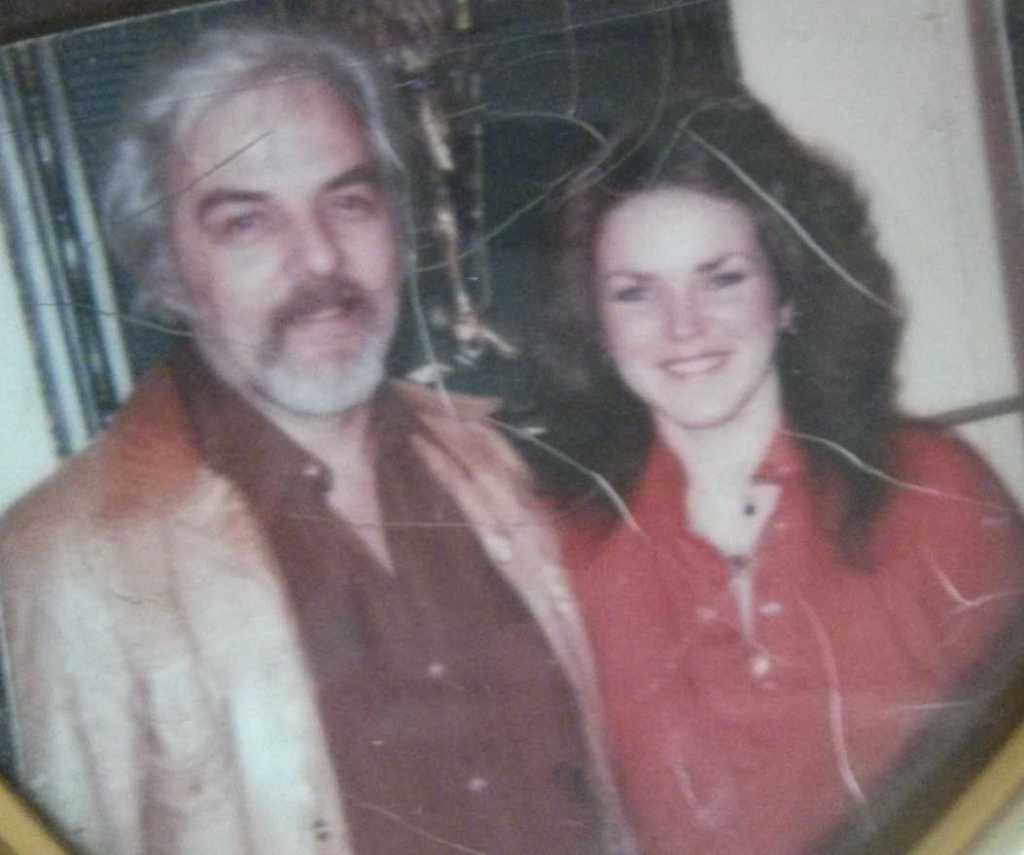
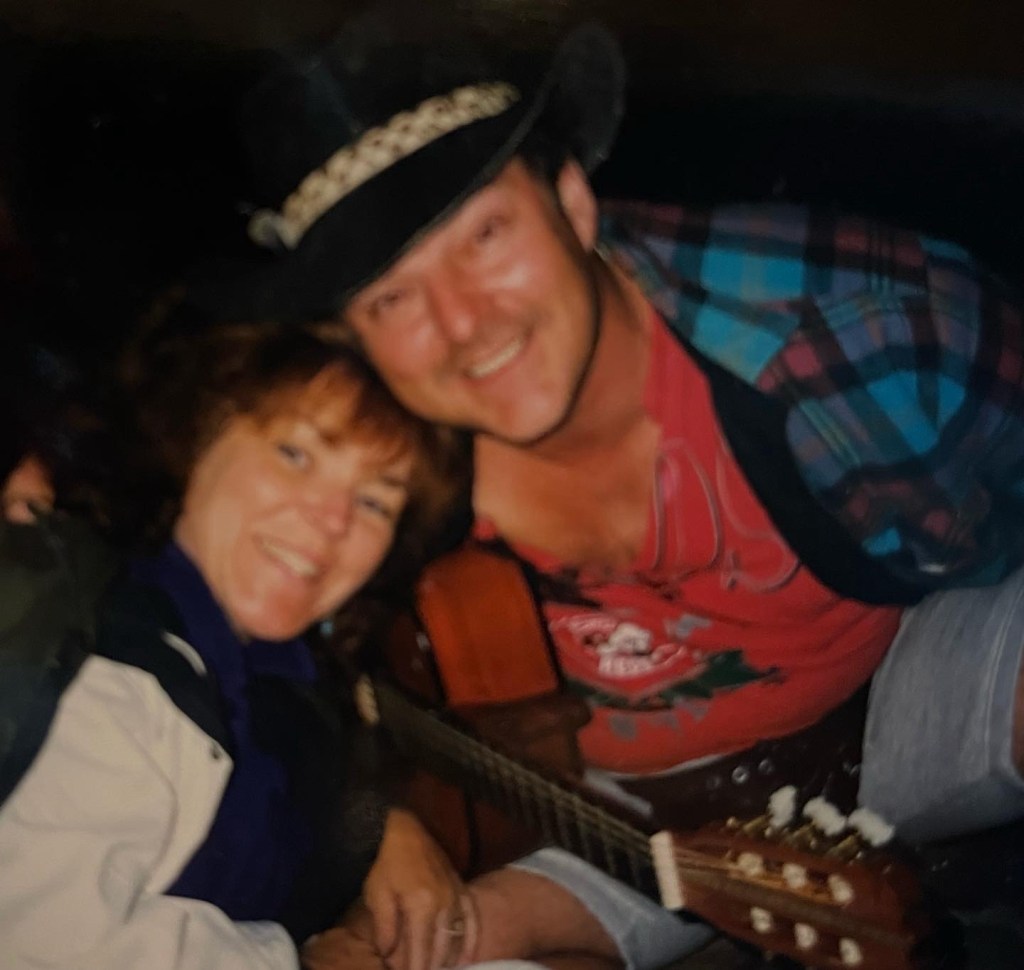
That’s my dad at the brush machines, lost in his work sometime in the early 1970s, then him and I late 1970s, and me, old now but still my father’s daughter in my devotion to a good cup of coffee
Echoes of Bygone Years
“The best journey takes you home.” — Unknown.
My bygone years rise in memory like sea mist. They carry the ache of knowing that the place I once burned to escape was quietly shaping the naïve soul I hastily ferried away.
And now that sea mist transports sounds and smells, taunting my return; the underpinning of honied seaweed on salty air, fish and chips, the smokey aroma of bonfires along the beach, someone strumming an old acoustic guitar by a fire pit––flames crackling and popping like dancing red pyrotechnics against the midnight sky. Home.
My brother, who owned that old guitar once, said to me as he strummed, “Sis, you’re a mermaid, or one of those Irish silkie things gramma talked about.” It was the greatest insight he ever offered me, and the only time I felt he saw my true spirit. That night, he tried to make up a song about mermaids. It was awful. We ended up laughing so hard we rolled over on our backs by the fire, watched falling stars, and listened to the silence.
These days, I think of myself as a mermaid left ashore too long, just as my brother once said. I need the ocean: sand beneath my bare feet and betwixt my toes, the squawks, screeches, and mewing sounds of scavenging seagulls, and blue-gray water near enough to breathe. I like to think he knew that need because he was Merfolk too. Maybe that’s why this world hurt him so much; perhaps he belonged to another. I love this life, but, like him, I love it best from the beach, the watery world that shaped me.
I’ll be returning home soon. I look forward to tending my family’s coastal graves and meeting the ghost of my younger self––a mermaid who longs to return to the sea. And though my brother is gone now, it is his strumming guitar I will hear in the echoes of our bygone years.
To Murder a Poet
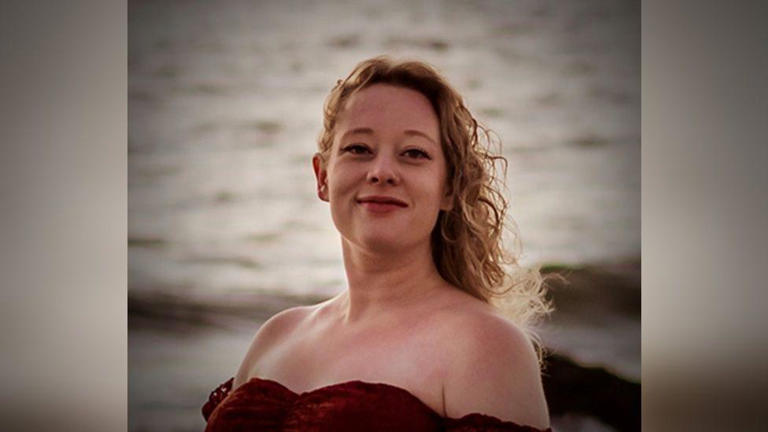
Dedicated to Renee Nicole Good, murdered by ICE on January 7th, 2026
What happens when a warrior is slain?
Witnesses left in tears
shock
pain
screaming, “What have you done?”
In death
that warrior emerges from behind the cloak of brutality.
Her words flow freely now,
unstoppable
no longer bound by tyranny.
She becomes mythological verse.
Her words rise from blood-soaked dust––
becoming oxygen
breathed in by her comrades in humanity.
When a warrior is slaughtered, she becomes a martyr.
That martyred poet
becomes a poem––
Sorrow wept into a gentle wind
spoken by devotees
that quiet wind becomes a tempest.
You can’t stop poetry
it whispers
sings to the rising sun
howls at the moon.
The warrior turned martyr––
Poet who becomes a poem
is now an unstoppable invisible force.
She turns her ghostly face to the perpetrators
points her spectral finger,
and says,
“See what they have done.”
And those words
like soul-rotting guilt
will float along the breeze
heavy
until they land on the intended one.
…. See what they have done.
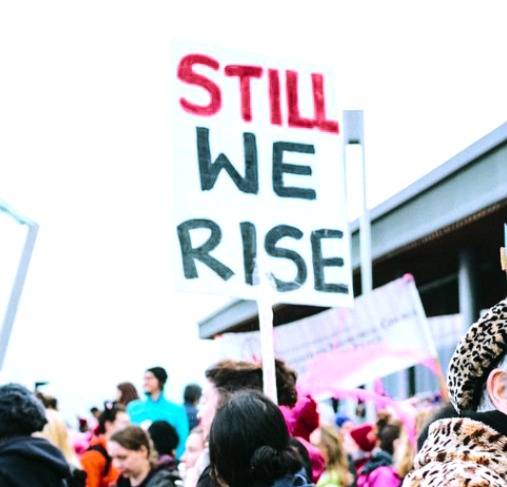
Rest in peace, Renee. Rest in peace.
The Women of BEYOND THIS WICKED REALM
My novel, for which I am seeking representation, is titled BEYOND THIS WICKED REALM.
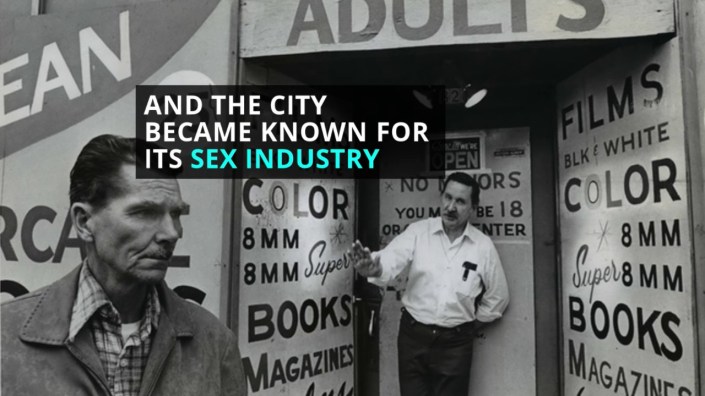
In 1970s, Portland Oregon, when stagflation met disco-mania, Portlanders seeking liberation from urban blight, lights out orders and ambushed pipe dreams turned to sexploitation. Mary’s Club, which features prominently in my newly completed novel, and other strip joints packed in customers. X-rated theaters and bookstores of the ADULT sort exploded around the city. To learn more about the background, please read my previous post titled, Mama Told Me Not To Come.
Below is a brief glimpse into the brave women in the story.
In 1972, Portland Oregon, four women—a Holocaust survivor, a mobster’s daughter, a drug dealer’s abused girlfriend, and a lady-scholar turned drifter—form an unlikely sisterhood in a fight for survival against Portland’s illicit porn and drug trades.
In Portland Oregon, our protagonist, Etta Broussard, has stopped taking her decades-long prescribed Valium drugs. Etta, a forty-five-year-old Holocaust survivor who views the evil in her world through the prism of The Lord of The Rings––suffers greatly from past trauma.
When Etta discovers that her neighbor is a pornographer and an inhuman monster, like Tolkien’s Orcs and Wargs in the concentration camps of her youth, she is dragged back into her nightmares. She vows to stop him from doing what the Nazi’s did to her. Her fervent mission launches the story.
Etta is a devotee of Tolkien’s work, sharing its message like a missionary on fire. She inspires these abused women to discover shieldmaiden-like courage in a battle with the criminal underworld.
When Etta meets fifty-year-old Ireland Ó Luain in a downtown Portland park, they become fast friends and form an unlikely sistership. Ireland becomes a big sister to Etta. Once a professor of women’s studies at Portland State, erudite and wise, Ireland now appears to be living rough on the streets of Portland. She pushes a grocery cart of her belongings around town and dispenses hard-earned wisdom.
Ireland considers herself as Persephone, sent to the underworld–a mental institution–for accusing a powerful man of rape. The commitment of a troublesome woman was acceptable in a city controlled by wealthy men. Cast into darkness, she now seeks to find her way back into the light.
Etta and her husband own a neighborhood bar. Two young friends, Maxie and Neva, are regulars. They offer Etta a bitter-sweet glimpse into the life of a normal twenty-something woman, laughing with friends, beautiful and confident. The life that was taken from her when she was sent to a concentration camp at fourteen. She adores them like daughters she never had.
One of the beautiful young women is Maxwell, ‘Maxie’ McGee, the twenty-three-year-old daughter of Portland’s most notorious gangster. Victim of her father’s increasing alcohol and drug-fueled rage, she longs to escape his wicked world and have a life without goons, corruption and murder. But she is terrified to go against him. She and Etta develop a sacred bond; Etta is the only person Maxie has found who knew her mysteriously disappeared mother. Maxie loves Etta as a symbol of her beloved mother, who she believes was murdered by her father.
One day, while sitting in the park, Etta and Ireland meet young Cleo Dubois. Cleo is a sixteen-year-old unwanted child, and now unwitting girlfriend of a violent drug dealer who works for Maxie’s mobster father. Etta saw darkness like these men in the camps: the SS had those dark souls—the most malevolent Nazgûl. They vow to save Cleo no matter what it takes.
After Etta makes a dreadful sacrifice, Ireland rescues Cleo. She hides Cleo away from her abuser and ushers her into a life Cleo never dared dream: family, friends, and a home of her own. Ireland mentors Cleo about surviving the darkness, then embracing life as it is, and thriving. And that thriving means fighting back, embracing her innermost shieldmaiden as Etta taught them. While mentoring and saving Cleo, Ireland finds redemption.
After Etta’s shocking brave sacrifice, Maxie ruminates on her many illuminating Tolkien-esque conversations with Etta and decides to embrace her inner shieldmaiden. She takes action to end her father’s wicked dominion over the city through drugs, pornography, and more.
****
Next time, I’ll share a brief glimpse at the men in BEYOND THIS WICKED REALM: a mobster and his brutal, devoted lieutenant, a truth-seeking reporter (and love interest), and a mortician with a strong sense of justice.
Thanks for reading. Please LIKE and share.
And if you’re an agent who is interested in BEYOND THIS WICKED REALM, please contact me.
2 responses to “The Women of BEYOND THIS WICKED REALM”


Author, Storyteller, Poet, Instructor


Leave a Reply