writing
Rebellious Female Characters
Harvey Weinstein is GUILTY!!! Duh! But YEY!
Beyond the Hero’s Journey, there’s no denying it, rebellious female characters—from Katniss Everdeen to Olive Kitteridge—dominate literary fiction.
Following the countless cases of male victimization and sexual harassment in the headlines lately, it seems that fictional heroines reflect a mood of defiance with the world that men have programmed and ruled. There’s a new movement of modern-day heroines who are damaged, flawed or even unapologetically ridiculous. Some who still seek romance, sure, but others who just as self-assuredly seek a one-night stand with or without a man. And while she may change in the progression of the story, divulging strengths and tactics that astonish us, a woman’s conformity is no longer required.

Carl Jung’s archetypes are the building blocks of the story world. In Chris Vogler’s book, The Writers Journey: Mythic Structure for Writers, he teaches about the vital use of archetypes in storytelling; the hero, the mentor, the threshold guardian and so on….
Beyond those central standards are the 8 FEMALE ARCHETYPES writers should be paying close attention to.
According to Jungian psychologists, there are 7 feminine archetypes prevailing in modern society—the Mother, the Maiden, the Queen, the Huntress, the Wise Woman, the Mystic and the Lover, to which I add, the emergent, Mermaid.
The Mermaid Archetype is emerging in today’s troubled world. This seductive, wild, Mermaid represents the feminine power of water—strong, loving, nurturing, self-indulgent and gorgeous, yet at the same time untamable, belligerent and outrageously independent—picture Aquaman’s mermaid mother, played by Nicole Kidman. She is a shapeshifter, a turbulent temptress, representative of both the loving abundant features of the ocean and the raw immense power of the seas and its undercurrents. Love and adore her, yes, but don’t piss her off!
These newly resurrected and empowered archetypes are used in modern day literature, on screen, and they now permeate society far beyond the secret whisperings of Jane Austen, to the anger of Lizbeth Salander, to the controlled madness of Gone Girl, and the literal Mermaid in Aquaman.
Archetypes have a language all their own. In the DNA of that unspoken language we often find the words and images essential for communicating our (personal and fictional) otherwise indescribable inner worlds (thoughts and feelings). Inner and outer continuously seek one another, and it is the sacred labor of the writer (or artist) to bring the two into artistic relationship; to reach deep into the hearts and minds of readers and provoke a rich and enlightening story experience.
Writers should be having fun with these emerging archetypes and should be delving DEEP into their imaginations to tap these mythic like women, Amazons or Mystics, for the multi-layered storytelling of which the world hungers.
Oh, and did I mention, Harvey Weinstein is GUILTY!!!
If you liked this please post it on your Facebook, Instagram or Twitter page. Thanks.
Leave a reply or comment below. Thank you.
The Seven Dwarves of Writing – Silencing The Shadow-Self
Julia Cameron, author of The Artist’s Way, suggests that when we write our morning (or mourning) pages we should think of it as taking our shadow-self out for coffee. I love that!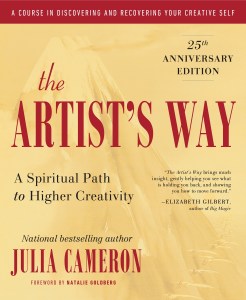
We must get all the cantankerous, crabby, complaining stuff out in order to clear the path for what’s to come.
As a fiction writer, I find this to be an invaluable tool. Often it’s tough to get my brain to stop obsessing about the day; my grocery list, meetings, phone calls, arguments, what time does my husband get home, and for goodness sakes I need to call my mom, and etc.…the day at hand. I need to get through those twenty-foot reeds to get to the creative side of my brain, and sometimes I just can’t get through them on my own. That’s where the morning pages come in. Writing LONGHAND, which means no typing, gives you access to your subconscious mind in a way that does not happen when using a computer. In addition, it’s good for your brain, science says so. Don’t believe me, read this Forbes article.
I like to think of my shadow self as the seven dwarfs; Grumpy, Dopey, Doc, Happy, Bashful, Sneezy and Sleepy.
The seven dwarfs symbolize different aspects of our self (dark and light sides).
Happy embraces the universe from a delighted state of mind and emotions.
Sneezy repels or banishes anything unwholesome that comes from the world.
Bashful helps us return to our secluded cosmos, giving us respite from the world.
Grumpy is the part of us that struggles against light.
Doc leads the parade in whining and complaining. Doc is the intellectual side that keeps us in touch with spiteful reality.
Sleepy is the turn-the-power-off apparatus within us, enabling us to take a break from chaos, to shut down when we need time alone.
Then there’s Dopey who embodies our naïve, innocent nature wonderfully unaware of the perils whirling around us.
Once I’ve written my way through those disruptive dwarfs, and they are all down for their nap, I start my writing journey and when I’m lucky I often arrive on Snow White’s doorstep—my inner writer.
Snow White symbolizes the purity and innocence that exists within us all. She beautifies the scenery of our mind, our thoughts, and feelings. She echoes our innermost radiance and reveals our most imaginative intelligence.
From this safe creative space—dwarves hushed—I can create.
And once I’ve started creating, I delve deeper into the stories I’m trying to tell. It’s only then, when the dwarfs are quiet, and Snow White is safe, that I can access my even darker self and craft an antagonist, aspiring to one like Snow White’s Queen.
The Queen—Snow White’s antagonist—represents our inner demons, the untamed ego, greed and the desire of self-gratifying pursuits. The Queen is the false (image) of self—the truest representation of a shadow-self.
Anyway, for me to arrive at a place where I can write a protagonist and an antagonist worth exploring, I need to silence the voices inside my head—That’s tongue-in-cheek, people. I do not really hear voices in my head. Just workin’ an analogy here—That means those annoying dwarves must take a nap. They have to behave, be quiet, and let me write.
Therefore, I allow them to have their say first, like toddlers; once I’ve listened to their wants, needs and complaints, they can go down for nap. QUIET TIME!

Moreover, for me, one way to achieve that goal is through morning pages, afternoon pages, writing in my car, or maybe sitting in a cafe in Florence writing my morning pages while my husband climbs the Duomo.
Keep writing everyone. Silence those dwarves, but let them play on occasion.
Good Critiques Are Essential
Good critique – the opinion of readers and other writers whom you trust – is vital to writers who want to improve their craft. Critique helps a writer make that piece of writing they just birthed, even better, and therefore increasing the odds of publication.
However, critiquing another writer’s work is a delicate, potentially hazardous proposition (to friendships and or family relationships) if you forget a few golden rules. I’ve seen writers receiving critique, drop into despair, eyes water, some even storm out of critique groups and never come back. That serves no one. Keep in mind that often writers tie their entire sense of self worth to their writing. A critique can seem like criticism if not handled carefully. In my beginning years critiques were hard for my thin skin to take. These days a critique is just part of the work, a necessary part, and I’m happy to edit, cut and rewrite to make my work what I want it to be. In other words, I now have thick scaly alligator skin.
Conversely, I’ve seen writers who want ONLY praise, who will not and do not read the craft books, understand the art of writing, and have no intention of doing so. To protect yourself, your time and energy keep this golden rule; DO NOT WASTE YOUR TIME AND ENERGY on any writer who is not working on their writing as hard as you do, or more so.
Writer’s Digest even has a Critique Group survival guide you can check it out here. Additional Golden Rules; Be kind. Be brave. Be thoughtful in your feedback.
No one learns anything if you are too kind, not brave enough, and your feedback is done hastily and is not helpful.
In critiquing, remember these golden rules;
- Critique the writing, not the writer.
- ONLY work with writers who want honest feedback that will genuinely help them improve their work.
- Take time and make an effort so you can offer a critique that is thoughtful and helpful; otherwise, just respectfully decline to do a critique for them.
- Put yourself in the critique receiver’s shoes. EMPATHY is key here.
- Always be brave enough to tell them the truth, in the kindest way possible.
- Take time to consider your feedback and how it may be received, then hopefully both parties come out unscathed, wiser and with mutual respect.
And for those receiving critique;
Not letting writing critiques wound you is easy to say. It necessitates a change of perception and a ton of practice to earn my kind of alligator skin. Constantly remember; your writing is not a reflection of your value as a human being. Keep reminding yourself that a critique is an opportunity for evolution. Keep reiterating to yourself; to become a better, stronger writer will take growing pains, as does all transformation. I remind myself of what Hemingway said, “It’s none of their business that you have to learn how to write. Let them think you were born that way.” Then I take every opportunity, including receiving critiques, to become better at my craft.
Bottom line, it’s your work, your words, your story. Don’t let anyone take that away from you.


Writing About Home
A Sense of Home
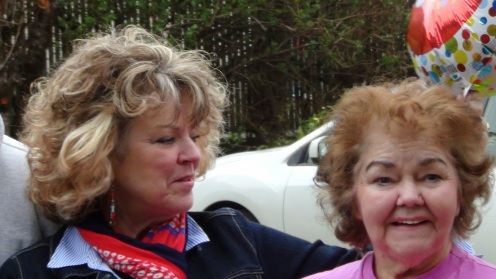
My childhood homes were many, chaos filled and transitory. My mother’s wanderlust disrupted life whenever we found a place to call home. I attended too many schools to remember, learned to disconnect from friends with ease, finally making no friends, because within that ‘ease’ was heartbreak every time I had to say goodbye. Those goodbyes generally occurred every year. That was the timeline: one year. Then mom got itchy feet, sold everything she owned, and move on to a new life, believing the grass is always greener somewhere else. It never was.
These days I jokingly call her the merchant of chaos, but that appellation is a thin veil masking the pain, abandonment and shattered reality of what should have been a refuge. Because of her, the concept of ‘home’ was alien to me; what is home? What and who should be in it?
I recall vividly, when I was ten years old, returning from school one day to a garage sale on the front lawn, all our furniture being sold, my bedroom set included. I loved that bedroom set with a French provincial white four poster bed and matching vanity. It was mine. How could she sell it?
That day, my bedroom furniture went off with an old woman. The red tail lights of her truck at the corner of Stanton Street, blinked, then turned onto 35th and disappeared. A deep root of resentment set in my bones that day. I knew with the fading of those tail lights we would soon move, leave our house, school, friends and start over, again.
Over the next three years my parent’s fights grew to legendary proportions; arrests, house fires, crashed cars, broken bones, or them disappearing for days on end, leaving me to tend my three younger brothers. I learned home was not a safe place, not a place where I could get attached to anything, or trust those whom I should have been able to trust the most. And though they loved us, my brothers and me, we were forgotten in their war. Dad slipped into alcoholism and mom, her bizarre gypsy ways, including, but not limited to giving things away with no regard for what was paid for those things or what they meant to the holder. Twice we ended up in a house with no furniture. Dad would buy new, she’d get mad and sell it all again. Dad finally disappeared with the last furniture sale.
I left ‘home’ at thirteen, then moved back because I had nowhere to go. At sixteen I left again, for good. I couch-surfed, lived in a car, a church basement and was blessed by a cousin who took me in.
It took forty years of roaming humanity’s desert to finally find a safe place to call home. Now, I have one with gardens, water view and a loving husband who swears (after our last move) we will never move again–music to my ears. We lived in our last house over a decade and we will stay in this one till we’re too old to go up the stairs, then it’s a condo, we’ve decided. I thrive in the normalcy of his steadfast plans. I’ve learned home is more than a house that can be sold, left and abandoned, it’s who is in that house that makes it a sanctuary. Home is no longer an alien concept to me. Home is my unwavering husband, no matter where we live.
My wander-lusting ‘merchant of chaos’ mother resents my normalcy and mocks me with her teen-angst voice whenever we argue. We argue a lot. Thankfully I’ve come to understand she is not a well person. She is an eternally rebellious and trapped teenager who wants to leave home, and I am the parent. To her any belongings, children, husbands or homes are shackles and must be banished, escaped and left behind.
For example, last year after we moved her into a fairly posh retirement residence, they had a Halloween dance at a neighboring rec-center. After not speaking to me for a week because I left her in a ‘home’, she called and asked if I’d drive her to the party. When I arrived she descended the stairs slowly so I could take in the full view of her costume; a black and white striped prison uniform with a chain belt.
She got into my car without a word, sat smiling and looking forward, her point made.
I shook my head, started the engine and said, “Do we need to stop somewhere to pick up a ball and chain?”
Now, that one year mark has hit. She’s serving her sentence in the ‘home’ but is planning an escape. She has one friend left who can drive (during the day) and they think they’re going on a road trip, you know to where that grass is greener, and apparently where men have hair and teeth. They are in their eighties and need naps about every two hours. I don’t think they’ll get far, I think that hair and teeth will be fake, and I know the grass won’t be greener.
We have told her if she tries to leave this safe haven we will never help her find one again. She knows we mean it this time. And though she has these little rebellions, I don’t think she will actually leave the retirement center where they feed, medicate, entertain and allow her the freedom to come and go with no strings. I think she’s finally grown up enough to recognize the need for a home.
Our mother, regardless of antics loves us deeply in her own dysfunctional way, and in that love is our sense of humor, humility, and yes, finally a sense of familial home.
What’s Milieu Got To Do With Story?
By the 1970s the now trendy and oh-so-cool Portland Oregon #PDX was known as the ‘porn capital’ of the northwest. Deep Throat seemed to play on a loop at ‘certain’ local theaters, and drugs -pink hearts, cross-tops and pot – were handed out like candy.
Like me, Portland in the 1960s and 70s was struggling to come of age. It was populated by people deeply wounded by WWII, weary from war, ever-suspicious of the Korean War, and ambivalent over the Vietnam War. Everyone was touched by warfare in some way – many sought escape.
Somewhere between 1967 and 1978 a great tide changed in Portland, at least in my life. Portland went from free-living-loving hippies in the parks, to disco in the clubs, drugs on every corner, and in every shadowy crevice of the city. From free love to cash-for-sex and porno, from dancing in the streets to the throb-throb-throbbing pulse of Donna Summer’s voice in the cocaine-laden disco nightclubs. Portland changed, and as I went from guileless teen into my awakening twenties, from innocently dancing in the parks, into the dark world of nightclubs, so did the landscape of my life, and the city I called home.
My current WIP (work in progress) is a collection of stories that draws upon that complex and layered backdrop. Why does that matter? That backdrop, setting or milieu, resonates with the theme of the stories, provides a mood and a frame of reference for my coming-of-age themes of ‘lost innocence, lost power, and soul death’.
When creating a narrative – fiction or non-fiction – it’s vital to have an in-depth understanding of your story world. Think about the cultural mores of a Jane Austen novel. Those quiet sufferings and tight reins on emotion in a polite society, would never work in today’s world.
The milieu or setting of a story consist of both the time and physical location within a storyline, either nonfiction or fiction. As a literary component, the setting helps introduce the main background and mood for a story. Essentials of setting may include culture, geography, and the historical period – it pains me to say the 1970s is now historical, but it is. It’s official, I’m old. Along with the character, theme, plot and style, setting is considered one of the fundamental components of fiction.
If you are interested in reading about Portland’s sleazy background, check out author Phil Sanford’s books, Rose City Vice and Portland Confidential.
 Mindy Meyers-Halleck