Writers
From Maiden to Monster, Female Archetypes
I recently rewatched PENNY DREADFUL, City of Angels
“All mankind needs to be the monster he truly is, is being told he can.” Magda (Natalie Dormer) states in the first episode of Penny Dreadful: City of Angels. I’d forgotten how captivating this character (and her portrayal by Dormer) was when I first watched it a few years back (2020). This female character is complex, brilliant, and breathtaking, sometimes quite literally.
Sowing seeds of discord, Magda’s plan to start a race war is to whisper in the ears of men she perceives as weak. Men might be the target of this shapeshifting demon, but she uses the face of Archetypal women to enact her vision. Traditional roles, including mother, secretary, and maid, dominate the 1938 Los Angeles setting, but the heavy dose of feminine archetypes is wielded as a weapon within Magda’s grand design.
At her core she is Isis: The Destroyer: A steadfast woman who never sways from her life’s mission but sees things in black and white; she is a firm believer in “the ends justify the means” as she masterfully slithers from maiden to monster. If you’re writing women, this (first season) is a must see. Magda is nothing like women in the Penny Dreadful novels of old. She’s new and horrifying.

Follow me on my Instagram page @Femarchetype for more on Female Archetypes.
Female Archetypes
Lately, in a desire to understand why I write certain types of female characters and yet struggle with writing others, I’ve launched into an in-depth examination of female Archetypes. One thing I have realized is that I don’t struggle to write the archetypes that are most consistent in my own nature, Artemis and Hestia, but do struggle with Persephone and anything Aphrodite-related. So it’s important to not simply mirror my own character aspects but to reach beyond them and write female characters whose archetypes might be foreign to me. I do believe all the archetypes are alive in my psyche at any given time, which is the case with most of us. And though we are not limited to our core archetype, it is generally the one that drives us. Especially when under stress. That’s a great thing to know when creating fictional characters.
I’m currently looking at the Greek Goddesses (archetypes):
The seven goddesses:
- Athena, goddess of wisdom.
- Artemis, goddess of the hunt.
- Hestia, goddess of the hearth.
- Persephone, goddess of the underworld.
- Demeter, goddess of grain and agriculture.
- Hera, goddess of marriage.
- Aphrodite, goddess of love.
I’ll be sharing my female archetypes educational journey here on my blog, and also on my Instagram account at @Femarchetype, so please follow me there.


If you liked it, please share @MindyHalleck
Tweet
Life Gets In The Way
I’ve been stressed, overwhelmed and slightly (not clinically) depressed this last year. Life is overwhelming for us all right now with covid, toxic politics, finances and our daily lives—there’s no arguing that. And for me, add to those stressors my mother’s dementia and now her LONG goodbye. The doctor sent her home over a month ago, telling us death was imminent. I’ve been in emotional stasis, sleeplessness, stomach issues and overall just feeling CRAPPY in the face of her slow demise and my helplessness. Crappy. We think that now it will be only days until mom says her final farewell… Days…. Grieve, heavy as cement has anchored in my lungs.
So, what does this have to do with writing? Just this; sometimes life gets in the way of your writing goals. PERIOD. It’s life (and death) and you can’t beat yourself up (that’s me reminding myself to stop beating myself up)…sometimes you, I, just can’t focus on ANYTHING but what’s in front of me, and that takes ALL my energy. Lately, I’d forgotten why my writing mattered, why I did it, and if I should continue or just move on to something else, like that retirement I’m supposed to be enjoying.

But sometimes the universe gives me a gentle reminder of why I write. This morning I woke to an e-mail from a publisher for whom I wrote and narrated a Seattle TOP 25 Coffee Shops App (still available on iTunes) because he wanted to verify my payment address. When I verified the address for a check I get every 24 months (all based on iTunes sales) I remembered how much fun it was to put all my favorite #writing #coffeeshops and hangouts throughout Seattle, into this app. It reminded me how I love to explore, #write about what I learn, and then learn something new, like creating an app. And it reminded me that in creating that app, or teaching a class, or submitting my novels and short stories for publication, that sometimes, once in purple moon, the universe responds. Thanks universe. I needed that gentle reminder.
So, if you’re going through a tough time, go through it, you cant go around it. Then, when you’re ready, your writing will be there, your stories will be waiting. When you return to them, a little more broken, a little more empathetic, you will bring that to your work and it will be the better for it. That’s a round-about way of saying, all of life is material. Don’t give up, just be kind and patient with yourself. Your writing will wait for you.
“Nothing bad can happen to a writer. Everything is material.”―
If you are dealing with true depression, here is the SAMHSA national helpline, 1-800-662-HELP (4357) PLEASE reach out to them.


Dedicated to My Writers Group
Did you know the first writer’s group was started in 400 BC. Yeppers, The Socrates School was a group of thinkers; Socrates and his students who pondered the weighty questions of life and 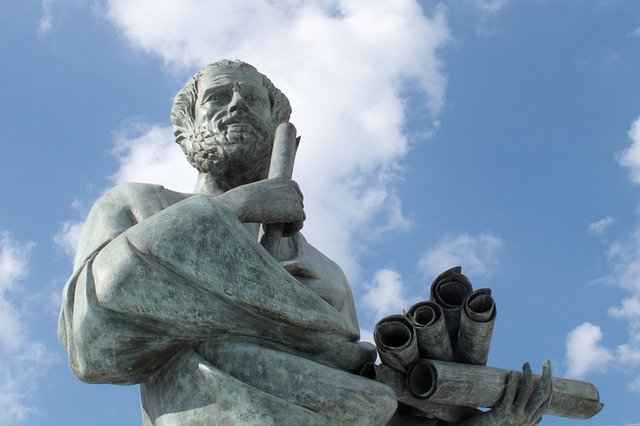 contributed vastly to Western philosophy and ethics through their writings. It’s nice to know we writer’s groups have such deep, inspirational roots.
However, today’s writing groups need to rethink and reimagine how to function in the face of the CoronaVirus2020 outbreak. I‘ve had to re-examine why, and IF I want to continue to facilitate a writer’s group in a new format, online. I’ve never been a fan of online classes and workshops for myself, but necessity requires change; must move with the times, and all that.
Initially, I felt a loss for the social interaction of my weekly meeting. As I’m sure many do. I enjoyed seeing my group (20 plus writers) as they entered the classroom, talking about their projects, their personal journeys and just chatting with like minded creatives. I loved the energy in the room. I also observed on their faces that often, those two hours on Thursdays were a reprieve from everyday life. There is great power in being part of a group, finding your tribe so to speak, and I miss that. It’s hard to grasp that our safe place is now a potentially dangerous one, but it is what it is. Grandma always said, “This too shall pass” and it’s true. At some point we’ll meet in groups again. For now, and the next 60-90 days, we need to return to why we sought and or belong to a writing group in the first place.
Afterall, what is a writing group? A writing group is a tribe of like-minded people who come together in pursuit of the art or craft of writing. Or, in Socrates case, to provide the foundation of Western civilization.
In moving our group online (as I’m certain Socrates would have done) I’ve reexamined what I can provide, or not, in that new setting. For me, what I can bring to the table (or the microphone) is craft and critique. Those are my focuses, because these two subjects/practices have always improved my own writing. So, on with it then.
The first rule of a writer’s group is like that famous line author, Chuck Palahniuk introduced in his novel Fight Club, “The first rule of Fight Club is you do not talk about Fight Club.” That line is a wonderful chorus throughout the book, as well as a plot/structural device for the story. But no words in recent history have been parroted more often. That refrain was so powerful and ultimately popular that it’s now considered cliché. But clichés get a bad rap. Despite the golden rule in writing, of avoiding clichés (like the plague, HA!), it’s important to remember that popular phrases become cliché because they work. They are powerful, become popular, and are oft repeated. So, the challenge to writers is to create our own compelling phrases so we too, can write what ultimately becomes a cliché.
I know, I know, that was a writing lesson buried in a seemingly unrelated article. But hey, it’s all relative. Back to writing groups: EVERYTHING that is read, said, or critiqued in writing group, stays in writing group. TRUST is the first pillar of any successful joint endeavor.
Additionally a successful group starts with a shared vision. For example;
- To focus on the craft of writing, irrespective of genre.
- To offer one another thoughtful critiques and support.
- To encourage each other to share stories.
- To provide a weekly deadline so members will be inspired to put pen to paper (or fingers to pad) and write
- To become stronger writers through becoming better editors.
- To give feedback as we work on rough drafts of our memoirs, short stories, and novels.
While awaiting our live regrouping, we can do all these things online. And maybe right now, with all the stress we’re facing we can again provide a reprieve from everyday life.
However, if your reasons for being in a writing group are more social than educational–which is totally fine–online may not be satisfying for you as it is near impossible to have much socializing going on while reviewing work. So, in addition to what can be addressed in a writers’ group, it’s important to look at your reasons/goals for being there.
What are your writing goals? What do you hope to achieve? Given your objectives, reflect on why you want to participate in a writing group. Most people have several reasons for seeking a group. Here are some examples:
- Learn writing tips and enhance craft skills
- Get more feedback on work
- Desire for deadlines (forces them to write)
- Become a better writer/editor
- Belong to a group of writing contemporaries
- Share support, motivation, and encouragement to share stories
- Share a passion for writing
- And so on . . . .
If the online group you are considering has goals that are in alignment with yours, then go for it. If they do not, then take the next couple months to write. Who knows, you may birth a manuscript if you embrace this as a time of seclusion and self-reflection. What’s most important is that you keep your writing life alive during this challenging time and that you do that in whatever way suits you best. Just keep writing and look forward to the sunny days when we can get together in person and talk about writing and the writer’s life.
Good Critiques Are Essential
Good critique – the opinion of readers and other writers whom you trust – is vital to writers who want to improve their craft. Critique helps a writer make that piece of writing they just birthed, even better, and therefore increasing the odds of publication.
However, critiquing another writer’s work is a delicate, potentially hazardous proposition (to friendships and or family relationships) if you forget a few golden rules. I’ve seen writers receiving critique, drop into despair, eyes water, some even storm out of critique groups and never come back. That serves no one. Keep in mind that often writers tie their entire sense of self worth to their writing. A critique can seem like criticism if not handled carefully. In my beginning years critiques were hard for my thin skin to take. These days a critique is just part of the work, a necessary part, and I’m happy to edit, cut and rewrite to make my work what I want it to be. In other words, I now have thick scaly alligator skin.
Conversely, I’ve seen writers who want ONLY praise, who will not and do not read the craft books, understand the art of writing, and have no intention of doing so. To protect yourself, your time and energy keep this golden rule; DO NOT WASTE YOUR TIME AND ENERGY on any writer who is not working on their writing as hard as you do, or more so.
Writer’s Digest even has a Critique Group survival guide you can check it out here. Additional Golden Rules; Be kind. Be brave. Be thoughtful in your feedback.
No one learns anything if you are too kind, not brave enough, and your feedback is done hastily and is not helpful.
In critiquing, remember these golden rules;
- Critique the writing, not the writer.
- ONLY work with writers who want honest feedback that will genuinely help them improve their work.
- Take time and make an effort so you can offer a critique that is thoughtful and helpful; otherwise, just respectfully decline to do a critique for them.
- Put yourself in the critique receiver’s shoes. EMPATHY is key here.
- Always be brave enough to tell them the truth, in the kindest way possible.
- Take time to consider your feedback and how it may be received, then hopefully both parties come out unscathed, wiser and with mutual respect.
And for those receiving critique;
Not letting writing critiques wound you is easy to say. It necessitates a change of perception and a ton of practice to earn my kind of alligator skin. Constantly remember; your writing is not a reflection of your value as a human being. Keep reminding yourself that a critique is an opportunity for evolution. Keep reiterating to yourself; to become a better, stronger writer will take growing pains, as does all transformation. I remind myself of what Hemingway said, “It’s none of their business that you have to learn how to write. Let them think you were born that way.” Then I take every opportunity, including receiving critiques, to become better at my craft.
Bottom line, it’s your work, your words, your story. Don’t let anyone take that away from you.
 Mindy Meyers-Halleck
Leave a comment