seattle writers
Pain Is A Great Teacher
I haven’t blogged in one year. WOW! As a long-time blogger, that’s a huge break.
In January I had a devastating fall in my home. I broke my shoulder, damaged the ulnar nerve in my elbow, sustained a concussion, bruises from head to toe, sprained and fractured my wrist, lost all use of my right arm and hand––of course I’m right-handed. Of course! ––and was bedridden for over 3 months. It was a traumatic injury that I am still, and as of writing this on September 1st 2024, going to physical therapy twice a week to regain full use of my hand. It’s painful, but worth it.
During my bedridden days, my husband had to feed me. I HATED being a helpless burden.
Anyways … I couldn’t even hold my phone, imagine that! I was very upset about losing writing time. And though the prospect of working on my full-length novel projects was too overwhelming for my concussed brain, I had to do something. Also, at that point, I could only use my forefinger on my bruised left hand to press a button, or anything else. My right hand was completely useless and in pain. The picture here shows how my arm swelled up and had black bruises from shoulder to fingertips. It looks more like an elephant trunk than a human arm. But human it was, and it was mine.
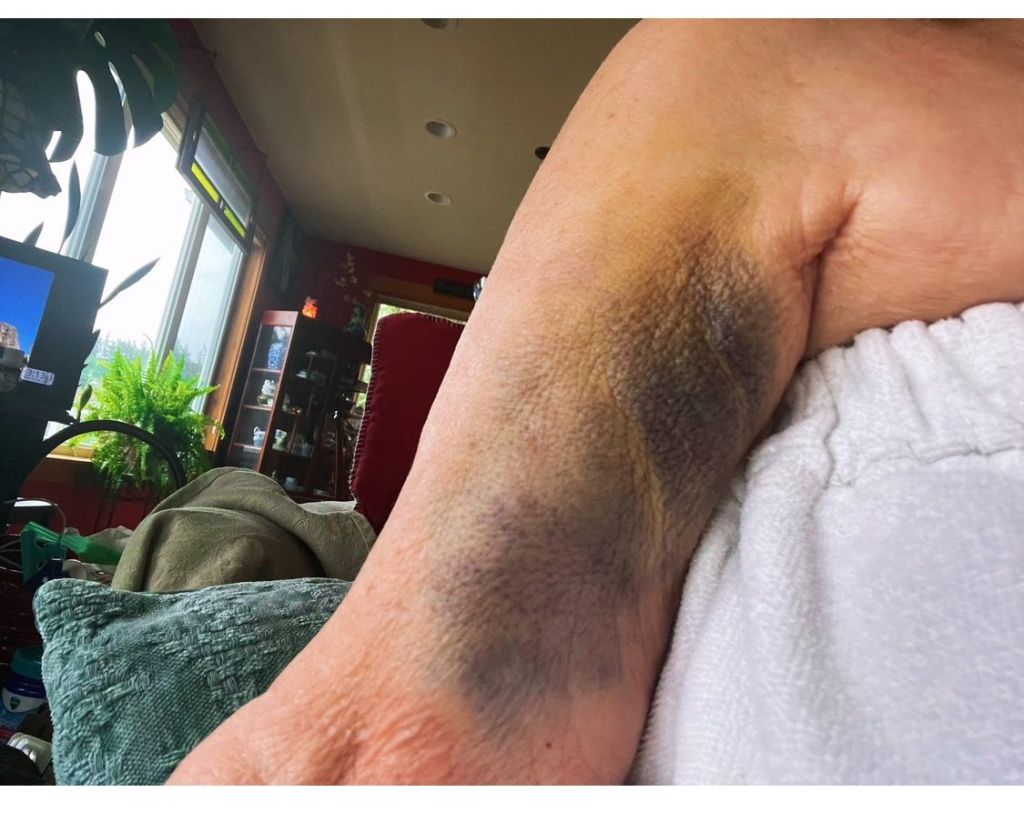
I was getting a bit depressed (pain meds didn’t help) about not writing, which I also realized was projecting my fear of having just almost died, onto the writing that would never be finished. My fate was linked with my trauma and created a profoundly sad state of mind. And trust me, that’s not a good foundation for healing––but only I could lift my spirits.
Unable to use my right hand––any movement reduced me to agony and tears––I managed to prop my phone on a pillow next to me and turn on my voice technology. I spoke into the phone and texted myself bits and pieces of story ideas and poems, trying to reawaken and spark my groggy brain cells. Though some days I could only work this way for 5-10 minutes without dropping into complete exhaustion, it saved me. I felt a sense of purpose and was able to stay in touch with my writing spirit, which is everything. Feeling a sense of purpose is vital in healing from anything.
During those months I managed to write several poems. I sent them to my e-mail (via text) to edit and format later when I was sure I would be able to type again. Later came five months later in early June. I formatted them and organized a manuscript of poetry, along with professional art, and voila! A small book of poetry was born from my trauma and a desperate desire to heal—heart, body, mind, and soul.
I am now querying that book to publishers. I am pleased to say that one poem has just been published in the Penn Journal of Arts and Sciences Literary journal.
Please give it a read, my poem is titled, Maiden, Mother, Crone https://www.upennjournalarts.org/writing/maiden-mother-crone-c44gn-nwrbj
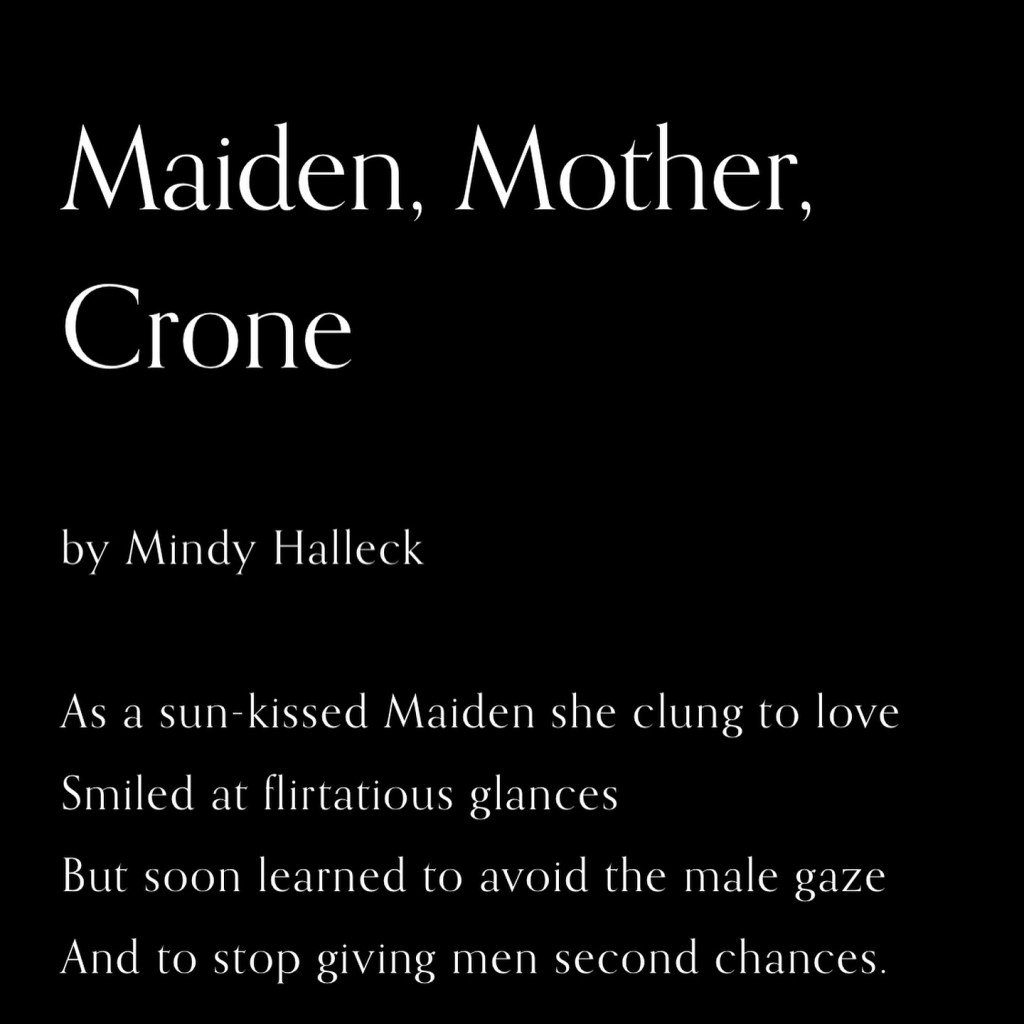
They also did a lovely interview with me, take a look at my featured profile Mindy Halleck — Penn Journal of Arts and Sciences (upennjournalarts.org)
Another poem titled, Unraveling was published in the Edmonds News, Poet’s Corner: Unraveling – My Edmonds News Though that poem was written before my fall.
What has this taught me about life? Well, pain is one of the greatest teachers we have. We learn a lot about ourselves, our resolve, our desire to heal, and mental as well as physical fortitude. I’ve lived through cancer, and had numerous other things happen to me but this injury has been the most traumatic, soul shaking experience. What it did was focus me in a way I had not been focused since my brothers died two years ago. It reminded me that time is of the essence and if I wanted to get anything done before I too, check out, I’d better get busy.

It also made me focus on my intentions, for example, what do I want to say in my work? I am concentrating on writing about the lives of women—ordinary and extraordinary alike—and the choices they make. I desire to delve into stories and poems that are instructional from my Crone-age perspective and encouraging for younger generations, passing on the wisdom of this old female warrior who has gone before. Pain has taught me to embrace my unique voice on these topics. Afterall, no one else has my lived experience or my voice.
I’m back to life now, gardening (short stints), and back to writing and querying. Oh, and smiling, I am definitely back to smiling.
Don’t wait for pain to be your teacher. What are you writing, why are you writing, and how can you tap into your unique voice?


Did You Know a Denouement is a Literary Device?
No matter how long you’ve been a writer, how many craft books you’ve read, studied and made part of your writerly DNA, a refresher never hurts. I firmly believe that if you choose to be a writer you’ve chosen a life-long apprenticeship. And if you stop learning, changing and growing, your writing will likely go stale, fall flat on the page and die there unnoticed.
So, I get excited when I learn something new – which in my life is pretty much every day.
Yesterday, at the EPIC Writer’s Group that I often lead, we had a guest speaker, Elena Hartwell author of the Eddie Shoes Mystery Series. Elena spoke to our group about story structure. In her talk she used a term I had heard but didn’t really appreciate. The word was Denouement.
A quick Google search gives us a definition; ‘Denouement is a literary device that can be defined as the resolution of the issue of a complicated plot in fiction. The majority of examples of denouement show the resolution in the final part or chapter, often in an epilogue. Denouement is usually driven by the climax.’
The difference between Resolution and Denouement is that Resolution is when the main problem or conflict is resolved. The Denouement is the very ending.
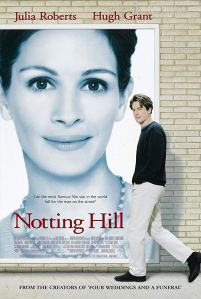
In class we used the example of one of my favorite ‘I’m home sick today’ movies, Notting Hill. You know, boy (Hugh Grant) gets girl (Julia Roberts), loses girl, girl wants boy back. Boy is an idiot and loses girl again. Then finally BOY GETS GIRL. Anyway, if you know the movie you remember the scene at the very end where Hugh Grant sits on a bench in the park and Julia Roberts lovingly reclines her pregnant self at his side. This revealing of the happy couple in their happy world is the characters in their new world order. This is the Denouement, this is him (our hero) after his hero’s journey, returned to his normal world, but forever changed.
I love learning new writing terms, how to apply them, and where they belong in the story structure.
I’m looking forward to Elena Hartwell’s 4 hour workshop in May. Class description; How to Build Tension with Objectives, Obstacles and Stakes
Stories require tension. From memoir to mystery, sci-fi to romance, comedy or tragedy, tension keeps readers turning pages with a need to know what happens next. So what can writers do to increase tension? One way is to focus on characters’ wants and needs. Investing each character with something they want, putting something in the way, and having high stakes for the outcome, makes stories compelling. Clear objectives, obstacles, and stakes make your stories the kind readers can’t put down. This workshop will help writers of all levels put these concepts into practice.
May 18th 2019
EPIC Writer’s Workshop 9am – 1 pm $70.00 for EPIC members $85.00 for non-members – Frances Anderson Center 700 Main St. Edmonds, WA.
Join Elena Hartwell for a 4 hour writing workshop, How to Build Tension with Objectives, Obstacles and Stakes.
Space is limited, so sign up TODAY at www.EpicGroupWriters.com

About Elena; In addition to her work as a novelist, Elena teaches writing workshops. She also does developmental editing, working one-on-one with authors on novels, short stories, and plays. If you’re interested in working with Elena on a project, please contact her.
When she’s not writing or coaching, her favorite place to be is at the farm with her horses, Jasper and Radar, or at her home, on the middle fork of the Snoqualmie River in North Bend, Washington, with her husband, their dog, Polar, and their cats, Coal Train and Luna, aka, “the other cat upstairs.” Elena holds a B.A. from the University of San Diego, a M.Ed. from the University of Washington, Tacoma, and a Ph.D. from the University of Georgia.
https://www.elenahartwell.com/
(Photo credit: Mark Perlstein)
What’s Milieu Got To Do With Story?
By the 1970s the now trendy and oh-so-cool Portland Oregon #PDX was known as the ‘porn capital’ of the northwest. Deep Throat seemed to play on a loop at ‘certain’ local theaters, and drugs -pink hearts, cross-tops and pot – were handed out like candy.
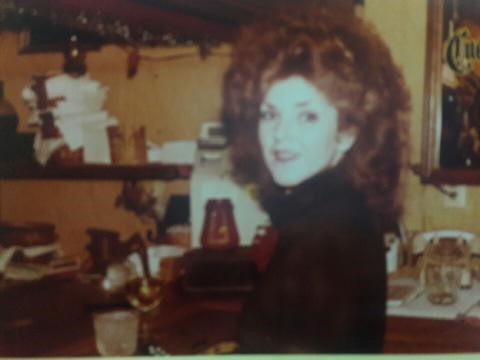
Like me, Portland in the 1960s and 70s was struggling to come of age. It was populated by people deeply wounded by WWII, weary from war, ever-suspicious of the Korean War, and ambivalent over the Vietnam War. Everyone was touched by warfare in some way – many sought escape.
Somewhere between 1967 and 1978 a great tide changed in Portland, at least in my life. Portland went from free-living-loving hippies in the parks, to disco in the clubs, drugs on every corner, and in every shadowy crevice of the city. From free love to cash-for-sex and porno, from dancing in the streets to the throb-throb-throbbing pulse of Donna Summer’s voice in the cocaine-laden disco nightclubs. Portland changed, and as I went from guileless teen into my awakening twenties, from innocently dancing in the parks, into the dark world of nightclubs, so did the landscape of my life, and the city I called home.
My current WIP (work in progress) is a collection of stories that draws upon that complex and layered backdrop. Why does that matter? That backdrop, setting or milieu, resonates with the theme of the stories, provides a mood and a frame of reference for my coming-of-age themes of ‘lost innocence, lost power, and soul death’.
When creating a narrative – fiction or non-fiction – it’s vital to have an in-depth understanding of your story world. Think about the cultural mores of a Jane Austen novel. Those quiet sufferings and tight reins on emotion in a polite society, would never work in today’s world.
The milieu or setting of a story consist of both the time and physical location within a storyline, either nonfiction or fiction. As a literary component, the setting helps introduce the main background and mood for a story. Essentials of setting may include culture, geography, and the historical period – it pains me to say the 1970s is now historical, but it is. It’s official, I’m old. Along with the character, theme, plot and style, setting is considered one of the fundamental components of fiction.
If you are interested in reading about Portland’s sleazy background, check out author Phil Sanford’s books, Rose City Vice and Portland Confidential.
Fight or Flight – Life Lessons I’ve Learned
 We all land on one side or the other of the ‘flight or fight’ issue. And anyone who knows me will likely say I’m a fighter. And anyone who knows my mom will tell you she’s a flighter. It’s been a long standing joke in the family, ‘Mom’s on walk about’ always meant she may be gone for a day or two, or a year. We, my three brothers and me, grew up knowing she may disappear at any point, so we took care of ourselves. I think I became that fighter because someone had to stay and take care of things.
When she was 80 years old I had to take her driving privileges (keys and car) away before she crashed THROUGH another Arby’s drive through window, or hurt herself or someone else. Mom has always been active and on the go, so ending that part of her life was difficult and sad, no more garage sales, no more Value Village and no more senior breakfast specials at Denny’s or their dueling rivalry, Shari’s Restaurant, and no more ‘flight’ capabilities. I wasn’t sure how she’d handle not being able to escape.
Soon it was evident that living on her own was no longer a healthy situation: despite her youthful face and attitude, mom has never liked vegetables or exercise and so was in poor health for a modern day 80 year old. We soon found a retirement home in her area. My brothers and I hoped that the retirement center would provide ample activities to keep her socially, mentally and physically active, like in high school. After all, she always said her happiest time in life was high school: of course, as her child that’s gratifying, ‘thanks mom’.
And though mom spoke of the other residents as if they were old people and she couldn’t figure out why she had to live with them, at first it seemed like it might work out. At least the socially active part kept her fully engaged. And by fully engaged I mean that she and her new cohorts in the ‘home’ became like any high school’s gaggle of mean girls. And in her early 1950s high school, my mom – a beauty queen, entertainer and one of the prettiest girls in school, sadly, was a leader of one of those toxic packs of mean girls. So mom finally returned to her youth, her happiest time;  gossiping, mocking and making fun of some of the other (80 plus year old) girls. This regression was unexpected (though not surprising) and sorely disappointing – proof that even old leopards do not change their spots. Obviously, who we truly are is revealed in stressful situations, and apparently times of boredom.
I soon realized that much of their gossipy activity was due (not entirely) but largely to monotony. The home she was in did not manage a lively activities calendar, which I have since learned is critical to a retirement community. This means that there was very little outside stimulation or visiting entertainment, so mom and her cronies created their own. And left to their own diminishing devices meant mom FREQUENTLY asked me to come in and read from my novel or do a talk on travel to Europe with my ‘fancy gadgets’ – her words to describe my laptop and Power Point. She’s always been proud of me, so, I did do presentations, talks and even sat in on a few of their ‘happy hours’ with them.
Mom called their happy hours the ‘dark times’ due to the substandard music and or other entertainment during their oft-failed attempt at one scanty hour of happiness per week.
I always brought a good bottle of wine and we smuggled it in so we could have a decent glass of wine instead of the boxed mystery elixir they served. Mom often invited her closest friend to sit with us, a one-time (and lifelong) airline stewardess who still dressed the part; small silk neck scarves from Paris tied in a perfect knot at the side of her neck, trinket jewelry from Asia, and sweaters and vests made in Ireland, red lipstick and short bleached blonde hair. She was 90, never married, always a beauty who traveled the world and who somehow landed in this home with no one to visit her and restricted to traveling with her walker only as far as the front lobby. The only thing that truly bonded these two women was their fading beauty, their tendency to be mean girls and their STRONG desire to escape the place, the age, and the circumstances where they now found themselves – like Alice after falling through the rabbit hole – shocked and surprised at their surroundings, wondering, how did this happen?
I’m confident that if either of them could still drive we would have had a Thelma and Louise state of affairs.
Things were copasetic for about three years, and during those years my brother who lives in Portland handled a great deal of what it takes to manage her healthcare and weekly shopping trips, and I handled the rest from here in Seattle. It took years and a great deal of paperwork and financing, but we finally had her set up where she was safe, had a nice place to live, meals, meds, personal care aids, and lots of caretakers on duty 24-7.
Still, mom constantly complained about everything in the home, begging me to come down (from Seattle to Portland) to entertain her friends, and constantly tried to find ways to bust out of the place, the ‘big house’ she called it. One year, after we had argued on the phone about her moving out on her own; which would have meant no one to cook for her, check her insulin, give her the correct amount of her meds, and no alert button to press if she fell, I agreed to drive down and take her to a local Halloween party at a neighboring retirement home. When I arrived, she came down to the lobby of her building dressed as a prison inmate (black stipes, hat and a chain around her ankle). Ever the actress, and always one to make a theatrical point.
That day I realized she never has been and never NEVER will be happy, so I’d settle for keeping her safe. My mother makes most people feel helpless because she is never happy or satisfied. Trying to please someone who will never be pleased is exhausting, and helplessness is soul sucking, so I stopped trying to make her happy. But safe, safe I can live with.
Anyway, during the last two years her stewardess friend grew weaker and weaker, no longer able to even travel from her room down the long hallway to mom’s apartment. Then two of mom’s other friends died, which is not uncommon in a home for the elderly, but remember, in mom’s mind she was still an imprisoned teenager trying to find a way out.
But then the stewardess died. Mom went silent for several weeks. Barely any conversation at all, not even complaining, which had me worried. But I should have known better, after all, mom’s a runner.
All of a sudden, I got a call from my two brothers who live in a small town on the Oregon Coast. Mom had somehow convinced them she should live in their house and that she could take care of herself, it would be no big deal. She swore them to secrecy, and covertly made all the arrangements to break out of the big house. Those two unsuspecting (ever culpable) brothers had never been involved in all the doctors’ appointments, and overall healthcare mom required, like my other brother and I had been. So now they have their hands full and because they went along with her secrecy, I wish them well. I can’t help them, but I wish them well.
As I said, mom’s a runner. Not a fighter, but a flighter. The death of her comrade in mean girl affairs stunned mom’s teenage sensibilities to her core, disturbed her naïve sense of mortality. When her friend took her final journey from this world, mom absolutely could not comprehend what was happening – Alice lost in (what’s the opposite of Wonderland?) anyway, mom’s flight reaction has always told her to run. And run she has. But this time there’s no running from old age. You have to befriend aging, I always told her, eat your vegetables, take your walks, work out, laugh, enjoy life, don’t resent it, and treat others as you would like to be treated, and so on. And though this is not and never will be mom’s credo, it is mine, and for that I owe her a debt of gratitude for always showing me what not to do. She’s a great life guide.
As a writer I always observe others, trying to figure out why they do, say or act the way they do. It’s all material, right? I’ve formed most of my theories on life based on how to not be like my mom in most ways. Don’t get me wrong, she is loving to her children, and as far as I know has never killed anyone (I feel the strongest urge to type ‘yet’ right here, but I won’t.)
Anyway, additionally I learned three life lessons from mom’s retirement home experience; people do not change their spots as they age, and people who live in those homes can get bored, and that I can do something to help them – because when you help someone else it assuages your (eternal) sense of helplessness.
I can’t do anything for my mom who is already calling my other brother begging him to rescue her, but I can be a little comfort to others. I volunteer at local retirement homes to read to residents, talk about my book, or the history that went into the back story, or talk about being a cancer survivor, or my travels, or even gardening, whatever else I can do to alleviate their boredom for one afternoon.
When I did a presentation about my novel last week at a local retirement home there were three Korean War veterans in the audience, which is rare. One man patted my hand as I left and thanked me for writing about the Korean War. He had tears in his eyes. He said that while listening to me talk about my protagonist (a Korean War Hero) he felt like a young man again, a soldier, he recalled the beauty of the Korean countryside. He said that part of him had been asleep for a good long time, and said thank you for waking him up and reminding him of things long forgotten. He warmed my heart and confirmed for me that just visiting with people can make all the difference on the world.
There’s nothing I can do to change my mom’s experience with aging, but I can add a little happiness to the dark times others may be experiencing on their final journeys. That much I know for sure.
Want to Improve Your Writing??? Fall is a Gr8 time for Writing Courses
 If you’re looking for some great fiction writing classes here in the Seattle area, below are classes taught by Scott Driscoll, that I can highly recommend. Check them out.
- Advanced Fiction Writing: Story Structure
COURSE DESCRIPTION
The fall class will be divided into three parts. In part one, we will look at how to bring drama into the real-life events that are the germ for many of the best stories (we’ll look at models from creative nonfiction and memoir). In part two, we will briefly look at non-linear or modular forms of storytelling (for those of you who want to experiment with plotless structure). In part three, (the bulk of the quarter), we will look at Franklin’s idea of the five-focus story structure and how to apply it in the service of organizing a novel. At the same time, we’ll consider Percy’s ideas for packing your stories and novels with more urgency and suspense, for trimming the bloat, and for pushing your characters to their limits while raising the stakes.
REQUIRED TEXTS
1) Writing For Story by Jon Franklin, a Plume Book, 9780452272958; 2) Thrill Me by Benjamin Percy, Graywolf Press, 9781555977597; 3) Narrative Design by Madison Smartt Bell, W.W. Norton, 0393320219; 4) Four Seasons in Rome by Anthony Doerr Scribner, 9781416573166; 5) Best American Short Stories 2016, Mariner Books, 9780544582897; 6) Oryx and Crake, a novel by Margaret Atwood, Anchor Books, 9780385721677; and 7) The Tsar of Love and Techno, a novel by Anthony Marra, Hogarth, 9780770436452. Suggested Reading: Norwegian By Night, a novel by Derek Miller 9780547934877.
Class meets: 10 Thursdays, Phinney Neighborhood Center # 3, 7-9:30 p.m., Sept. 28 through Dec. 7, a week off for Thanksgiving
2) Pop Fiction Writing: Foundations
UW Continuum, Fall 2017 Wednesday 6-9 PM, 9/27/17-10/25/17, five weeks
WRI FIC CP100 A; Reg #: 167105
Instructor: Scott Driscoll
Phone: 206 782 8587 or E-mail: sdriscol@uw.edu
Location: UW Campus, Savery 162
COURSE DESCRIPTION
This course is designed to explore the craft of popular fiction writing. We will cover story arc both as a linear quest for an object of desire as well as in the guise of a hero’s circular journey out from the ordinary world, through the ordeal, and back on the return. We will discuss character arc and how to use archetypes to strengthen character identity. We will also look at how to dramatize high points in your characters’ journeys through scene. For examples, we will pull form a number of texts, but our primary examples will be taken from novels chosen for this purpose. In the final week, all participants will be expected to workshop a chapter or an excerpt.
REQUIRED TEXTS
The Writer’s Journey by Christopher Vogler, Michael Wieseman Productions, 3rd Edition, 2007, Paperback: ISBN: 978-1-932907-36-0.
The Witness, by Nora Roberts, Berkeley Books, 2012. ISBN: 978-0-399-15912-1.
The Black Echo by Michael Connelly, Grand Central Publishing, 1991: ISBN: 978-1-4555-5061-6.
The texts are available at the University Bookstore.
3) FICTION WRITING: CRAFT
Class Meets: Wednesday evenings, on UW campus 6-9 PM 11/1/17-11/29/17, five weeks in November
UW Continuum WRI FIC CP101 A; Reg. # 167107
COURSE DESCRIPTION
This course is designed to explore fiction writing as craft. We will cover points of technique, including: story arc (linear quest vs. round hero’s journey), how to introduce an inciting incident into the familiar world, point-of-view, character arc, and reversals. We will also introduce scene structure. In class, we will discuss readings, look at examples, and do occasional “sudden writings” to practice. You’ll be given an opportunity to bring in your own work for workshopping in the final week.
REQUIRED TEXTS
Writing Fiction: A guide to Narrative Craft, 9th ed., by Burroway, Janet and Elizabeth Stuckey-French, Longman, 2011, Paperback: ISBN: 978-0-321-92316-5.
How Fiction Works, by Wood, James, Farrar, Straus and Giroux, 2008. ISBN: 978-0-374-17340-1.
The Best American Short Stories 2016, edited by Juno Diaz, Houghton Mifflin Harcourt: ISBN: 9780544582897
The texts are available at the University Bookstore.
Winter 2018:
- Advanced Fiction Writing: Character
COURSE DESCRIPTION
The winter class will focus on “character” and “scene.” We will begin by reducing character to an essential value mobilized by a “desire” to seek a “goal.” We will next examine how character evolves on the journey through the five-focused plot structure by looking at methods of character presentation in each of the five focuses. We will also consider the role of subtext based on the assumption that characters arrive in stories with a history of repressed desires and needs. We will compare the role of character, and the amount of subtext required in the form of ghosts and revenants in popular genres to that in literary fiction. We’ll spend time walking characters through dramatized scenes. Finally, we will talk about character “reversals” and how they might evolve differently in literary stories and in popular fiction genres and we’ll consider how to use scene to design story structure.
Runs: Thursday evenings 1/4/2018 through 3/8/2018, 7-9:30 PM, Phinney Neighborhood Center #3.
REQUIRED TEXTS
Story by Robert McKee, ISBN: 9780060391683; Scene & Structure by Jack Bickham, ISBN: 9780898799064; The Art of Subtext by Charles Baxter, ISBN: 9781555974732; Reading Like A Writer by Francine Prose, ISBN: 9780060777050; The Art of Character by David Corbett, ISBN: 9780143121572; A novel or two (tba).
2) How to Build a Novel (and Write Smooth Prose)
Runs: Wednesday evenings, 6-9 PM, UW campus, 1/3/2018 – 3/7/2018, ten weeks
Course still in design. Texts will include: Writing For Story by Jon Franklin, Story by Robert McKee, Scene & Structure by Jack Bickham, and The Writer’s Journey by Christopher Vogler, Thrill Me by Benjamin Percy, and two novels (tba).
 Mindy Meyers-Halleck
Leave a comment