poetry
Autumn Poem
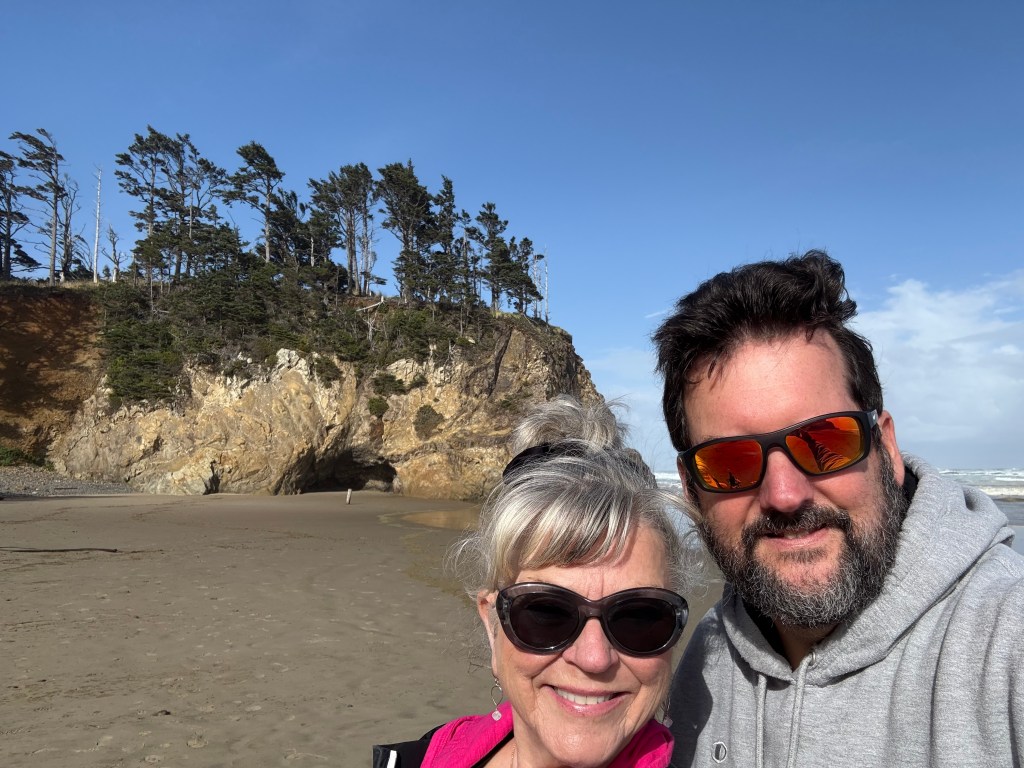
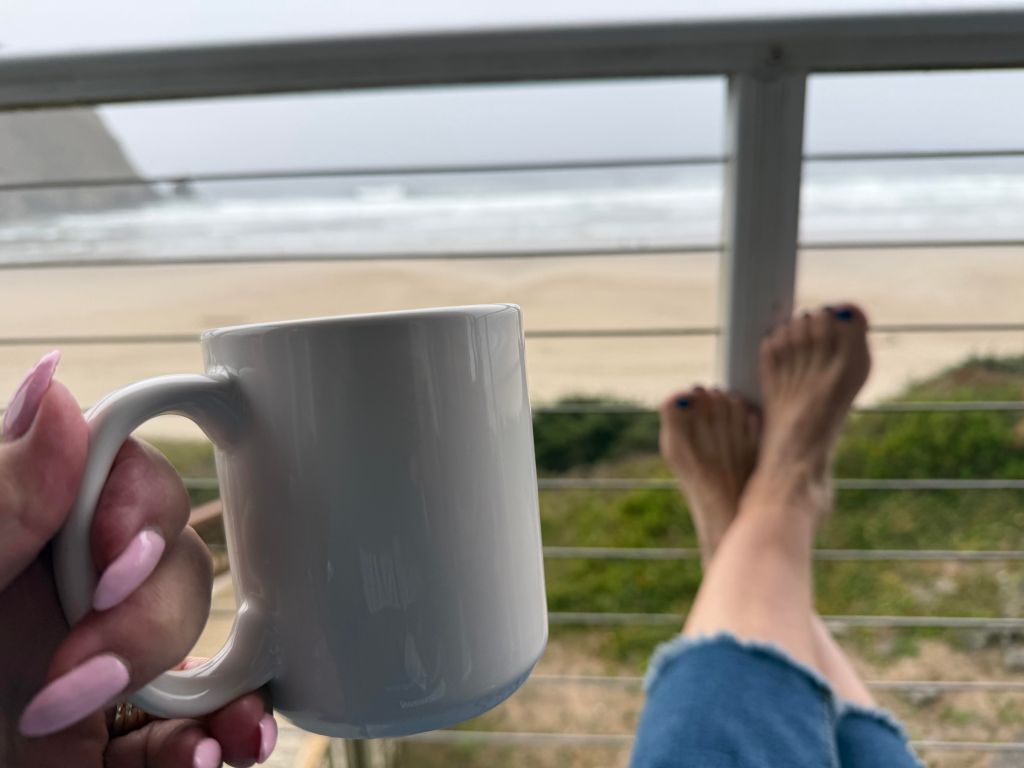
I’ve just returned from our annual trek to Cannon Beach, Oregon. While there, I pondered Autumn and all the many spiritual and physical meanings and consequences of the season.
‘Autumn’ was the monthly prompt from our Edmond’s poetry group leader, author, Gerald Bigelow. I wrote several poems sitting on my deck overlooking Haystack Rock. I love to write #poetry while on vacation. It gives my brain a break from novel #writing and the relentless search for an agent.
I’ll share this short one with you, shockingly titled Autumn.


Autumn
Thoughts
Traverse
Beachy memories
Lost to long days
––now shortened
In search of a warm hearth ablaze
To reminisce on sun-splashed
Nostalgias
––lingering
Only to melt against life’s bonfire
Of lost days.
Autumn leaves above my head
Turn
Swirl
Soar
On the wind
And fall like summer memories
To their final feathery bed.
2 responses to “Autumn Poem”


A Tragedy Inspired Poem
Recently, one of my poems was published in The Edmonds Beacon newspaper. The poem was inspired by a tragic car accident I witnessed several years ago. A scene that etched into my memory.
That’s how it often happens for us writers, something––a face, a scarf, a doorway, or an incident––imprints on our psyche and ultimately, we use it in a piece of work. Here is the poem that resulted from that tragic afternoon, followed by a brief epilogue.
SEPTEMBER MOON
Beneath the September moon
A flicker of weak light
The faint memory of her mothering years––lost
Unraveled
Tiny strings frayed
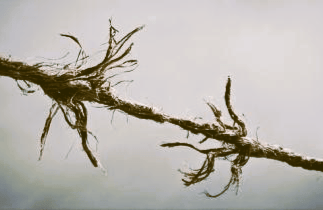
Scattered
Across the fallow fields of her life.
Alone in the darkness she feels
Loosely tethered to both worlds
One where she still sees her children
Hears them sing
The other where she floats endlessly in the hollow silence of night
Linked to them by one last ethereal string.
She closes her eyes
Afraid to see, to hear, to know,
What happened
––in her wine-colored afterglow.
Beneath a September moon
Reminders––
Buried deep
Lost in her spirit
The solitary tills of time
Of heart
And soul
Barren of love, barren of life
––and she knows
The piercing betrayal of one more glass of wine.
She now imagines her children as dormant butterflies
Who will not awaken any time soon
Their innocent lives arrested by
Mommy’s cocktails at noon.
Beneath fading lunations
She hears their cries
Her sweet butterflies
And she knows
Therein is her penance
Her dark destiny
––a life sentence
To carry aural witness of their final cries
To her spiritual wasteland
Filled with echoes of a mother’s bittersweet lies.
Tiny fingertips, like frayed strings
Once adored
Now, grasping
Reaching
Weakening
Tearing away from the cord.
Epilogue
This was a tragedy about a mother who attended a wine tasting luncheon, tasted too much wine, and then decided to pick up her two toddlers from daycare.
I was three cars behind her on the road when suddenly her car veered over the side of the road and crashed into a tree. We all slammed on our brakes. There was an officer parked in the parking lot not ten feet away. We all ran toward the car, but he arrived first and motioned for us all to stand back.
He pulled the mother from the front seat. Her head was gashed, blood dripping into her eyes, all over her hands, and was sprayed against her white silk blouse like blood on snow.
Her piercing screams horrified us all. She kept screaming and crying hysterically. “I’ve killed my babies!”
The five or six of us who’d leapt from our cars to help stood frozen. Collective dread filled all our faces. Approaching sirens echoed in the background.
The officer got her seated at the curb while the rest of us, me included, finally inched up to the car, fearful of what we might see in the back seat.
Her screams grew more hysterical. “I’ve killed my babies! … Oh God, I‘ve killed them.”
But as we all leaned down and trepidatiously peered into the windows, we were surprised by what we saw.
There in the back seat, staring at us, were two small children, safely buckled into car seats, looking at us like we were aliens.
They were fine. Afraid, but otherwise fine.
The mother was arrested for drunk driving and endangering her children, who again, I stress, were unharmed.
I learned later in the newspaper that her husband divorced her, and she lost custody and all visitation of her children. It was her third drunk driving incident, so she also went to prison for a time.
Perhaps her drunken terror that awful day was a mournful premonition. She did, after all, lose her children.
Leave a comment
Dementia–The Cradle of Twilight
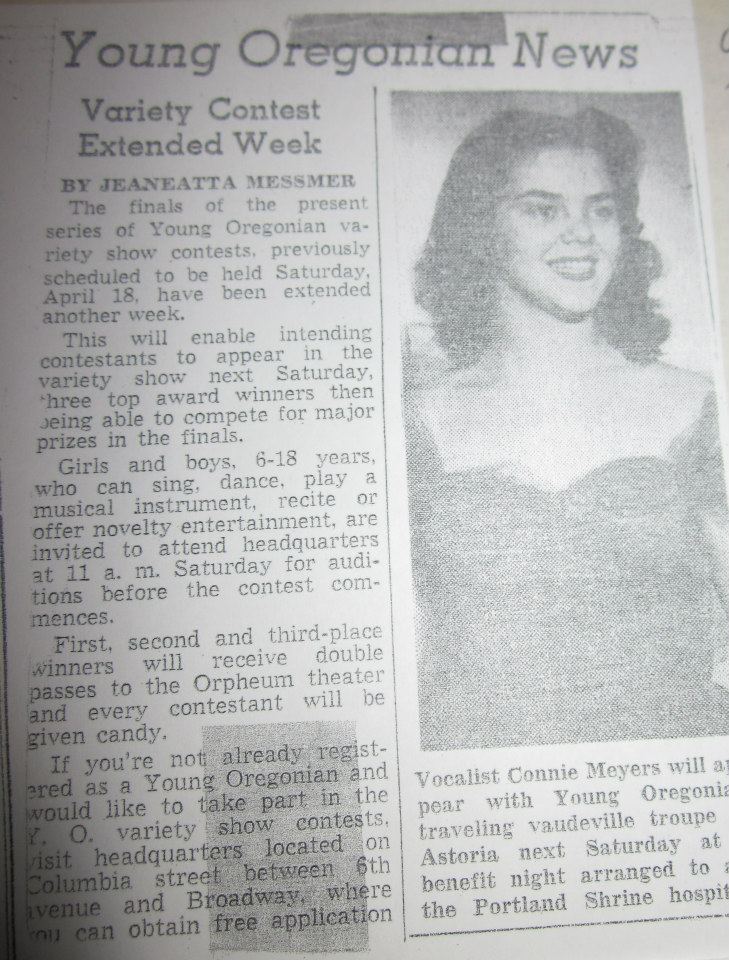
My mom, Connie Meyers was a beauty queen who was never comfortable in her own skin.
She constantly changed hair color, her waistline (yoyo dieting), fashion, lipstick, and persistently adored or hated herself in the mirror. She never fully wanted to be in this world. The story goes that she died once or twice when she was a child. She saw heaven and did not want to return to this earthly realm. She said so all my life. And once her beloved mother, my grandma Ollie May, died, she only wanted to be with her in that celestial kingdom she saw as a child. Then a couple of her sisters died, then a couple good friends, and all she wanted was to peel off her skin and go with them. Mom was my real-life Selkie.
This poem, Cradle of Twilight was published today Sundays Poet’s Corner of My Edmond’s News. I wrote it during the months of my mom’s descent into dementia. She finally slipped into the deep blue three years ago.
Applying the Celtic myths of our Scottish Irish ancestry was this daughter’s way of making sense of, and peace with her mother’s journey in a life she hated, and her longing to return ….
Cradle of Twilight
Mindy Meyers-Halleck
At the edge of midnight
she rises from bed,
steps outside her coastal cottage
wearing her nightdress
barefooted––
shaved head.
As her soul lays ruined against the rocks,
she breathes in the briny algae drifting on the breeze,
and hears the eternal song of the seas––
the crash of cresting waves, clicking of dolphins, flurry of bubbles,
as seaweed sways, shuffling side-to-side in the ever-shifting tide.
As the webbing between her fingertips
twitches
itches
grows,
she knows––
her seal skin is forming …
eternity knocks.
Soon she’ll return to the briny deep,
swim, frolic with the Selkies,
––drift upon the waves in deep, deep sleep,
with her sisters of the sea.
As her aching body prepares for transition––
exchange of human skin for glossy black Selkie seal––
beneath the silver light of the moon,
she cries seven tears
into the sea,
the price of re-admission to her natural milieu––
She’s been gone too many years,
she misses the sweet taste of salt
and the sky reflected on water,
the soothing blue, blue, blue.
From the shore she sings a melodic tune that echoes across the waves.
Those enchanted echoes
whispers on the wind
a bridge that
crosses one mystical realm to the other––
calling to them
calling her home.
This earthbound world has been painful at times––
abandonment, loneliness, loss, grief––
things the human body can’t release …
instead,
it aches, opines and enshrines
pronounces itself dead.
But love has been a treasure healing earthly wounds.
Love, divine as the silken skin of her sisters of the sea,
has made her short journey a spree
of wonder.
Worth leaving the embrace of blue waters
… Temporarily.
But now she cries seven tears,
and calls to her family of the deep––
Will you come for me soon?
She is ready for the waves,
the gently rocking,
a cradle of twilight sleep.
Come for me soon …
She awaits divine transcendence beneath the silvery moon.
*************
Below are photos of Mom in her heyday and then in the early 2000s in Edmonds, WA.



Transcending—Art into Poetry
During a recent workshop with the poet Susan Rich, on Ekphrastic poetry––which is poetry that explores art––at La Conner’s gallery/museum, MoNA, I became entranced with a painting, which I’ll share in a minute. Susan inspired us to find a painting or piece of art in the gallery, and using a rhetorical device known as ekphrasis, engage with the painting, drawing, sculpture, or other mode of visual art.
The term ekphrastic (also spelled ecphrastic) originates from a Greek expression for description. The earliest ekphrastic poems were vivid accounts of real or imagined scenes when writers in ancient Greece aspired to transform the visual into the verbal. Later poets pushed beyond depiction to reflect on deeper meanings. Today, the word ekphrastic can refer to any literary response to a non-literary work.
The painting that grabbed my attention and heart was The Longhouse by Helmi Juvonen, a gift from Wesley Wehr.
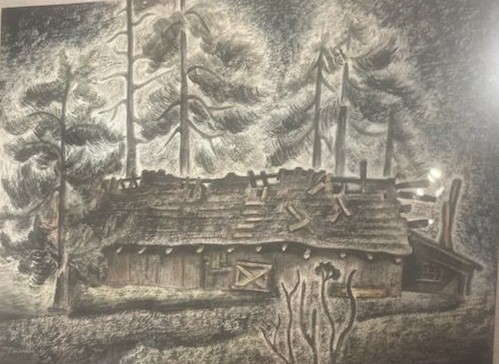
Helmi Dagmar Juvonen (January 17, 1903 – October 17, 1985) was born to Finnish immigrants (Helmi is Finnish for Pearl) and became an American artist associated with the artists of the Northwest School, and was active in the Seattle, Washington area.
She attended Queen Anne High School, and after graduating, worked various art and design-related jobs while studying illustration, portraiture, and life drawing with private teachers. In 1929 she received a scholarship to Cornish College of the Arts, where she studied illustration with Walter Reese, puppetry with Richard Odlin, and lithography with Emilio Amero. You can read more about her illustrious career here.
Sadly, Helmi was diagnosed with schizophrenia (manic-depression), and was committed to a mental institution in Elma, Washington, where she spent the final 26 years of her life. There, she was visited by artists and supporters, who facilitated wide recognition for her work, during her lifetime through many art museum exhibitions.

Helmi transcended boundaries
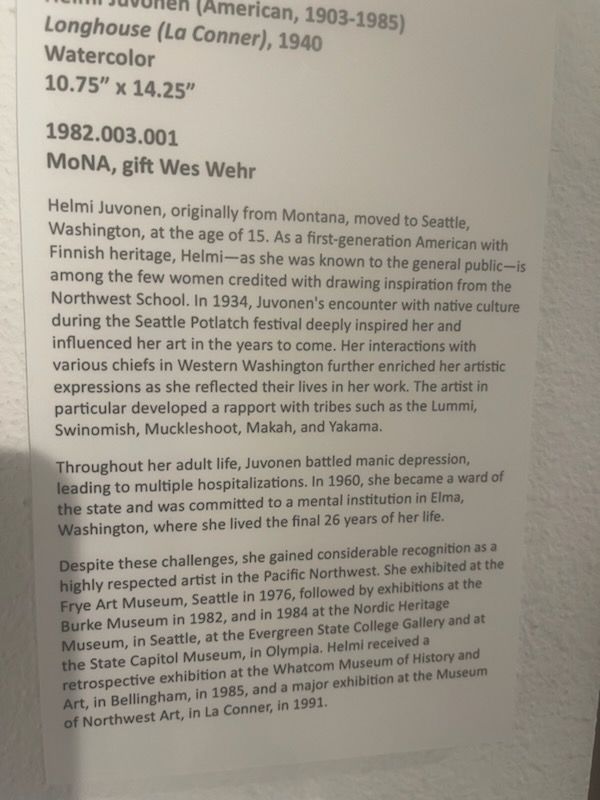
Native American culture cultivated Helmi’s creative spirit and empowered her to transcend the boundaries of ordinary life, poverty, and decades in a mental asylum. Her interest in identifying the origins of human culture, especially as it addressed the dichotomies of good and evil, led her to investigate these themes in diverse spiritual traditions – Judeo-Christian, Tibetan Buddhism, and the Baha’i faith.
And in the painting that captured me so completely, I sensed something beyond the brokenness of the exterior. Combined with my (limited) knowledge of native folklore from the Oregon Coast––gleaned while researching my novel Return To Sender––and reading a bit about the Lummi Nation (Pacific Northwest myths, I wrote the essence of what I felt and saw in this piece of art.
My poem from that day, which is also published on the MoNA website, is titled, Dancing with the Dead. Please visit MoNA’s site and explore all the poems produced that day. I have a 2nd poem on their site titled, Shadow Dance.
Dancing with the Dead
By Mindy Meyers-Halleck


Her house is ill,
they said.
Unhinged shutters,
band aids on the roof,
boards as exposed as skeleton bones,
a crooked door that’s lost its will,
and a roofline of sagging skin.
Her house is ill,
and it allows no one out,
and no one in.

The native peoples
said of their treasured mad woman
with skin white as pearl
that she is
broken in the head.
––but, that sacred wound,
They said,
allows darkness to seep in.
And in those spirit-filled shadows
she dances with the dead.

It took her a lifetime,
to embrace the brokenness in her head––
––her dark shadow sister who never saw the sun––
A sister coiled in nocturnal corners, dreaming of
wolves, trees, and danger
she was never able to outrun.

The trees that surround her house are
not quite alive
not quite dead,
they haunt the yard
––redolent with tears and blood of the fallen
sister who never saw the sun.
She is broken in the head,
they said.

In those mist shrouded trees
she sees
The Keeper of Drowned Souls.
His green long-fingered hand,
spindly as spider legs,
beckons her to follow
deep, deeper into the hollow.

The Keeper of Drowned Souls exists
transitory between the human world and the phantom world
he tells her,
her dark sister who coils like the snake
inside her house,
is condemned to endless hunger, agony, wandering and sin.
Because her house is ill,
it allows no one out,
yet he wants in.

She is broken in the head,
they said.
She observes ethereal phantoms,
and dances with the dead.
Pain Is A Great Teacher
I haven’t blogged in one year. WOW! As a long-time blogger, that’s a huge break.
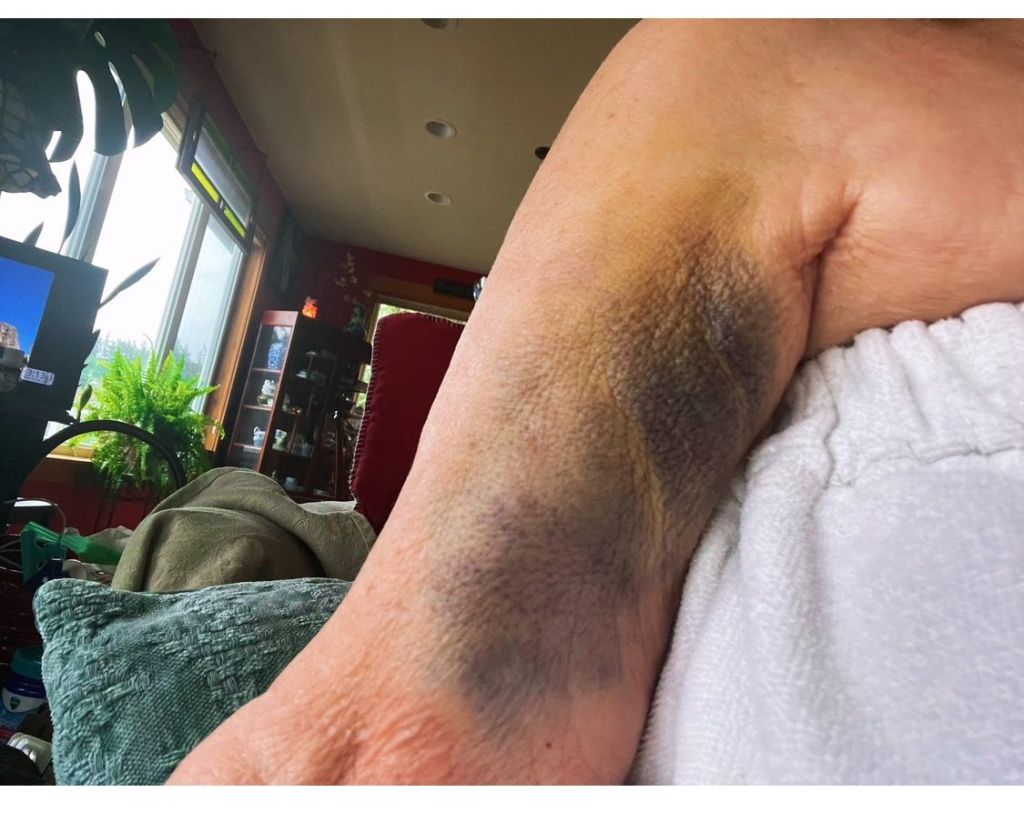
In January I had a devastating fall in my home. I broke my shoulder, damaged the ulnar nerve in my elbow, sustained a concussion, bruises from head to toe, sprained and fractured my wrist, lost all use of my right arm and hand––of course I’m right-handed. Of course! ––and was bedridden for over 3 months. It was a traumatic injury that I am still, and as of writing this on September 1st 2024, going to physical therapy twice a week to regain full use of my hand. It’s painful, but worth it.
During my bedridden days, my husband had to feed me. I HATED being a helpless burden.
Anyways … I couldn’t even hold my phone, imagine that! I was very upset about losing writing time. And though the prospect of working on my full-length novel projects was too overwhelming for my concussed brain, I had to do something. Also, at that point, I could only use my forefinger on my bruised left hand to press a button, or anything else. My right hand was completely useless and in pain. The picture here shows how my arm swelled up and had black bruises from shoulder to fingertips. It looks more like an elephant trunk than a human arm. But human it was, and it was mine.
I was getting a bit depressed (pain meds didn’t help) about not writing, which I also realized was projecting my fear of having just almost died, onto the writing that would never be finished. My fate was linked with my trauma and created a profoundly sad state of mind. And trust me, that’s not a good foundation for healing––but only I could lift my spirits.
Unable to use my right hand––any movement reduced me to agony and tears––I managed to prop my phone on a pillow next to me and turn on my voice technology. I spoke into the phone and texted myself bits and pieces of story ideas and poems, trying to reawaken and spark my groggy brain cells. Though some days I could only work this way for 5-10 minutes without dropping into complete exhaustion, it saved me. I felt a sense of purpose and was able to stay in touch with my writing spirit, which is everything. Feeling a sense of purpose is vital in healing from anything.
During those months I managed to write several poems. I sent them to my e-mail (via text) to edit and format later when I was sure I would be able to type again. Later came five months later in early June. I formatted them and organized a manuscript of poetry, along with professional art, and voila! A small book of poetry was born from my trauma and a desperate desire to heal—heart, body, mind, and soul.
I am now querying that book to publishers. I am pleased to say that one poem has just been published in the Penn Journal of Arts and Sciences Literary journal.
Please give it a read, my poem is titled, Maiden, Mother, Crone https://www.upennjournalarts.org/writing/maiden-mother-crone-c44gn-nwrbj
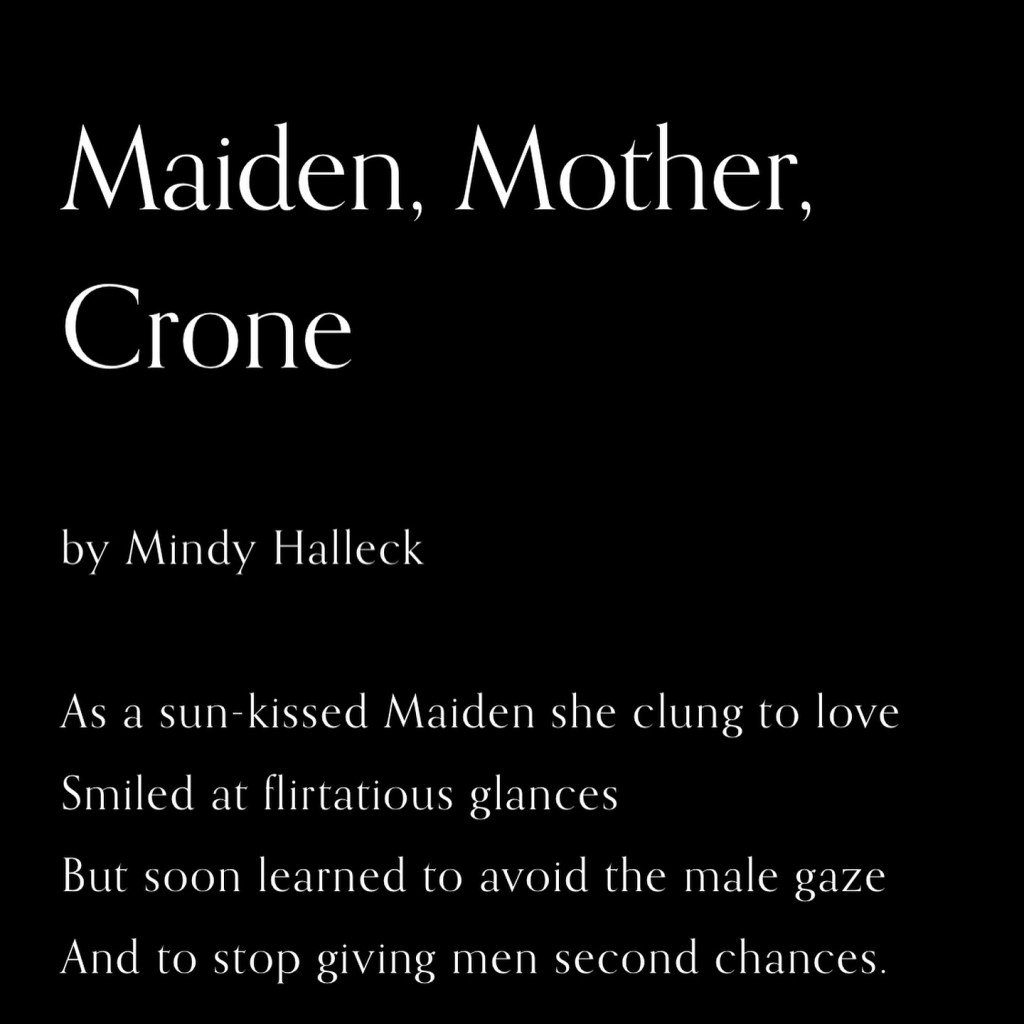
They also did a lovely interview with me, take a look at my featured profile Mindy Halleck — Penn Journal of Arts and Sciences (upennjournalarts.org)
Another poem titled, Unraveling was published in the Edmonds News, Poet’s Corner: Unraveling – My Edmonds News Though that poem was written before my fall.
What has this taught me about life? Well, pain is one of the greatest teachers we have. We learn a lot about ourselves, our resolve, our desire to heal, and mental as well as physical fortitude. I’ve lived through cancer, and had numerous other things happen to me but this injury has been the most traumatic, soul shaking experience. What it did was focus me in a way I had not been focused since my brothers died two years ago. It reminded me that time is of the essence and if I wanted to get anything done before I too, check out, I’d better get busy.

It also made me focus on my intentions, for example, what do I want to say in my work? I am concentrating on writing about the lives of women—ordinary and extraordinary alike—and the choices they make. I desire to delve into stories and poems that are instructional from my Crone-age perspective and encouraging for younger generations, passing on the wisdom of this old female warrior who has gone before. Pain has taught me to embrace my unique voice on these topics. Afterall, no one else has my lived experience or my voice.
I’m back to life now, gardening (short stints), and back to writing and querying. Oh, and smiling, I am definitely back to smiling.
Don’t wait for pain to be your teacher. What are you writing, why are you writing, and how can you tap into your unique voice?


 Mindy Meyers-Halleck
Leave a comment