movies
The Women of BEYOND THIS WICKED REALM
My novel, for which I am seeking representation, is titled BEYOND THIS WICKED REALM.
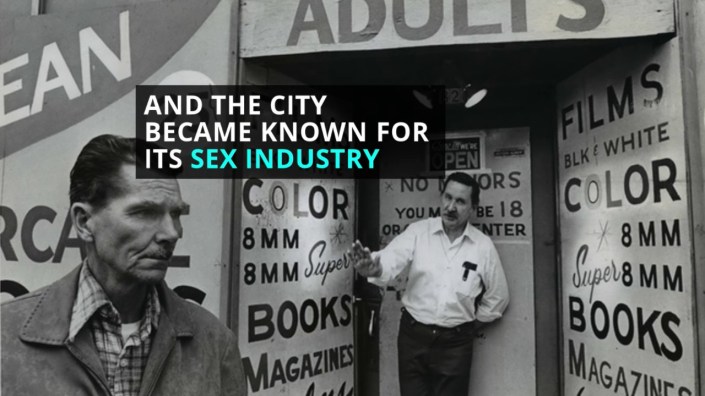
In 1970s, Portland Oregon, when stagflation met disco-mania, Portlanders seeking liberation from urban blight, lights out orders and ambushed pipe dreams turned to sexploitation. Mary’s Club, which features prominently in my newly completed novel, and other strip joints packed in customers. X-rated theaters and bookstores of the ADULT sort exploded around the city. To learn more about the background, please read my previous post titled, Mama Told Me Not To Come.
Below is a brief glimpse into the brave women in the story.
In 1972, Portland Oregon, four women—a Holocaust survivor, a mobster’s daughter, a drug dealer’s abused girlfriend, and a lady-scholar turned drifter—form an unlikely sisterhood in a fight for survival against Portland’s illicit porn and drug trades.
In Portland Oregon, our protagonist, Etta Broussard, has stopped taking her decades-long prescribed Valium drugs. Etta, a forty-five-year-old Holocaust survivor who views the evil in her world through the prism of The Lord of The Rings––suffers greatly from past trauma.
When Etta discovers that her neighbor is a pornographer and an inhuman monster, like Tolkien’s Orcs and Wargs in the concentration camps of her youth, she is dragged back into her nightmares. She vows to stop him from doing what the Nazi’s did to her. Her fervent mission launches the story.
Etta is a devotee of Tolkien’s work, sharing its message like a missionary on fire. She inspires these abused women to discover shieldmaiden-like courage in a battle with the criminal underworld.
When Etta meets fifty-year-old Ireland Ó Luain in a downtown Portland park, they become fast friends and form an unlikely sistership. Ireland becomes a big sister to Etta. Once a professor of women’s studies at Portland State, erudite and wise, Ireland now appears to be living rough on the streets of Portland. She pushes a grocery cart of her belongings around town and dispenses hard-earned wisdom.
Ireland considers herself as Persephone, sent to the underworld–a mental institution–for accusing a powerful man of rape. The commitment of a troublesome woman was acceptable in a city controlled by wealthy men. Cast into darkness, she now seeks to find her way back into the light.
Etta and her husband own a neighborhood bar. Two young friends, Maxie and Neva, are regulars. They offer Etta a bitter-sweet glimpse into the life of a normal twenty-something woman, laughing with friends, beautiful and confident. The life that was taken from her when she was sent to a concentration camp at fourteen. She adores them like daughters she never had.
One of the beautiful young women is Maxwell, ‘Maxie’ McGee, the twenty-three-year-old daughter of Portland’s most notorious gangster. Victim of her father’s increasing alcohol and drug-fueled rage, she longs to escape his wicked world and have a life without goons, corruption and murder. But she is terrified to go against him. She and Etta develop a sacred bond; Etta is the only person Maxie has found who knew her mysteriously disappeared mother. Maxie loves Etta as a symbol of her beloved mother, who she believes was murdered by her father.
One day, while sitting in the park, Etta and Ireland meet young Cleo Dubois. Cleo is a sixteen-year-old unwanted child, and now unwitting girlfriend of a violent drug dealer who works for Maxie’s mobster father. Etta saw darkness like these men in the camps: the SS had those dark souls—the most malevolent Nazgûl. They vow to save Cleo no matter what it takes.
After Etta makes a dreadful sacrifice, Ireland rescues Cleo. She hides Cleo away from her abuser and ushers her into a life Cleo never dared dream: family, friends, and a home of her own. Ireland mentors Cleo about surviving the darkness, then embracing life as it is, and thriving. And that thriving means fighting back, embracing her innermost shieldmaiden as Etta taught them. While mentoring and saving Cleo, Ireland finds redemption.
After Etta’s shocking brave sacrifice, Maxie ruminates on her many illuminating Tolkien-esque conversations with Etta and decides to embrace her inner shieldmaiden. She takes action to end her father’s wicked dominion over the city through drugs, pornography, and more.
****
Next time, I’ll share a brief glimpse at the men in BEYOND THIS WICKED REALM: a mobster and his brutal, devoted lieutenant, a truth-seeking reporter (and love interest), and a mortician with a strong sense of justice.
Thanks for reading. Please LIKE and share.
And if you’re an agent who is interested in BEYOND THIS WICKED REALM, please contact me.
2 responses to “The Women of BEYOND THIS WICKED REALM”


Author, Storyteller, Poet, Instructor
Can Writers Learn Lessons from Bad Storytelling?

“A culture cannot evolve without honest, powerful storytelling. When society repeatedly experiences glossy, hollowed-out, pseudo-stories, it degenerates. We need true satires and tragedies, dramas and comedies that shine a clean light into the dingy corners of the human psyche and society. If not, as Yeats warned, ‘the centre cannot hold.’”
– Robert McKee
Can Writers Learn Lessons from Bad Storytelling?
In Fargo speak, YOU BETCHA!
Twenty years ago a magazine editor told me that she admired my writing style because I ‘creatively broke the rules’. Huh? Thankfully, they bought and published that article in a glossy (old school for you younglings) magazine and I got paid. Thing was, when she said ‘broke the rules’ I hadn’t a clue what she meant. That sent me on a LONG journey of learning the rules so I could break them knowingly and with intentional, instead of accidental style.
“It ain’t whatcha write, it’s the way atcha write it.” —Jack Kerouac
That being said, there are many writing ‘rules’, but there are none that need ALWAYS be obeyed. As a matter of fact, conforming to rules often stifles artistic endeavor and can destroy an otherwise good story. Freedom, however, comes with responsibility. Any writer can break the ‘rules’, as long as it passes the onerous test of an audience. And (to quote Shakespeare) therein lies the rub.
It’s important to remember some rules of good #storytelling. For example, characters are what they do. Goes to follow that if your character doesn’t DO anything, you’ve got a problem. Story events should ALWAYS influence the character’s behavior, conversely the character’s behavior should impact story events. Actions and reactions produce revelation and insight, culminating in a meaningful emotional experience for the audience. And so on…but you know all that, right?
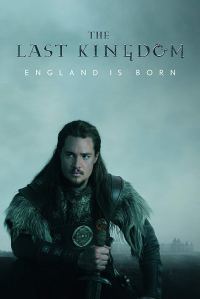 Now, I love a good book and a good tv-binge because I study storytelling in all genres. My most recent tv-binge, after Stranger Things (which delivers on SO many levels) has been The Last Kingdom. In the Last Kingdom they stuck to some solid storytelling principles, and delivered a historically accurate and captivating drama. Oh, did I forget to mention the bevy of handsome hunky actors who actually have acting chops? Then there’s that….But, after season 4 Ended, and while anxiously awaiting season 3 of Stranger Things (July 2019), we needed to find another mutually acceptable (that’s a husband wife thing) tv-binge.
We settled (after much debate – another husband wife tv watching issue) on Frontier, starring the ever resting on his gorgeousness, JASON MOMOA, (AKA Auquaman) with ZOE BOYLE (Downton Abbey) and ALUN ARMSTRONG (KRULL, and too much British Fabulousness to list).
We started watching, hopeful that the perilous era of the 1770s in Canada’s fur trading wars would provide some great entertainment. It had a boundless premise; by the late 1700s, French, Scottish and American immigrants have destabilized the Hudson’s Bay Company’s control in the fur trade. The HB company provokes a bloody battle for control of power and wealth, led by (here’s our bad guy) Lord Benton (Alun Armstrong) and opposed by the savage (good guy) Declan Harp (Jason Momoa) a rogue and fierce former HB employee. Since hubby and I like #historicalfiction drama that explores aspects of a real history, we decided this could be entertaining, and certainly Armstrong has the serious acting chops to tell the story, right?

SO, the first 4 episodes had some problems, there’s a lot going on there, but we thought, okay, we’ll hang in for the actors. One thing that bugged the heck out of me was the incongruous quotes at the beginning of each episode. RED FLAG! They were from people like Alan Greenspan and Ice T, who, though quotable, have NOTHING to do with the period or the Hudson’s Bay Trading Company, or the Indigenous tribes, or ANYTHING at all to do with the subject matter. It was like some teenager said, ‘Hey, this’ll be cool,’ without any regard for the audience. The quotes were SO incompatible they took me out of the story before it even started.
As a writer, that’s a serious golden rule, and the LAST thing you want to do to your readers and or viewers, NEVER take your audience out of the story.
Anyway, we hung in there UNTIL… in the middle of episode five we hit a wall. Despite the good actors, the potential for a fascinating period drama, our collective eye-rolling during episode 5 did us in. The writing, regarding female interaction with males, had to be done by a team of 13 year old sniggering boys. I could just hear them in the corner of their office/playground giggling and saying, ‘boobies’. In the scene where the lovely actress, #BreanneHill who plays barmaid, Mary endeavors to ‘seduce’ an officer, it was clear no female was involved in the writing of those scenes and others involving men and women interacting. It was sophomoric. We stopped watching.
It didn’t even rise to the level of being disgusting or repulsive or anything remotely like that – that would require skill –
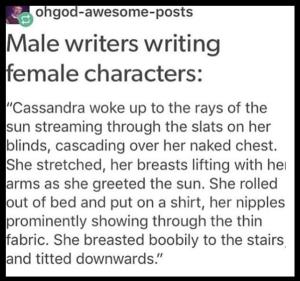
no, it was just stupid, and insulting. And that’s another golden rule you shouldn’t break, NEVER insult the intelligence of your audience.
As Robert McKee says, a writer must have ‘respect, not disdain, for the audience’.
A good #story should make the audience feel emotions in reaction to the story as it unfolds. Every time #Frontier hinted at an emotional connection it then jumped (leaps and bounds) to another #storyline and didn’t return to the one I thought I was going to connect with. For example, the first episode we leave a young Irish girl, Clenna played by Lyla Porter-Follows, stranded by her lover and trapped in an English prison. By the time we return to her in Episode 5, I no longer cared about her or the potential love story. That needed to be set up better to have a pay-off.
Even good #writers can get caught up by a notion or an emotion that disengages them from their audience and results in a story that loses traction or takes an unexpected direction, so it’s vital to stay on alert when writing. The best works connect with the audience and sustain a connection throughout the story.
If a writer falls into the deception that their audience is stupid, incapable of understanding story nuances and that considering them is nothing but an inconvenience, they are as doomed as their story.
Frontier bombs on many fronts, but mostly in its #writing, it fails to do anything truly meaningful, it wants to be a mature gritty, violent #drama, and in some ways it is, but really it’s just a hodgepodge of activity with no heart at its core. A story needs an undeniable truth, and a heart at its center.
Netflix has some GREAT writers and GREAT programming, this just didn’t rise to that level. And though I really want to believe that Jason Mamoa can bring a little more to a story than his powerful presence, he should go get an Indie Film role and prove that he can rise above his screen stealing image and show us if he can ACT. Because when the writing is weak, the actor needs to be that much more skilled.
Anyway, a writer must know the rules to break them successfully. That’s the art, and that art requires skill. In the betrayal of them, an onus of great power is on you as an artist. It’s important to know the rules/guidelines of writing because your audience has expectations and if you let them down, you lose them. If you aren’t familiar with some of the rules out there in the blogosphere, a good place to start is with Stephen King’s top 20 rules of writing.
“Write every day, line by line, page by page, hour by hour. Do this despite fear. For above all else, beyond imagination and skill, what the world asks of you is courage, courage to risk rejection, ridicule and failure. As you follow the quest for stories told with meaning and beauty, study thoughtfully but write boldly. Then, like the hero of the fable, your dance will dazzle the world.”– Robert McKee
THANK YOU for letting me rant about bad writing, and hopefully in this rant you can find a few nuggets. If you liked this, please share on Twitter, Facebook, Instagram or Pinterest or wherever you socially media. Thanks for reading. Cheers, Mindy
Creating Characters Who Dance on Fire
Often when contemplating the creation of fictional characters – what makes them do what they do, or what makes them who they truly are – I’ll watch movies or read books about damaged people, because (as we all (writers) should know) flawless characters are boring and no human makes it very far in life unblemished.
Today I watched the first movie that received high tributes for one of my favorite actors, Tom Hardy who can play 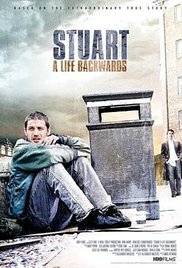 anything because of the depths he is willing to go into the human psyche. Anyway, the movie is Stuart: A Life Backwards. The synopsis: A writer takes a backwards look at the life of his unlikely friend Stuart, a homeless alcoholic who experienced a traumatic event in his childhood.
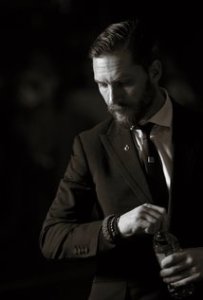
I laughed, I cried and I came out of the movie with even more (if possible) admiration for my favorite actor. This movie was based on a true story. And even though it’s impossible to put mere words to the human experience that rises above verse, we as writers can aspire to hold a mirror up to our characters and reflect what we see in the world – and if we delve into our writerly craft – what they might see in the world. This character Stuart was charismatic and abhorrent at the same time – abhorrent because it can be difficult to look at the things we find disturbing; homelessness, disease, drug addiction, violence and fear. Tom Hardy danced like a skilled ballerina around each of these issues of the human condition. His (character’s) loud abrasive communications with the world were a beautiful soul-sick opera.
My head is spinning with ideas on how to write more compelling characters, characters who can dance on fire and whose hearts sing to the universe for mercy.
Oh, and if you haven’t been watching the new Tom Hardy TV series titled, Taboo (2017) you’re really missing out on some GREAT characters. Well, I’m off to create.
 Mindy Meyers-Halleck
Leave a comment