Fiction Writing, write to heal, survivor
J.K. Rowlings Inspires Writers – 20 Bits of Writerly Advice
“The wonderful thing about writing is that there is always a blank page waiting.
The terrifying thing about writing is that there is always a blank page waiting.” J.K. Rowling
I just returned from a whirlwind trip through Scotland. Our last stay was the Balmoral Hotel, one of Edinburgh’s most luxurious hotels, where J.K. Rowling finished her final book in the Harry Potter series. Devoted, and wealthy fans pay almost £1,000 a night to stay in the room, which contains the marble bust she signed after completing her last HP book.
All the doors on the 5th floor were white, except one. My room was 5 doors down from the now famous ‘purple door’ that is room 552, and has the famous ‘J.K. Rowling Suite’ brass plaque, and where just behind that enchanted door, Harry Potter and the Deathly Hallows was completed. 

One night, while heading downstairs to meet my brother for dinner I heard a group of people chuckling, shivering, and twittering while taking pictures. Though they were all in their 40s, they stood, posed, and giggled as if 12-years old on the precipice of the purple door with the JK Rowling brass plaque. I offered to take a group shot. They posed like they were excited teens on graduation day. Then, over the next few days I noticed groups getting off the elevator in search of the famous door. “Our tour guide told us where to go.” One man said. I pointed the way. He was kind enough to take this kid’s picture by the purple door. :)
Great, I thought, strangers are coming in to take pictures, and I’m just a couple doors down. That didn’t make me feel terrible safe, until I realized all these touristy HP fans were reduced to giggling children in the presence of that door. I smiled every time I saw a group of them exit the elevator, fresh out of the rain, down coats zipped, but cameras ready. What a gift JK Rowling’s novels have given to kids of all ages.
National Novel writing month (NANOWRIMO) is next month, November. Now back in the states, I’m due to give a talk next week in preparation for that upcoming 30-day writing challenge. I’ll talk about creating the habit of writing, possibly plugging into the NANOWRIMO community and how to overcome obstacles on the path to completing their writing projects. JK ROWLING is a great, if not the golden example of a person, a writer, who can make it through anything – single motherhood, depression, financial difficulties and rejection upon rejection from the publishing world – who persevered and went on to publish one of the most popular series of all time.
We all want to write a bestseller (right?), so – being fresh off a 10-hour flight home from Scotland – it seems an opportune time to review a bit of J.K. Rowling’s quotes and sage advice to writers.
- J.K. Rowling said: “What you write becomes who you are… So make sure you love what you write!” One of the reasons the Harry Potter books are so infectious is because the reader absorbs and is transported by her sheer delight and love of the world she created – and all the characters in them. If you’re passionate about how and what you write, you’ll entice readers into your fantasy world. So write your passion. Readers will follow.
- “Be ruthless about protecting writing days. Do not cave in to endless requests to have “essential” and “long overdue” meetings on those days. The funny thing is that, although writing has been my actual job for several years now, I still seem to have to fight for time in which to do it. Some people do not seem to grasp that I still have to sit down in peace and write the books, apparently believing that they pop up like mushrooms without my connivance. I must therefore guard the time allotted to writing as a Hungarian Horntail guards its firstborn egg.”
- “You’ve got to work. It’s about structure. It’s about discipline. It’s all these deadly things that your school teacher told you you needed… You need it.”
- “I stopped pretending to myself that I was anything other than what I was, and began to direct all my energy into finishing the only work that mattered to me.”
- “Write what you know: your own interests, feelings, beliefs, friends, family and even pets will be your raw materials when you start writing. Develop a fondness for solitude if you can, because writing is one of the loneliest professions in the world!”
- “Write something that a publisher would want to publish (it only takes one, but it might take a while to find them. If you are turned down by every single publisher in existence, you will have to consider the possibility that what you have written is not publishable). Next, you need to approach the publisher, either directly, or (which is advisable if you can manage it) by securing an agent who will act on your behalf. The best way to find agents’ and publishers’ addresses is to consult ‘The Writer’s and Artist’s Yearbook’, which is updated every year (Double-check that you are writing to the right person/people; don’t, for example, send science fiction to a publisher of medical textbooks). Wait. Pray. This is the way Harry Potter got published.”
- “Sometimes you have to get your writing done in spare moments here and there.”
- “I always advise children who ask me for tips on being a writer to read as much as they possibly can. Jane Austen gave a young friend the same advice, so I’m in good company there.”
- “Perseverance is absolutely essential, not just to produce all those words, but to survive rejection and criticism.”
- “What you write becomes who you are… So make sure you love what you write!”
- “All a writer needs is talent & ink.”
- “Failure is inevitable — make it a strength.”
- “You have to resign yourself to the fact that you waste a lot of trees before you write anything you really like, and that’s just the way it is. It’s like learning an instrument, you’ve got to be prepared for hitting wrong notes occasionally, or quite a lot, cause I wrote an awful lot before I wrote anything I was really happy with.”
- “I just write what I wanted to write. I write what amuses me. It’s totally for myself.”
- “Moments of pure inspiration are glorious, but most of a writer’s life is, to adapt the old cliché, about perspiration rather than inspiration. Sometimes you have to write even when the muse isn’t cooperating.”
- From JK Rowling’s twitter; “I plan a lot. This particular novel’s plan comprises a vast, complicated, colour-coded table showing all the suspects, with blue ink for clues and red ink for red herrings.” After J.K. Rowling finished the first book in the Harry Potter series, she realised she’d given away the whole plot of the series. So she had to rewrite it, and hold back a number of integral plot points.
Planning and plotting are essential. It took five years for her to create and develop every last detail of the Harry Potter world. Every part of Rowling’s books was planned, right down to how the Wizards and Muggles interacted, what the education was like, how magic helped in life and how the wizarding world was governed. She also plotted out all the events of the seven books before she wrote the first.
- Rewriting is equally essential. She rewrote the opening chapter of her first book a total of fifteen times.
- “Fear of failure is the saddest reason on earth not to do what you were meant to do. I finally found the courage to start submitting my first book to agents and publishers at a time when I felt a conspicuous failure. Only then did I decide that I was going to try this one thing that I always suspected I could do, and, if it didn’t work out, well, I’d faced worse and survived.
Ultimately, wouldn’t you rather be the person who actually finished the project you’re dreaming about, rather than the one who talks about ‘always having wanted to’?” J.K. Rowling’s website.
- “Resisting the pressure to think you have to follow all the Top Ten Tips religiously, which these days take the form not just of online lists, but of entire books promising to tell you how to write a bestseller/what you MUST do to be published/how to make a million dollars from writing.
I often recommend a website called Writer Beware (https://accrispin.blogspot.com) to new and aspiring writers. It’s a fantastic resource for anyone who’s trying to decide what might be useful, what’s worth paying for and what should be avoided at all costs. Unfortunately, there are all kinds of scams out there that didn’t exist when I started out, especially online.” J.K. Rowling’s website.
- And finally, from J.K. Rowling’s website; “Ultimately, in writing as in life, your job is to do the best you can, improving your own inherent limitations where possible, learning as much as you can and accepting that perfect works of art are only slightly less rare than perfect human beings. I’ve often taken comfort from Robert Benchley’s words: ‘It took me fifteen years to discover I had no talent for writing, but I couldn’t give it up, because by that time I was too famous.’”
Keep writing, aim high no matter the odds, and if you need a nudge check out the NANOWRIMO community. Cheers, Mindy
If you liked this, please share on your social media, like Twitter or Facebook


This is What a Memoir Should Be
 Gray is the New Black, by Dorothy Rice is what a memoir should be. Despite it’s lack-luster cover, the book is a testament to the universal truths of womanhood.
When the tick-tock of time thwacks its boney knuckles on Dorothy’s door, via a beloved, but dying pet, empty-nester syndrome, and a mother with Alzheimers who often wonders who Dorothy is, she is left to ponder that same question; who is Dorothy Rice?
Now in her sixties, Dorothy examines what came before and ponders acceptance for what’s left of her life.
During a demoralizing dinner with her fit and thin sisters whom she habitually compares herself to, a radical gauntlet is laid down;
‘I was forty-pounds overweight and not in the mood for self-reflection’….’I had no right to resent her – she eats like an anorexic bird and works out like an Olympian’… the conversation turns from working out and eating like a bird, two things Dorothy has not mastered, to hair; she may struggle with weight, but she has GREAT hair. Dorothy is grateful for the change in tête-à-tête. ‘Why is it that men become more distinguished with age, while for women, going gray isn’t a natural consequence, but rather a political statement, or an admission that they’ve given up on their appearance?’
At that dinner table where her sisters perfect the ‘art of fake eating’ and Dorothy sits hungry and eyeing the dessert case, an agreement is met; they will go gray together. In a youth obsessed world, this is radical.
Gray is the New Black is also a sister’s story. A wife’s story. A daughter’s story. A mother’s story. This is every woman’s story. I laughed, cried, related, and often cringed at the rawness of her revelations and how brave she was in her profoundly personal reveals. But mostly, I felt I wasn’t alone in my experiences, my feelings. I felt connected to my journey, not alone on the long road from girlhood to womanhood. That’s what a good memoir should do, connect us in our universal experiences.
Most women, myself included, will relate to the deeply personal exploration into sugar addiction, ups and downs of weight and the consistent fat-shaming of ourselves. Rice explores loss and shame, and the illusory expectations of a Prince Charming who shows up not in shiny armor, but threadbare and incapable of espousing the great love of myth and lore that we all grew up expecting.
This book resonated with me for many reasons. Dorothy grows to accept and truly appreciate her precious relationship with her sisters, writing, ‘The three of us will live together on a family compound, perhaps in three adjacent tiny homes…’ she writes on about what life in their sisterly dotage will be.
That is so like what my sister and I had planned.
When my sister died, with her went our ‘old age’ plan of walking on the beach – divorced and left to ourselves – wearing purple hats, bickering at one another as we did, and laughing till we peed. The loss of that old age insurance plan, that image, shook me to my core, left me seated on the edge of mortality, alone. Dorothy’s sisterly old-age-strategy resonated, and made me smile.
And now with my mom experiencing dementia, possibly Alzheimers, the stories in Dorothy’s book about her mom brought tears. Especially one scene when she’s visiting her mom in her Alzheimers home.
***
She rummages in her handbag and pulls out a ratty Kleenex, “One day,” Mom says, “when I have lots of money, I’m going to buy a whole pile of these little sheets of paper for blowing your nose.” She wipes her nose, refolds the soiled tissue, and stuffs it back into the stained handbag that never leaves her sight.
“I could fill your Christmas stocking with them.” I say.
“Really.” Mom says. “I had no idea you could do that.”
***
That sweet exchange reminds me of the hundred or so just like that, that I’ve had with my mom the last two years.
Dorothy journeys from self-loathing and self-sabotage to self-acceptance. In that self-acceptance she also recognizes that though her husband is not the Prince Charming of fable, he’s her prince, warts and all. Though she does not permanently lose the weight, she so struggles with, she does come to terms with her inner voice. That voice like a paranoid purveyor of chaos always told her to read between the lines, assume that every side-glance or whatever someone said, was a jab at her weight, or how much she was eating, or how she looked in that dress, or, or, or….always negative self-talk. She gets a peaceful handle on that toxic inner life-coach and begins to relax, accept herself, weight and all. As her hair grows in strength, length and the beautiful rich grayness of womanhood, it becomes metaphor for Dorothy.
She recognizes her own personal power is one of choice – how she chooses to perceive the world – and in that, she finds peace.
Ultimately, that’s really all the power we have isn’t it; our choice in how we see the world colors every experience. Once we get that right everything else begins to fall into place.
I HIGHLY recommend this book.
Ultimately, Gray is the New Black is a story of transformation.
Let Me Tell You a Story…
Writing a Memoir? Apply the essentials of fiction-writing to bring your story to life.
If you’re writing a memoir, make sure your story takes readers on a journey they won’t forget. Remember, to your readers your memoir is just a story, and YOU are just a character. A great memoir invites a reader into its story world just like fiction does. Readers will (or not) emotionally engage with the unique quest, struggle, ups and downs, and the wonderment of it all. Don’t embellish, don’t lie or mess with the facts, just tell your story honestly and in a way that only you can. Remember, the facts in the story are as you remember them, they may not, and usually don’t, encompass the entire truth, just your truth, and that’s what you’re writing.
One way to create your unique story world perspective is to introduce captivating setting details and develop an intriguing plot for your memoir. In the details is where even the most mundane can come to life. Remember, ‘show don’t tell’ your readers the places you describe and arouse emotions within them. They need to experience your story, almost as if it was their own. Pretend you are sitting at your kitchen table and you say to your readers, let me tell you a story…
For example, I’m working on a memory of mine;
When I was seventeen, my dad took me to a dirt-floored nightclub in a barn on Division Street in Portland Oregon. It was called the ‘D Street Corral’. I remember staring at the entrance, an actual barn with barn-red doors and stacks of hay outside where people stood in line to get in. “Are we goin’ to a rodeo?” I asked. “Cause I don’t like rodeos.”
“You’ll like this one.” Dad said. He lit a filter-less Camel cigarette and we got out of the
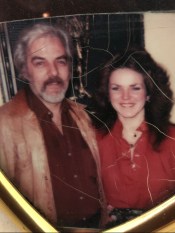
car.
Inside it was dark, it looked like a rodeo place with all the stuffed deer, and huge bull horns hanging over the stage.
Hundreds of people gathered at the long bar, small round tables clustered near the stage where a man, a large black man was tuning his guitar, unmindful of the congregating crowd. Dad stepped over to the busy bar and got two bottles of Coke, because they didn’t’ sell alcohol. I remember the waitress, a pretty black-haired girl no more than twenty-three or four, flirting with him. He winked and returned to where I stood. Women and girls, flirted with dad all the time. It rolled off him like water. He’d give that wink, they’d smile, and in that innocent exchange both parties got what they desired, a blameless flirtation. I knew it then, I know it now, though my green-eyed mother never understood that he didn’t invite these flirtations: he was as oblivious to them as that man on stage tuning his guitar.
I wore my jeans, strappy platform shoes, my fringy-suede vest, and a flower-power blouse like I’d seen Julie (Peggy Lipton) on Mod Squad wearing – at seventeen, she was my fashion idol. And of course, my sunglasses stayed on top my head, holding my long hair back, just like Julie’s. On Fridays, I worked for Dad at our downtown Portland shoe shop. Sometimes after work, we stopped somewhere so he could have a quiet drink, me a coke, and maybe have something to eat before going home to a bucket of Kentucky fried chicken, my rambunctious three younger brothers and my mother’s impossible to anticipate, shifting, diet-pill induced moods.
Dad went up to a table right next to the stage where two guys were seated, he leaned down and said something to them, then took out his money clip and handed them a crisp ten-dollar-bill. They stood. At first, I thought they looked angry and that maybe dad was gonna get into a fight.
But then one said, “Your daughter, well…” they looked at me and smiled, “Happy twenty-first birthday.” And they left. We sat at the table right at the edge of the stage. Those peanut shells on the floor kept getting into my cool platform shoes and cutting at my feet. It hurt. I thought, what would Julie do? Yes, I was that corny and tragically trying to be cool at seventeen. Well, Julie would act like nothing was wrong, even if her foot was bleeding. So, I kicked off my shoes and propped my feet on the chair next to me. Dad smiled, we toasted, clinking our bottles together as the lights went down. The crowd hushed, and that large man on stage stepped up to the microphone and didn’t say a word, but the next few seconds I quickly recognized the beginning guitar notes of ‘The Thrill is Gone’. I leaned across the table to my dad who was nodding his head and had a smile on his face like I’d never seen on him before. I almost didn’t’ want to intrude, but then said, “Is that…?”
“Yep.” He said, still nodding, still smiling. “BB King.”
That was the night, the place, the song and the surprising blues-loving man I was with, when I was introduced to the blues.
Later, in my twenties I returned to ‘D Street’ on many Saturday nights to hear bands like Vegas and Paul Revere and the Raiders, because no matter how ‘Julie’ cool I tried to be, my favorites songs were ‘Kicks’ and ‘Indian Reservation.’ We danced our butts off. But there was never a night there more special than the one I spent with dad, sipping a beer and listening to BB King.
TELL your readers a story, don’t leave out the details like rocks in your shoes, smells, sights, sounds and sacred memories.
If you liked this post, please FOLLOW my blog (see sign up at the right) and please share on social media. Thanks, Mindy
Good Critiques Are Essential
Good critique – the opinion of readers and other writers whom you trust – is vital to writers who want to improve their craft. Critique helps a writer make that piece of writing they just birthed, even better, and therefore increasing the odds of publication.
However, critiquing another writer’s work is a delicate, potentially hazardous proposition (to friendships and or family relationships) if you forget a few golden rules. I’ve seen writers receiving critique, drop into despair, eyes water, some even storm out of critique groups and never come back. That serves no one. Keep in mind that often writers tie their entire sense of self worth to their writing. A critique can seem like criticism if not handled carefully. In my beginning years critiques were hard for my thin skin to take. These days a critique is just part of the work, a necessary part, and I’m happy to edit, cut and rewrite to make my work what I want it to be. In other words, I now have thick scaly alligator skin.
Conversely, I’ve seen writers who want ONLY praise, who will not and do not read the craft books, understand the art of writing, and have no intention of doing so. To protect yourself, your time and energy keep this golden rule; DO NOT WASTE YOUR TIME AND ENERGY on any writer who is not working on their writing as hard as you do, or more so.
Writer’s Digest even has a Critique Group survival guide you can check it out here. Additional Golden Rules; Be kind. Be brave. Be thoughtful in your feedback.
No one learns anything if you are too kind, not brave enough, and your feedback is done hastily and is not helpful.
In critiquing, remember these golden rules;
- Critique the writing, not the writer.
- ONLY work with writers who want honest feedback that will genuinely help them improve their work.
- Take time and make an effort so you can offer a critique that is thoughtful and helpful; otherwise, just respectfully decline to do a critique for them.
- Put yourself in the critique receiver’s shoes. EMPATHY is key here.
- Always be brave enough to tell them the truth, in the kindest way possible.
- Take time to consider your feedback and how it may be received, then hopefully both parties come out unscathed, wiser and with mutual respect.
And for those receiving critique;
Not letting writing critiques wound you is easy to say. It necessitates a change of perception and a ton of practice to earn my kind of alligator skin. Constantly remember; your writing is not a reflection of your value as a human being. Keep reminding yourself that a critique is an opportunity for evolution. Keep reiterating to yourself; to become a better, stronger writer will take growing pains, as does all transformation. I remind myself of what Hemingway said, “It’s none of their business that you have to learn how to write. Let them think you were born that way.” Then I take every opportunity, including receiving critiques, to become better at my craft.
Bottom line, it’s your work, your words, your story. Don’t let anyone take that away from you.
Honor Your Writing Time
This morning I responded to a woman who is in a writer’s group that I mentor, about establishing and then protecting her writing time. She wrote to let me know she picked up the book, The Artist Way, that I recommended. I thought I’d share my response since it’s important for us all;
One of the hardest things I had to do (some years back) was transition from being a bread-winner-single-mom career woman, into being a writer, whether paid or not – mostly not. Learning to  honor my writer’s spirit was tough life work. It took me a decade of feeling guilty if I was not making money, or dealing with everyone else’s problems – always putting my writing last. Not that I still don’t have these issues, but what’s different these days is that my writing comes first. My family knows this now. Well, the family that I am close to. Many of them, like the ‘toxic playmates’ in Julia Cameron’s, The Artist Way, are no longer part of my inner circle. My inner circle shrunk at first – illuminating the shallow-thinking-feeling bankers, mortgage experts, finance guru’s and realtors that had populated my soul-sucking career world. But then, as time went on and I changed, embracing my artist self, my inner circle expanded in ways I had never imagined – artist, writers, playwrights, screenwriters, and so on. That was a vital part of honoring myself, of embracing my dreams and transitioning to the other side, to a life I had only ever fantasized about.
Establishing writing time was also a huge part of that. NOW I feel guilty if I don’t write. That’s a complete change.
Remember, as Julia Cameron wrote;
‘Our creative dreams and yearnings come from a divine source. As we move toward our dreams, we move toward our divinity.’
I have lived (and still am living) this journey and am now closer to the other side, the side I NEVER thought I’d transition to. It’s been hard work, but SO worth the journey. I wish you confidence and a spark of divine spirit as you embark on this journey. It’s your life work now, you’ve chosen it, it has chosen you…you can’t not go down this road, because if you do, that’s the path to regret – nobody wants that.
Set a time each day, as we discussed. Stick to it, even if it’s 20 minutes. That 20 minutes is a seed that will grow. Surround yourself with people who believe in and honor your dreams. No One else is allowed in right now, not till your stronger, with feet firmly planted in making your dream come true. Then, like a good meditation session, outside noise can’t penetrate your dream world.
All my best. Mindy
A BIG THANK YOU to Lydia for reminding me how far I’ve come on this path.
Keep writing you all, even if it’s 20 minutes a day. Write on. Cheers, Mindy
 Mindy Meyers-Halleck