Fiction Writing, write to heal, survivor
What Are Your Corona Virus Author Activities?
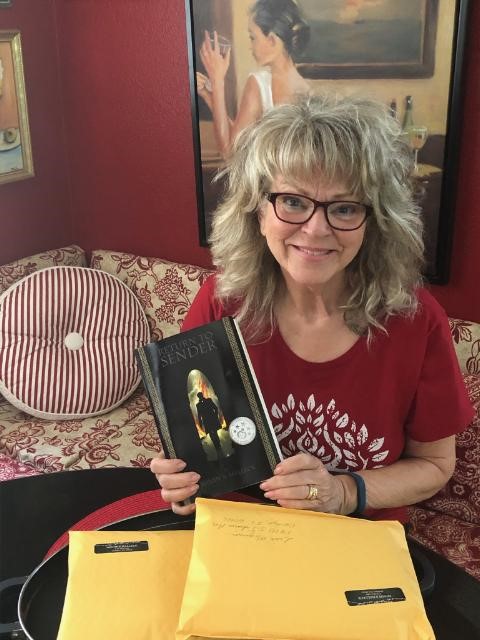 This week, what I have termed my Corona Virus Author Activities included autographing a few of my novels and mailing them to front line workers, nurses and doctors in Chicago and Philadelphia who do a lot of reading on their breaks, if they get breaks. I am so grateful to medical staff who have saved my life numerous times during my cancer journey, and to the ones watching over my mother, now suffering the end stage of Dementia’s long goodbye, that I had to do this when I was asked. It’s such a small thing. This was part of the #AuthorAdopt program (no longer accepting authors).
I hope the nurses know how much we all appreciate their risk and their great work. #Nurses are angels. If there’s anything you can do to lighten their load, do it.
Also, as part of my corona virus author activities, I have been searching for an agent for my now finished novel. Fingers crossed.
In addition, I’ve been facilitating a critique group on ZOOM, the new cool place to be, for novel writers. What a great source of inspiration that group is for me. When a teacher no longer learns from her students then her days as a teacher are done. Looks like I’ll be around for a LONG time. I learn from them every day. During this shut down, quarantine, socially distanced mask wearing (’cause I’m not a #maskhole) time, it’s important to keep your feet to that writerly fire, stay motivated, keep in touch with other #writers and keep writing, keep submitting, keep creating.
What Corona Virus Author Activities have been keeping you sane in this befuddled (such a great word) time?
Oh, and watching Netflix or any other streaming channels only counts if you’re taking notes, which I do. If OZARKS was a novel, that tension and conflict would be a page turner.
Tweet me @MindyHalleck


Why Did Shakespeare Make Me Cry?
In storytelling, the term, universal truth can often stop a writer in their tracks. Simply put, that truth creates a common frame of reference for the story. Like classic myths, this “truth” also rises above culture and language. We recognize it instantly—it resonates deeply.
Shakespeare was a master at theme and universal truth. And he’s the best example of a writer who mastered those aspects of the writing craft and remains relevant to this day. Among his MANY stories, Romeo and Juliet is still popular because of its universal and relatable themes. I remember balling my eyes out in the 7th grade when my sister and I went to the Rose Theater 4 weekends  in a row to watch Romeo and Juliet.
Tattooed on my sappy teen-age soul is the last scene; both Romeo and Juliet die because they both believe the other is dead. SOB, SOB, SOB, went the pre-teen girls. They died for love, unable to bear living in a world without each other. We cried through our popcorn, we cried through our Dilly Bars, and we cried so loud that on weekend 5, the theater owner finally tossed us to the curb. Then in the 1980s when we had VCRs, (link added in case you’re too young to know what that is.) Anyway, we got the video. Then we locked everyone out of the house, curled up with popcorn on the couch on a Saturday morning and again, we cried.
WHY does a story capture our hearts in such a way? Generally, it’s the universal theme and truth; love, longing, desire, loss….
The Universal Truth can be anything that grounds the story along familiar lines; lost love, a dying parent, a betraying spouse, man’s (or woman’s) best friend (Dogs), a funeral, a wedding, or a family holiday dinner, to name just a few.
In literary writing a universal truth is an emotion or experience that the reader can relate to, no matter their language, upbringing, race, or life experiences. For example, when Tolstoy wrote, ‘All happy families are alike; each unhappy family is unhappy in its own way.’ Most readers with a family immediately understood and agreed, making it a universal truth that transcends culture, privilege, time and space.
Additionally, a key component of a powerful personal narrative (essay) is a “universal truth,” also called “a life lesson.”
Life Lesson Examples:
Love hurts.
Be true to yourself.
What goes around comes around.
You can’t always get what you want. (but you might get what you need)
Face your fears. (overcoming)
What goes around comes around (Karma).
 You reap what you sow (you get out of life what you put into it). To survive is to live
A universal message is a message that resounds beyond the story—a message that has meaning even when you strip away the book’s details.
For example, the main theme in Gone with the Wind is survival during a time when traditions, ways of life and thinking, love and understanding are gone with the wind, like in the South during the Civil War, or any story during or post war. To submit that tradition, way of life, love and understanding can all be GONE WITH THE WIND, is a universal statement that was based on, or an extension of the universal theme of survival.
Why has Gone with the Wind been popular for so long? There are a lot of reasons (good and bad), but the strongest of which is the universal themes of the story. Survival and courage in a time of crisis, never giving up in the face of impossible odds, and of course the refrain “Tomorrow is another day” make the story timeless. Anyone, regardless of age, gender, orientation, religion, time or space, can hang on to. Readers and movie goers relate to the characters on some level or another. Because of this, it’s tough to pigeonhole Gone with the Wind as era-specific; it could be any era, any place, any time. Having said that, it certainly is a creation of its time, but the larger more universal themes and truths make it a timeless story.
Right now, sitting here at my computer, everyone under quarantine, my dog is bored, my husband is watching the tv on LOUD, and I’ve gained four pounds that I will call the quarantine four (like the college fifteen) anyway, I’m kinda liking that mantra, Tomorrow is another day.
 If you liked this, please tweet it out TWITTER
Dedicated to My Writers Group
Did you know the first writer’s group was started in 400 BC. Yeppers, The Socrates School was a group of thinkers; Socrates and his students who pondered the weighty questions of life and  contributed vastly to Western philosophy and ethics through their writings. It’s nice to know we writer’s groups have such deep, inspirational roots.
However, today’s writing groups need to rethink and reimagine how to function in the face of the CoronaVirus2020 outbreak. I‘ve had to re-examine why, and IF I want to continue to facilitate a writer’s group in a new format, online. I’ve never been a fan of online classes and workshops for myself, but necessity requires change; must move with the times, and all that.
Initially, I felt a loss for the social interaction of my weekly meeting. As I’m sure many do. I enjoyed seeing my group (20 plus writers) as they entered the classroom, talking about their projects, their personal journeys and just chatting with like minded creatives. I loved the energy in the room. I also observed on their faces that often, those two hours on Thursdays were a reprieve from everyday life. There is great power in being part of a group, finding your tribe so to speak, and I miss that. It’s hard to grasp that our safe place is now a potentially dangerous one, but it is what it is. Grandma always said, “This too shall pass” and it’s true. At some point we’ll meet in groups again. For now, and the next 60-90 days, we need to return to why we sought and or belong to a writing group in the first place.
Afterall, what is a writing group? A writing group is a tribe of like-minded people who come together in pursuit of the art or craft of writing. Or, in Socrates case, to provide the foundation of Western civilization.
In moving our group online (as I’m certain Socrates would have done) I’ve reexamined what I can provide, or not, in that new setting. For me, what I can bring to the table (or the microphone) is craft and critique. Those are my focuses, because these two subjects/practices have always improved my own writing. So, on with it then.
The first rule of a writer’s group is like that famous line author, Chuck Palahniuk introduced in his novel Fight Club, “The first rule of Fight Club is you do not talk about Fight Club.” That line is a wonderful chorus throughout the book, as well as a plot/structural device for the story. But no words in recent history have been parroted more often. That refrain was so powerful and ultimately popular that it’s now considered cliché. But clichés get a bad rap. Despite the golden rule in writing, of avoiding clichés (like the plague, HA!), it’s important to remember that popular phrases become cliché because they work. They are powerful, become popular, and are oft repeated. So, the challenge to writers is to create our own compelling phrases so we too, can write what ultimately becomes a cliché.
I know, I know, that was a writing lesson buried in a seemingly unrelated article. But hey, it’s all relative. Back to writing groups: EVERYTHING that is read, said, or critiqued in writing group, stays in writing group. TRUST is the first pillar of any successful joint endeavor.
Additionally a successful group starts with a shared vision. For example;
- To focus on the craft of writing, irrespective of genre.
- To offer one another thoughtful critiques and support.
- To encourage each other to share stories.
- To provide a weekly deadline so members will be inspired to put pen to paper (or fingers to pad) and write
- To become stronger writers through becoming better editors.
- To give feedback as we work on rough drafts of our memoirs, short stories, and novels.
While awaiting our live regrouping, we can do all these things online. And maybe right now, with all the stress we’re facing we can again provide a reprieve from everyday life.
However, if your reasons for being in a writing group are more social than educational–which is totally fine–online may not be satisfying for you as it is near impossible to have much socializing going on while reviewing work. So, in addition to what can be addressed in a writers’ group, it’s important to look at your reasons/goals for being there.
What are your writing goals? What do you hope to achieve? Given your objectives, reflect on why you want to participate in a writing group. Most people have several reasons for seeking a group. Here are some examples:
- Learn writing tips and enhance craft skills
- Get more feedback on work
- Desire for deadlines (forces them to write)
- Become a better writer/editor
- Belong to a group of writing contemporaries
- Share support, motivation, and encouragement to share stories
- Share a passion for writing
- And so on . . . .
If the online group you are considering has goals that are in alignment with yours, then go for it. If they do not, then take the next couple months to write. Who knows, you may birth a manuscript if you embrace this as a time of seclusion and self-reflection. What’s most important is that you keep your writing life alive during this challenging time and that you do that in whatever way suits you best. Just keep writing and look forward to the sunny days when we can get together in person and talk about writing and the writer’s life.
The New Normal—-UGH! Social Distancing
I made my husband strip down on the back porch. That’s right, I greeted him after a grocery store run and made him change clothes right there in the carport. While he did that, I disinfected the groceries on the back porch (in rubber gloves, of course). . . As a person with a challenged immune system, I am as stressed out (angry, frustrated, scared)  as the next person about this coronavirus situation. I’m doing EVERYTHING possible to socially distance myself to the point of self quarantining since it all started and
  denying my poor puppy her fun days at her camp—she’s SO bored.
I haven’t left my house in since last Monday. And I sterilize, wash my hands until my skin is raw, and sneeze into my elbow. The last 2 weeks I have had a cold and probably a sinus infection, which is not uncommon for me, but it’s been scary. With every sneeze, ache, or pain I’ve wondered, is it the coronavirus?
As a writer, I don’t respond well to stress; I shut down. I can’t create when stressed, and I tend to not want to write about what’s stressing me out, so instead I binge. Not just on potato chips, but also on tv series; this week it’s The Indian Doctor and The Witcher (for the 2nd time). I take notes on stories or characters to be used later when I do feel like writing. I watch with a tablet and a pen, and frequently pause the program so I can make notes. That’s as good as it gets when I’m stressed. Otherwise, I’m looking forward to feeling good enough to go walk my dog, do some yoga, start destressing and figuring out what the new normal is going to be. I can’t imagine what the retirement account I worked, saved and invested in all my life, looks like right now. But, I can’t do anything about that right now; it is what it is.
Folks, we’re in this coronavirus chaos for a long time. The new normal will be very different from what normal was 10 days ago and everyone needs to grasp that FACT.
I liken it to the first time I was diagnosed with cancer; everything that came after a short 15 minutes in my doctor’s office, looked, felt, and would always be different, because I was different. I was awakened and transformed. Awakened to the possibilities of the life I still had, and whatever time was left, and transformed in the way one is when they’ve seen something they can’t unsee, or experienced something—a death, a broken heart, a tragic car accident, an illness—and now at the edge of that knowledge, they are a different person, awakened and transformed–there’s no going back.
Therefore, as a country, it’s time for the US (and the global community) to wake up, take care of one another, and be prepared for next time; be smarter, awakened to the possibility of new viruses, the need for supplies, cooperation, and humanity.
WE WILL BE DIFFERENT NOW. Nothing will go back to normal. For those of you who are saying things like, “it’s not my problem,” or “it’s not fair” or “it doesn’t affect me”, it’s time for you to grow up. YOU and everything you know is already changed; the only real question is, who will you be in the face of this transformation; your worst, or your best self? Let’s hope for the latter.
If you are a writer you can choose to use your voice to spread the word that this is real, this is DANGEROUS and we are all in it together. If you can, help the elderly get the supplies they need, if you have a sewing machine then make hospital masks, if you can give blood give blood. If you have a platform on twitter, Instagram and Facebook then encourage social distancing.
Lastly, vote for politicians who have the ability and can and will take care of us. And either demand resignation or vote OUT the morally bankrupt senators profiting from the coronavirus.
Otherwise, STAY HOME, STAY HOME STAY HOME, STAY HOME STAY HOME, STAY HOME STAY HOME, STAY HOME STAY HOME, STAY HOME STAY HOME, STAY HOME STAY HOME, STAY HOME STAY HOME, STAY HOME
What Is a Call to Adventure/Action?
A hero (protagonist) is presented with a problem, challenge, or adventure to undertake. Once this happens, there’s no returning to normal, no lounging in her ordinary world, because the CTA (call to adventure/action) has upset that applecart…she must act. Remember, a story is about a character doing something.
A CTA can be as subtle as a letter arriving, or the death or illness of a family member that forces the protag to return home. How many stories have we read/seen about a reluctant protag turning home? Why, because they tap into universal themes that resonate with audiences of all genres and all demographics.
Examples of over the top, life altering death defying CTA’s are;

In the Hunger Games when Katniss Everdeen volunteers for the 74th Hunger Games in place of her 12-year-old sister. It’s the call to action that sets the story in motion. Primary Theme; Survival.
In Breaking Bad it’s when Walter White gets the news that he’s dying. He doesn’t tell his family, but instead goes on a unique journey to ensure his family’s financial security. Themes; Begins on Survival, and the importance of family themes, then graduates to sin, regret and envy, and the corrupting influence of greed and power.
Count of Monte Cristo, when Edmond Dante is unjustly imprisoned and his desire for revenge drives him to escape and retaliate. Themes are a delicate balance between, vengeance and forgiveness, power and powerlessness. These universal themes are why that story has been told and retold since Alexandre Dumas wrote it in 1844.
So, in your story, can you identify your call to action? Does a letter arrive? Does your protagonist have to return home? Does your protagonist have to volunteer for something in order to save someone else? Was your protagonist just given a death sentence? How can you use that CTA to develop character and set your plot in motion?….Without a call to action, what’s the point?
REMEMBER, there are twelve stages to the Hero’s Journey, The Call to Adventure is only one.
There are twelve steps to the hero’s journey. According to the Oracle Education Foundation Library, those steps are as follows.
- Ordinary World: This step refers to the hero’s normal life at the start of the story, before the adventure begins.
- Call to Adventure: The hero is faced with something that makes him begin his adventure. This might be a problem or a challenge he needs to overcome.
- Refusal of the Call: The hero attempts to refuse the adventure because he is afraid.
- Meeting with the Mentor: The hero encounters someone who can give him advice and ready him for the journey ahead.
- Crossing the First Threshold: The hero leaves his ordinary world for the first time and crosses the threshold into adventure.
- Tests, Allies, Enemies: The hero learns the rules of his new world. During this time, he endures tests of strength of will, meets friends, and comes face to face with foes.
- Approach: Setbacks occur, sometimes causing the hero to try a new approach or adopt new ideas.
- Ordeal: The hero experiences a major hurdle or obstacle, such as a life or death crisis.
- Reward: After surviving death, the hero earns his reward or accomplishes his goal.
- The Road Back: The hero begins his journey back to his ordinary life.
- Resurrection Hero – The hero faces a final test where everything is at stake and he must use everything he has learned.
- Return with Elixir: The hero brings his knowledge or the “elixir” back to the ordinary world, where he applies it to help all who remain there.

Consider writing a 500 word narrative of the scene where your character receives their call to action/adventure.
 Mindy Meyers-Halleck