Fiction Writing, write to heal, survivor
Themes in fiction (or Non) Writing
All stories have themes – whether they’re intentionally explored or bubbling under the surface – and the exploration of different themes adds layers and depth to any story, especially if those themes are universal, tapping into what Carl Jung called, the collective unconscious.
The other day I mentioned to a class I was teaching, that discovering what your theme is not only helps you tell the story, it keeps you on track. For example in my novel, Return To Sender, I tried to keep only the letters my protagonist, Theo wrote from war (Korean) that had to do with saving someone. Why? Because he wants to be saved. Redemption is the theme.
I didn’t abandon the theme when I revealed his letters, but instead used them to support the theme. This excerpt from his letters is an example;
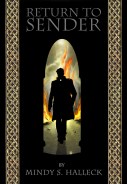 It rained hard the night we evacuated the children from their orphanage, harder than I’d seen, even on the Oregon Coast. The smell of wet dirt, trees, and napalm, that’s the smell I remembered most, the chemical and petroleum of burning napalm. We scrambled with the kids up Korea’s dominating T’aebaek Mountain—the mountain was nearly the same height as Neahkahnie but had limestone caves tunneled deep within. Massive stalagmites hung heavy throughout the corridors. Ancient bamboo-roped bridges built across chasms linked the vast rooms of the caves to one another. It was otherworldly. But the surviving nun knew the place, the Karst Caves, and said we’d be safe. Water spouted from innumerable cracks and seeps – the sound of rain and falling water was everywhere.
We clawed our way up the hills and out of the valley of death. The CCF had entered the war that week and were as ubiquitous as the rain. The NK were ruthless and bloodthirsty and wanted those kids—and now us—dead. The kids and that dedicated nun were too vulnerable for us to abandon for slaughter, so we, my buddy Lieutenant Peters and me, abandoned our orders instead.
Sometimes we writers aren’t fully aware what our theme is until we write a good bit of the story, set it aside, let it ruminate in a drawer for a day, ten or 30, then read it. The theme(s) should emerge, jump off the page, even sometimes, surprise you. Then when you rewrite and edit you can shore them up and explore them in more satisfying (to both you and your readers) ways throughout the story.
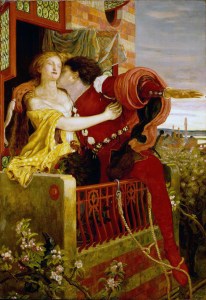
There are tons of themes, and in a story of any length, there’s generally more than one. Death, War, Prejudice, Freedom…and it shouldn’t be a shocker that the number one theme in literature is love. It’s one of the most prevalent topics in books, movies and music. Love is a universal, a multi-faceted theme that’s been examined in a number of ways throughout storytelling history.
Puppy love, unrequited love, first love, lost love, forbidden love, married love, the love between parents and children, siblings, friends, pets… the power of love to triumph over all…except when it doesn’t.
What are some different love theme examples in literature?
Shakespeare’s Romeo and Juliet is a tragic tale of forbidden love with dreadful consequences.
Pride and Prejudice explores the type of love that develops slowly over time, from misunderstanding and disdain to friendship, respect and love.
Wuthering Heights explores love by emphasizing how its passion has the power to unsettle and even destroy every unfortunate life in its path.
To create more layered tales, explore themes in your writing.


Understanding Your Fictional Character’s Behavior
‘The collective fear on their parents faces that day, settled in Sylvia’s bones. The Nazis had tried to force her parents, God fearing Christians to swear a loyalty oath to Hitler. Since they refused, they knew they were on the list of undesirables.’
I wrote that this week for one of the stories in my WIP, a collection of short stories. My fictional character’s life was changed the day her parents paid the ultimate price for their values.
As a writer, it’s vital that we understand the history of our characters, the choices they’ve made either willingly or unwillingly. We need to know what happened in their past because the past is, and always will be relevant to the present, and it will form the future. It informs the world we inhabit and it informs the choices we make. This goes for our fictional characters as well.
So when my character’s parents made that brave choice, they knew full well that not swearing an oath of loyalty to Hitler would likely be a death sentence, but they stood strong in their values. That choice altered the lives of the entire family not for that moment in time, but for generations, for all time. That decision in 1944 charted the course for my character’s behavior in 1976, giving a deep layered background for the story and every choice she makes.
Don’t get sidetracked by your character’s backstory (it’s easy to do), and certainly don’t do info dumps of narration, nobody likes that.
But DO pepper your stories with enough seasoning (backstory) to give it the full flavor that will deliver a satisfying read to your audience. And if in that read you can educate and illuminate the reader, all the better.
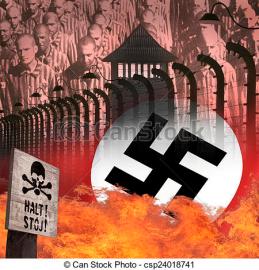
I have a clear objective with this particular story, and that is to show, not tell, that white supremacy attitudes (worldwide) lead to a ravenous hunger for power and ultimately, a thirst for blood. However, as with any writer who has a specific message or agenda, the best way to get that across is through story, not from a pulpit. Stories change hearts, hearts change minds. Pulpits just piss people off. Be a storyteller not a preacher (unless you’re actually a preacher, in that case, preach on.) Don’t beat people over the head with your message, tell them a story.
A Writer’s Magic Keys
Recently, I taught a three week series on how objects make great storytelling strategies. Below is a reprint of an article I wrote a few years back for Willamette Writers magazine about the use of objects as plot devices and metaphors.
Magic Keys
In 2011 I embarked on one of the harshest undertakings; I placed what I thought was the final draft of my novel in a drawer for one year. Why? Because, as I told others in my most knowledgeable author voice, “A writer needs distance from their material before editing and rewriting.”
While that’s true, the real reason was, the story didn’t work. I thought it worked, it worked in my head, but based on a few shrewd readers it didn’t work in theirs.
During that year–fighting the wicked temptation to tweak pages, chapters and plots–I turned my attention to books on rewriting, in search of a magic key to unlock my manuscript and turn it into a novel, the kind people wanted to read. I took workshops, and reaped too many tips to list. All that matters is that nothing helped, until one day . . . .
I read yet another craft book, and SHAZAM! You know how it feels when something simple smacks you like a Mack truck of a good idea? Well, chapter 14 in the The Weekend Novelist Re-Writes the Novel by Robert J. Ray, did that for me. The ‘objects lesson’ taught me to utilize my story objects (often called plot-devices) as shorthand for backstory and eliminate a lot of dense narrative.
Finally, that magic key!
“Objects tell your story.” Ray writes. “When you rewrite your novel, you can tighten your story by repeating a single object; car, train, statue, slipper, harpoon, book. There’s a good chance the objects are already there, in your manuscript, waiting to be found, to be selected, to be repeated, to be laid down like neon breadcrumbs in the forest. Readers follow breadcrumbs.”
I began to see the power of storytelling objects everywhere. What’s Lord of the Rings without the ring, Cinderella without glass slippers, The Notebook without the book, or poor little Forest Gump without his box of chocolates?
No glass slippers, no enchanted tale, just a barefoot girl with an unfortunate name who probably does not go from rags to riches and who likely does not find her fella . . . what’s the point?
In Nicholas Spark’s novel The Notebook, that evocative leather bound book literally contains their love story. And that chocolate box on Forest Gump’s lap is a metaphor for the story to come; “Life is like a box of chocolates, you never know what you’re gonna get.” And oh-boy does that plot device set up and deliver a story.
Though easily overdone, an object that’s well-crafted, or emerges organically from setting or characters can establish a character’s values and thus inform and enhance the story.
In a Willamette Writers Conference screenwriting/storytelling workshop taught by Clark Kohanek, he too touched on the objects lesson. “Think about Die Hard,” Kohanek said, “when Bruce Willis enters with the teddy bear. We immediately know that object defines what’s important to him; family.”
That fuzzy teddy bear represents Willis’s values and reenters the story burnt and dirty, but safe, like him, ready to reunite with what he values so much he’d kill for. That object represents the driving force, and heart of the story because it’s valued by the protagonist.
Eventually, in rewriting my novel, the protagonist, Theo Riley, now has a toy soldier, a stack of blood-stained returned love letters, and a photograph of Korean Orphans. This trinity of objects define him, inform his moral compass and ultimately chart his destiny. These objects give the reader an understanding of Theo on a deeper level. They are backstory shorthand, and explaining it once eliminated pages of narration, because when the reader sees the tin soldier, letters, or pictures (Neon Breadcrumbs), they remember . . . because objects are a writer’s magic keys.
Can Writers Learn Lessons from Bad Storytelling?

“A culture cannot evolve without honest, powerful storytelling. When society repeatedly experiences glossy, hollowed-out, pseudo-stories, it degenerates. We need true satires and tragedies, dramas and comedies that shine a clean light into the dingy corners of the human psyche and society. If not, as Yeats warned, ‘the centre cannot hold.’”
– Robert McKee
Can Writers Learn Lessons from Bad Storytelling?
In Fargo speak, YOU BETCHA!
Twenty years ago a magazine editor told me that she admired my writing style because I ‘creatively broke the rules’. Huh? Thankfully, they bought and published that article in a glossy (old school for you younglings) magazine and I got paid. Thing was, when she said ‘broke the rules’ I hadn’t a clue what she meant. That sent me on a LONG journey of learning the rules so I could break them knowingly and with intentional, instead of accidental style.
“It ain’t whatcha write, it’s the way atcha write it.” —Jack Kerouac
That being said, there are many writing ‘rules’, but there are none that need ALWAYS be obeyed. As a matter of fact, conforming to rules often stifles artistic endeavor and can destroy an otherwise good story. Freedom, however, comes with responsibility. Any writer can break the ‘rules’, as long as it passes the onerous test of an audience. And (to quote Shakespeare) therein lies the rub.
It’s important to remember some rules of good #storytelling. For example, characters are what they do. Goes to follow that if your character doesn’t DO anything, you’ve got a problem. Story events should ALWAYS influence the character’s behavior, conversely the character’s behavior should impact story events. Actions and reactions produce revelation and insight, culminating in a meaningful emotional experience for the audience. And so on…but you know all that, right?
 Now, I love a good book and a good tv-binge because I study storytelling in all genres. My most recent tv-binge, after Stranger Things (which delivers on SO many levels) has been The Last Kingdom. In the Last Kingdom they stuck to some solid storytelling principles, and delivered a historically accurate and captivating drama. Oh, did I forget to mention the bevy of handsome hunky actors who actually have acting chops? Then there’s that….But, after season 4 Ended, and while anxiously awaiting season 3 of Stranger Things (July 2019), we needed to find another mutually acceptable (that’s a husband wife thing) tv-binge.
We settled (after much debate – another husband wife tv watching issue) on Frontier, starring the ever resting on his gorgeousness, JASON MOMOA, (AKA Auquaman) with ZOE BOYLE (Downton Abbey) and ALUN ARMSTRONG (KRULL, and too much British Fabulousness to list).
We started watching, hopeful that the perilous era of the 1770s in Canada’s fur trading wars would provide some great entertainment. It had a boundless premise; by the late 1700s, French, Scottish and American immigrants have destabilized the Hudson’s Bay Company’s control in the fur trade. The HB company provokes a bloody battle for control of power and wealth, led by (here’s our bad guy) Lord Benton (Alun Armstrong) and opposed by the savage (good guy) Declan Harp (Jason Momoa) a rogue and fierce former HB employee. Since hubby and I like #historicalfiction drama that explores aspects of a real history, we decided this could be entertaining, and certainly Armstrong has the serious acting chops to tell the story, right?

SO, the first 4 episodes had some problems, there’s a lot going on there, but we thought, okay, we’ll hang in for the actors. One thing that bugged the heck out of me was the incongruous quotes at the beginning of each episode. RED FLAG! They were from people like Alan Greenspan and Ice T, who, though quotable, have NOTHING to do with the period or the Hudson’s Bay Trading Company, or the Indigenous tribes, or ANYTHING at all to do with the subject matter. It was like some teenager said, ‘Hey, this’ll be cool,’ without any regard for the audience. The quotes were SO incompatible they took me out of the story before it even started.
As a writer, that’s a serious golden rule, and the LAST thing you want to do to your readers and or viewers, NEVER take your audience out of the story.
Anyway, we hung in there UNTIL… in the middle of episode five we hit a wall. Despite the good actors, the potential for a fascinating period drama, our collective eye-rolling during episode 5 did us in. The writing, regarding female interaction with males, had to be done by a team of 13 year old sniggering boys. I could just hear them in the corner of their office/playground giggling and saying, ‘boobies’. In the scene where the lovely actress, #BreanneHill who plays barmaid, Mary endeavors to ‘seduce’ an officer, it was clear no female was involved in the writing of those scenes and others involving men and women interacting. It was sophomoric. We stopped watching.
It didn’t even rise to the level of being disgusting or repulsive or anything remotely like that – that would require skill –
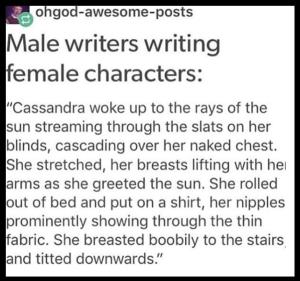
no, it was just stupid, and insulting. And that’s another golden rule you shouldn’t break, NEVER insult the intelligence of your audience.
As Robert McKee says, a writer must have ‘respect, not disdain, for the audience’.
A good #story should make the audience feel emotions in reaction to the story as it unfolds. Every time #Frontier hinted at an emotional connection it then jumped (leaps and bounds) to another #storyline and didn’t return to the one I thought I was going to connect with. For example, the first episode we leave a young Irish girl, Clenna played by Lyla Porter-Follows, stranded by her lover and trapped in an English prison. By the time we return to her in Episode 5, I no longer cared about her or the potential love story. That needed to be set up better to have a pay-off.
Even good #writers can get caught up by a notion or an emotion that disengages them from their audience and results in a story that loses traction or takes an unexpected direction, so it’s vital to stay on alert when writing. The best works connect with the audience and sustain a connection throughout the story.
If a writer falls into the deception that their audience is stupid, incapable of understanding story nuances and that considering them is nothing but an inconvenience, they are as doomed as their story.
Frontier bombs on many fronts, but mostly in its #writing, it fails to do anything truly meaningful, it wants to be a mature gritty, violent #drama, and in some ways it is, but really it’s just a hodgepodge of activity with no heart at its core. A story needs an undeniable truth, and a heart at its center.
Netflix has some GREAT writers and GREAT programming, this just didn’t rise to that level. And though I really want to believe that Jason Mamoa can bring a little more to a story than his powerful presence, he should go get an Indie Film role and prove that he can rise above his screen stealing image and show us if he can ACT. Because when the writing is weak, the actor needs to be that much more skilled.
Anyway, a writer must know the rules to break them successfully. That’s the art, and that art requires skill. In the betrayal of them, an onus of great power is on you as an artist. It’s important to know the rules/guidelines of writing because your audience has expectations and if you let them down, you lose them. If you aren’t familiar with some of the rules out there in the blogosphere, a good place to start is with Stephen King’s top 20 rules of writing.
“Write every day, line by line, page by page, hour by hour. Do this despite fear. For above all else, beyond imagination and skill, what the world asks of you is courage, courage to risk rejection, ridicule and failure. As you follow the quest for stories told with meaning and beauty, study thoughtfully but write boldly. Then, like the hero of the fable, your dance will dazzle the world.”– Robert McKee
THANK YOU for letting me rant about bad writing, and hopefully in this rant you can find a few nuggets. If you liked this, please share on Twitter, Facebook, Instagram or Pinterest or wherever you socially media. Thanks for reading. Cheers, Mindy
After a 6 Month Blogging Break…I’M BACK!
 In June 2018, I decided to scale back on activities that added to stress, you know that ‘One more thing to do today’ kind, and other energy draining commitments that kept me from my writing projects. During those months I also resigned from two committees that took my time in ways that were not creative, and then signed onto a board, Epic Writers Group, where I can be an active participant in the creative writing community. It’s CRITICAL to all of us to assess what makes us happy, what adds stress, or what makes us sick, and then do a course correction. I had always done this in my annual business review of my goals and aspirations, but am very guilty of not doing this in my private and or writing life. So KUDOS to me for doing some long overdue adulting. Oh, and that’s another VERY important aspect of this reassessing, realigning and re-imaging of life goals, giving YOURSELF a pat on the back.
This month I feel re-energized and recommited, and will get back to my blogging about writing, the writer’s life and whatever else strikes my fancy, but for now, THANK YOU for hanging in with me as a follower. As a gift I’d like you to receive  this updated 2019 booklet, titled 17 Blogging & Social Media Tips for Writers, just click here to download.
MEANWHILE, keep writing, keep submitting, and of course keep reading other writer’s work. And local writers, there’s a #writing contest at EPIC GROUP WRITERS in Edmonds Washington that is open to all. Check it out via the below information. Good luck.
** Attention Writers in Washington State **
You are invited to enter your prose and/or poetry
EPIC Group Writers Writing Contest
~ Make us laugh, cry, and think ~
ENTER NOW!
** EPIC Writing Contest is now open **
Welcoming entries in poetry and prose
Friday, February 1 through Friday, April 5
Adult and Student (grades 8-12) categories.
Cash awards for 1st and 2nd Place Winners.
Student Winners’ school libraries also receive a cash prize.
Publication on www.epicgroupwriters.com
Submission dates: Friday, February 1 through Friday, April 5, 2019
Submission fees: EPIC Members (adults): $10.00 per submission
Non-members (adults): $15.00 per submission (Not a member? Click here!
Students (grades 8-12): FREE
CLICK HERE TO SUBMIT
A public reading and reception will be held at the Edmonds Library on May 16, 2019
EPIC Group Writers
Every Person is Creative!
www.epicgroupwriters.com
Facebook: EpicGroupWriters
Twitter: @epicgroups
 Mindy Meyers-Halleck