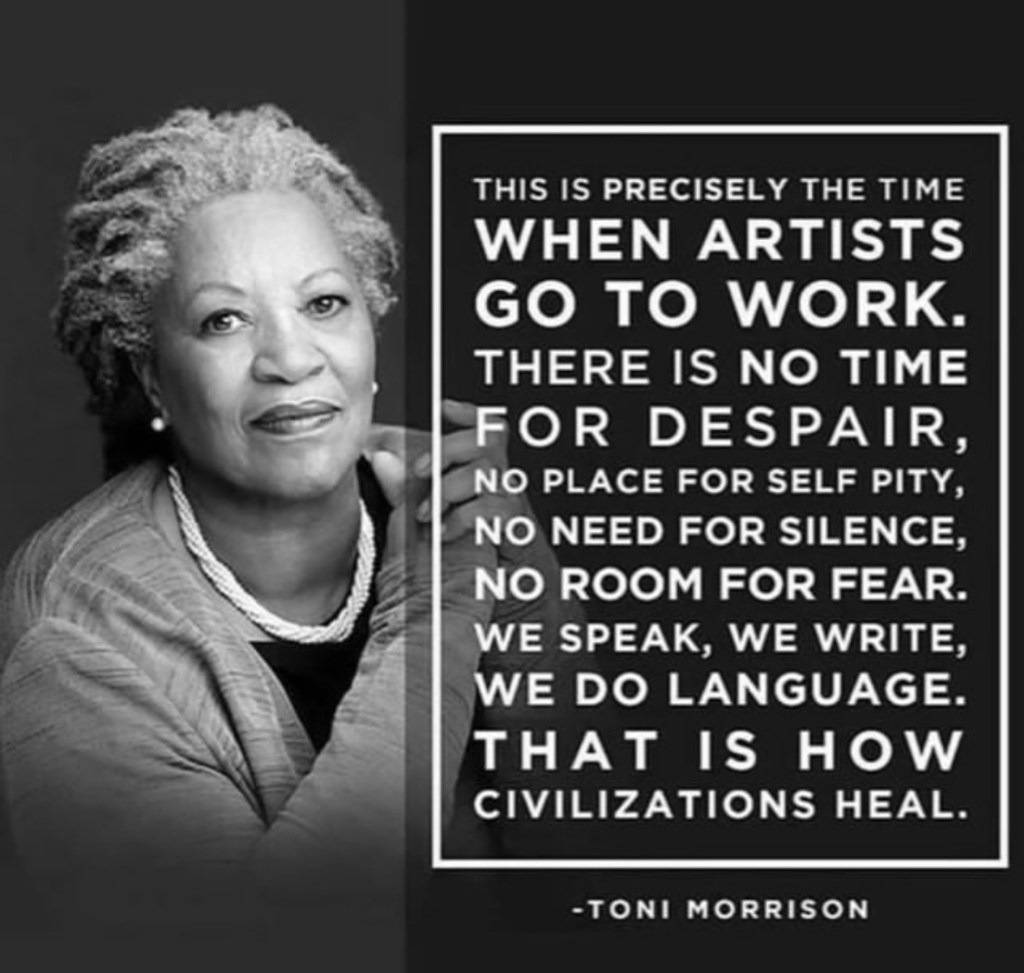


Touching. Words can be powerful stimulants, bad or good. I choose the latter.
Fiction Writing, write to heal, survivor
What’s Mold Got To Do With Politics?
Right now, I am staying in a hotel, a nice hotel, but still, away from my home, my husband, and dog. Mold was discovered in our attic and the removal, repair, and roof replacement has become a major ordeal. With my compromised immune system, I can’t be around the mold or the abatement spraying. So, here I am in a rainy coastal town 25 minutes from my house, with a fireplace and a view of the water––I know, poor me.

You’d think I’d be delving into writing more than I am, but I feel anxious and unfocussed like someone’s tearing my home apart in the middle of winter, and I’m not there to protect it. I know my precious doggo is scared and missing my cuddles, my husband is managing things as best he can from his home office––and maybe he’s missing my cuddles too. Anyway, it’d be better if I were there in person dealing with the contractors, instead of by phone.
Distractions like this tend to silence my muse. Stress is always a writing disruption, but this feels more like a psychic disturbance. Does tearing the shielding roof off my home and ripping the protective insulation out of my attic have spiritual significance to me?
In these troubling times of chaos and tearing our political agencies apart, leaving us exposed and vulnerable to the elements, I can’t help but wonder if that’s the true source of my soul-deep sense of unnerving disorder.
Even with mold in our attic we wouldn’t burn the house down. No, we eradicate and repair, because it is otherwise a great house. That’s what I feel should be done with our democracy, it’s a great house with some rot that should be eliminated. Instead, the house is being burnt down, and we are left exposed and in danger of all looming storms. And they are looming.
To ease my unease I’m taking walks, writing this in a coffee shop, and meditating on my life’s blessings that were once only impossible dreams.
So now, on the eve of our country’s nightmare, I count the blessings of dreams come true and feel empowered to do things once thought impossible: like being 70 years old and trying to muster my inner 17-year-old revolutionary, again––and sadly, to fight for the same things as before.
For me, participating in politics other than voting, attending city meetings, and door-knocking for a few politicians––and once, in the 1970s being quasi-arrested for protesting the Vietnam War, and demanding women’s rights, including abortion rights––has been random participation.
My husband says I’m too political. My grandson says I’m not right enough, and my granddaughter says I’m not left enough. So here I am, standing firm in the middle of a burning house, realizing that random participation is no longer good enough.
I have learned that I can’t fix everything––a tough life lesson––and it’s not my job to mend the world all at once. But I can heal some small part within my reach.
“Life is bristling with thorns, and I know no other remedy than to cultivate one’s garden.” François-Marie Arouet, a.k.a. Voltaire
Times like these, as with a writing deadline, force me to focus on what can be done instead of catastrophizing about what can’t and what’s gone wrong––instead, focusing my energies on what could go right. So, I started thinking about a few of those things that could go right, for example:
- Troubling times are opportunities to rise and get in-spirit. I turn to the elders for inspiration; Martin Luther King Jr., Voltaire, Margaret Mead, The Bible, Edmund Burke, J.R.R Tolkien, and so many others. I’ve included their words below.
- Activists who in the past faced a drought of public interest are now facing a tsunami of awareness and volunteers, turning helplessness into hope. From immigrants escaping violence, food-deprived senior citizens, and underprivileged kids in need of schooling, food, and shelter, to the unhoused we see in every city, there is no shortage of ways we can make a difference.
“Never doubt that a small group of thoughtful, committed people can change the world. Indeed, it is the only thing that ever has.” – Margaret Mead.
3. The rules of routine politics have been tossed into a bonfire––no more business as usual––it’s time to engage anew, rise from those ashes a bright and radiant phoenix of this modern revolution. After all, WE ARE THE PEOPLE damn it!
4. This is a unique opportunity to turn the tables and capitalize on intentional chaos (being created as a strategic plan to distract) and alter the political landscape of our country. It’s time to challenge elected officials and compel them to resist this inhumane administration.
“Injustice anywhere is a threat to justice everywhere.” – Martin Luther King Jr.
5. As writers, activists, and concerned citizens we must reevaluate and revise the conditions of debate around issues concerning our society at large. It is time to eradicate the mold under our roof, to reign in our spending without harming those most in need. Time to tax those inclined toward greed. It is time to get big money out of politics, time to do away with the corruption of organizations like citizens united, deliver a gut punch to the donor class (a plutocracy), and to alleviate greed and corruption to the best of our ability. It’s time to build that sheltering roof for our communities. It’s not time to move backward via Project 2025, but forward to a new humanity. And that takes active participation.
“Speak up for those who cannot speak for themselves; ensure justice for those being crushed.” – Proverbs 31:8-9
6. Go sign up for something, lend your voice, carry a sign, contact your representatives (repeatedly) about climate change, women’s rights, voter rights, gun control, civil rights, immigrant rights, and so much more. Use your voice to speak up against evil.
“The only thing necessary for the triumph of evil is for good men to do nothing.” – Edmund Burke
7. Visit sites and resources like the MASA––Let’s Make America Smart Again website for free resources, even print your own posters and so much more.
8. Right now, our house is burning, but it’s an opportunity to remodel and build a new house with a mold-resistant roof.
“From the ashes, a fire shall be woken, A light from the shadows shall spring…” — J.R.R. Tolkien, The Fellowship of the Ring
Come on fellow citizens, let’s be that light!
Transcending—Art into Poetry
During a recent workshop with the poet Susan Rich, on Ekphrastic poetry––which is poetry that explores art––at La Conner’s gallery/museum, MoNA, I became entranced with a painting, which I’ll share in a minute. Susan inspired us to find a painting or piece of art in the gallery, and using a rhetorical device known as ekphrasis, engage with the painting, drawing, sculpture, or other mode of visual art.
The term ekphrastic (also spelled ecphrastic) originates from a Greek expression for description. The earliest ekphrastic poems were vivid accounts of real or imagined scenes when writers in ancient Greece aspired to transform the visual into the verbal. Later poets pushed beyond depiction to reflect on deeper meanings. Today, the word ekphrastic can refer to any literary response to a non-literary work.
The painting that grabbed my attention and heart was The Longhouse by Helmi Juvonen, a gift from Wesley Wehr.
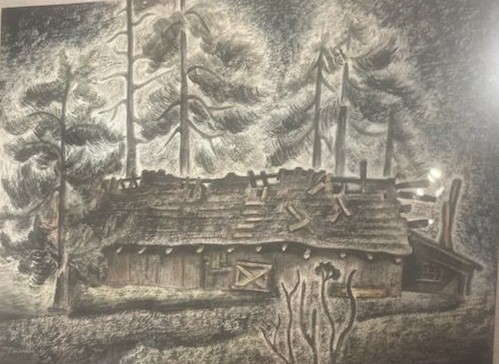
Helmi Dagmar Juvonen (January 17, 1903 – October 17, 1985) was born to Finnish immigrants (Helmi is Finnish for Pearl) and became an American artist associated with the artists of the Northwest School, and was active in the Seattle, Washington area.
She attended Queen Anne High School, and after graduating, worked various art and design-related jobs while studying illustration, portraiture, and life drawing with private teachers. In 1929 she received a scholarship to Cornish College of the Arts, where she studied illustration with Walter Reese, puppetry with Richard Odlin, and lithography with Emilio Amero. You can read more about her illustrious career here.
Sadly, Helmi was diagnosed with schizophrenia (manic-depression), and was committed to a mental institution in Elma, Washington, where she spent the final 26 years of her life. There, she was visited by artists and supporters, who facilitated wide recognition for her work, during her lifetime through many art museum exhibitions.

Helmi transcended boundaries
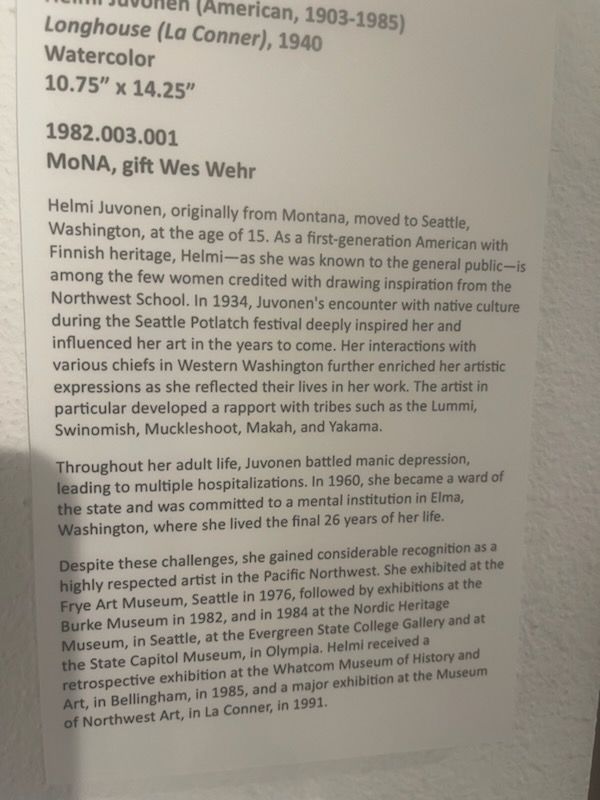
Native American culture cultivated Helmi’s creative spirit and empowered her to transcend the boundaries of ordinary life, poverty, and decades in a mental asylum. Her interest in identifying the origins of human culture, especially as it addressed the dichotomies of good and evil, led her to investigate these themes in diverse spiritual traditions – Judeo-Christian, Tibetan Buddhism, and the Baha’i faith.
And in the painting that captured me so completely, I sensed something beyond the brokenness of the exterior. Combined with my (limited) knowledge of native folklore from the Oregon Coast––gleaned while researching my novel Return To Sender––and reading a bit about the Lummi Nation (Pacific Northwest myths, I wrote the essence of what I felt and saw in this piece of art.
My poem from that day, which is also published on the MoNA website, is titled, Dancing with the Dead. Please visit MoNA’s site and explore all the poems produced that day. I have a 2nd poem on their site titled, Shadow Dance.
Dancing with the Dead
By Mindy Meyers-Halleck


Her house is ill,
they said.
Unhinged shutters,
band aids on the roof,
boards as exposed as skeleton bones,
a crooked door that’s lost its will,
and a roofline of sagging skin.
Her house is ill,
and it allows no one out,
and no one in.

The native peoples
said of their treasured mad woman
with skin white as pearl
that she is
broken in the head.
––but, that sacred wound,
They said,
allows darkness to seep in.
And in those spirit-filled shadows
she dances with the dead.

It took her a lifetime,
to embrace the brokenness in her head––
––her dark shadow sister who never saw the sun––
A sister coiled in nocturnal corners, dreaming of
wolves, trees, and danger
she was never able to outrun.

The trees that surround her house are
not quite alive
not quite dead,
they haunt the yard
––redolent with tears and blood of the fallen
sister who never saw the sun.
She is broken in the head,
they said.

In those mist shrouded trees
she sees
The Keeper of Drowned Souls.
His green long-fingered hand,
spindly as spider legs,
beckons her to follow
deep, deeper into the hollow.

The Keeper of Drowned Souls exists
transitory between the human world and the phantom world
he tells her,
her dark sister who coils like the snake
inside her house,
is condemned to endless hunger, agony, wandering and sin.
Because her house is ill,
it allows no one out,
yet he wants in.

She is broken in the head,
they said.
She observes ethereal phantoms,
and dances with the dead.
Pain Is A Great Teacher
I haven’t blogged in one year. WOW! As a long-time blogger, that’s a huge break.
In January I had a devastating fall in my home. I broke my shoulder, damaged the ulnar nerve in my elbow, sustained a concussion, bruises from head to toe, sprained and fractured my wrist, lost all use of my right arm and hand––of course I’m right-handed. Of course! ––and was bedridden for over 3 months. It was a traumatic injury that I am still, and as of writing this on September 1st 2024, going to physical therapy twice a week to regain full use of my hand. It’s painful, but worth it.
During my bedridden days, my husband had to feed me. I HATED being a helpless burden.
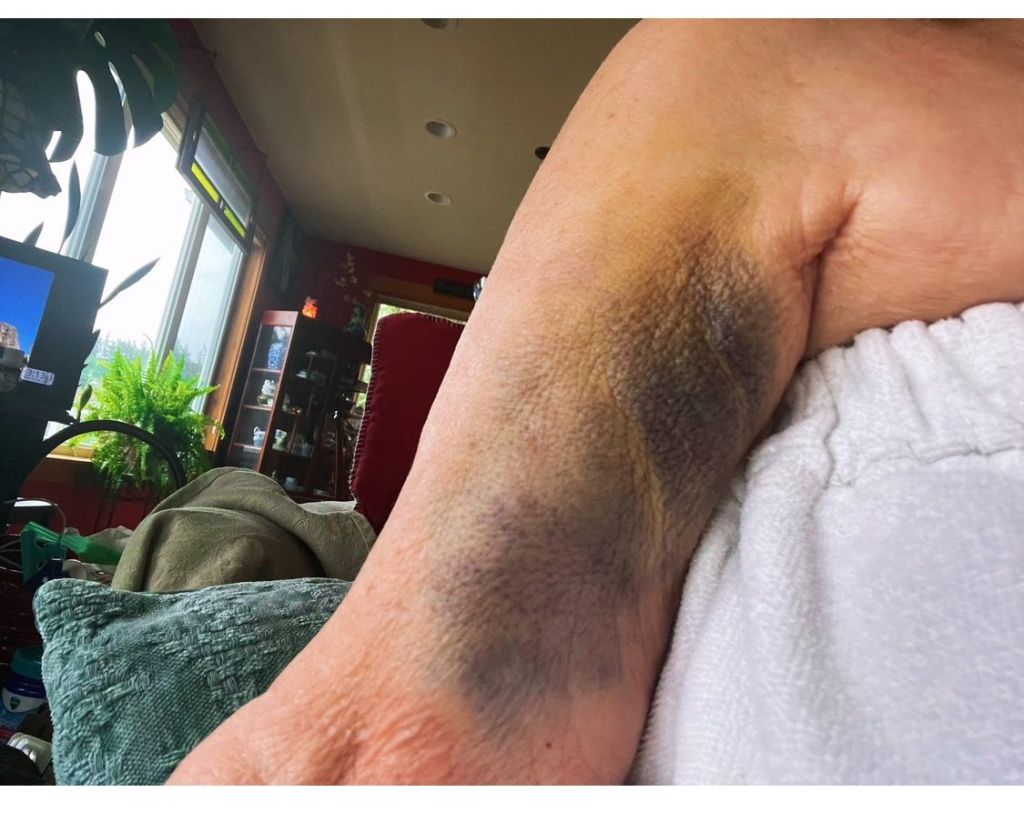
Anyways … I couldn’t even hold my phone, imagine that! I was very upset about losing writing time. And though the prospect of working on my full-length novel projects was too overwhelming for my concussed brain, I had to do something. Also, at that point, I could only use my forefinger on my bruised left hand to press a button, or anything else. My right hand was completely useless and in pain. The picture here shows how my arm swelled up and had black bruises from shoulder to fingertips. It looks more like an elephant trunk than a human arm. But human it was, and it was mine.
I was getting a bit depressed (pain meds didn’t help) about not writing, which I also realized was projecting my fear of having just almost died, onto the writing that would never be finished. My fate was linked with my trauma and created a profoundly sad state of mind. And trust me, that’s not a good foundation for healing––but only I could lift my spirits.
Unable to use my right hand––any movement reduced me to agony and tears––I managed to prop my phone on a pillow next to me and turn on my voice technology. I spoke into the phone and texted myself bits and pieces of story ideas and poems, trying to reawaken and spark my groggy brain cells. Though some days I could only work this way for 5-10 minutes without dropping into complete exhaustion, it saved me. I felt a sense of purpose and was able to stay in touch with my writing spirit, which is everything. Feeling a sense of purpose is vital in healing from anything.
During those months I managed to write several poems. I sent them to my e-mail (via text) to edit and format later when I was sure I would be able to type again. Later came five months later in early June. I formatted them and organized a manuscript of poetry, along with professional art, and voila! A small book of poetry was born from my trauma and a desperate desire to heal—heart, body, mind, and soul.
I am now querying that book to publishers. I am pleased to say that one poem has just been published in the Penn Journal of Arts and Sciences Literary journal.
Please give it a read, my poem is titled, Maiden, Mother, Crone https://www.upennjournalarts.org/writing/maiden-mother-crone-c44gn-nwrbj
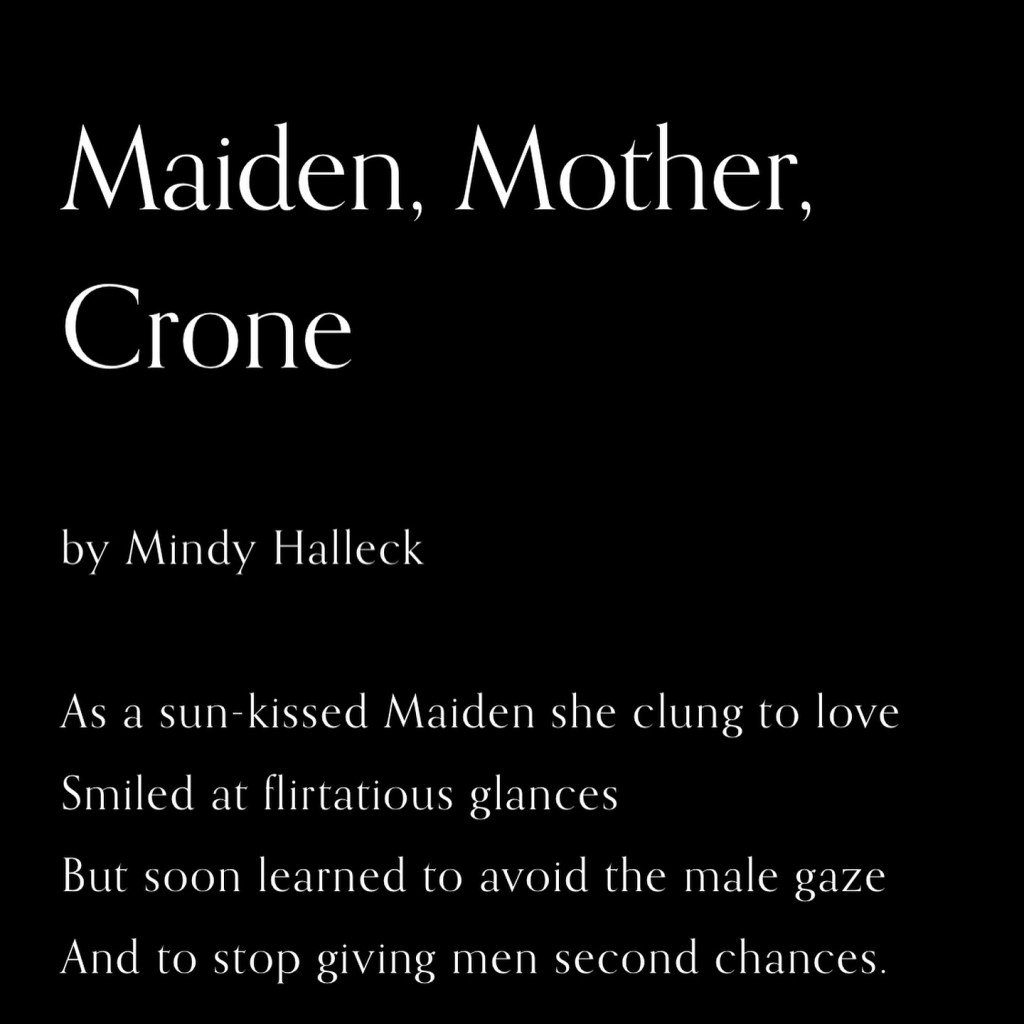
They also did a lovely interview with me, take a look at my featured profile Mindy Halleck — Penn Journal of Arts and Sciences (upennjournalarts.org)
Another poem titled, Unraveling was published in the Edmonds News, Poet’s Corner: Unraveling – My Edmonds News Though that poem was written before my fall.
What has this taught me about life? Well, pain is one of the greatest teachers we have. We learn a lot about ourselves, our resolve, our desire to heal, and mental as well as physical fortitude. I’ve lived through cancer, and had numerous other things happen to me but this injury has been the most traumatic, soul shaking experience. What it did was focus me in a way I had not been focused since my brothers died two years ago. It reminded me that time is of the essence and if I wanted to get anything done before I too, check out, I’d better get busy.

It also made me focus on my intentions, for example, what do I want to say in my work? I am concentrating on writing about the lives of women—ordinary and extraordinary alike—and the choices they make. I desire to delve into stories and poems that are instructional from my Crone-age perspective and encouraging for younger generations, passing on the wisdom of this old female warrior who has gone before. Pain has taught me to embrace my unique voice on these topics. Afterall, no one else has my lived experience or my voice.
I’m back to life now, gardening (short stints), and back to writing and querying. Oh, and smiling, I am definitely back to smiling.
Don’t wait for pain to be your teacher. What are you writing, why are you writing, and how can you tap into your unique voice?
Fatal Flaw
Aside Posted on


WHAT IS A FATAL FLAW? —- It’s character arc 101.
This flaw is a character’s destructive character trait that is often the cause of their demise.
Great characters are generally wounded, and they don’t want to be hurt again, so they adopt new protective behaviors––drinking (Jesse Stone), tattoos (Lisbeth Salander) or unchecked ambition (Macbeth), whose fatal flaw ultimately led to his downfall.
But their new defensive behaviors are usually dysfunctional, increasing negative consequences and keeping them from attaining the things they desperately want and need.
And speaking of Macbeth, let’s look at the brilliant performance of the actor, Walton Goggins (pictured above) as Boyd Crowder in the hugely popular, Justified series. Boyd is a complex, brilliantly articulate man with a huge fatal flaw. His FF, GREED. Even when he has everything, he says he wants, love, money, and a possible escape plan, that one last big steal is too intoxicating for him to leave behind. He lets the love of his life walk out, believing he will get his hands on the elusive millions of dollars, earn her love back, and life will be wonderful again. Sadly, she realizes that’s not possible, because Boyd is weaker than his flaw.
Boyd, portrayed alongside his nemesis, Marshall Raylan Givens (actor Timothy Olyphant)––a friend from his coal mining days with whom he has a lifelong bond––is the shadow character and Raylan, the light––or at least, lighter than Boyd. When Raylan kills somebody, it’s justified (hence the name) but when Boyd does it it’s a criminal endeavor. Boyd serves as a caution to Raylan that one wrong step and he too, will cross the line and be on the dark side with Boyd. The two men, so similar it’s often hard to see any daylight between them, dance between light and dark. It’s a poignant relationship worthy of its own article.

Anyway, Boyd succumbs to his weakness and is ultimately destroyed by it. It’s a great example of a character’s fatal flaw. As #archetypes go, Boyd is a classic tragic hero, and an Outlaw Archetype as coined by Gloria Kempton in her book, The Outlaw’s Journey.
For a character to reach their arc, they must ultimately see that their emotional protection is essentially a theatrical mask––Boyd never reaches this arc. They must stop sabotaging themselves and make changes if they want to achieve their deepest desires––Boyd is doomed, trapped in a toxic game of self-sabotage. And the only way is to look the fatal flaw in the mirror and renounce it––Boyd believes he is right, righteous even, and that the lucrative albeit violent end will justify the vicious means. When he looks in the mirror, he sees only a righteous man who will do whatever it takes to have what he wants. Boyd, like Macbeth, yields all he is to this flaw and is overwhelmed by his own venomous yearnings.
This is a critical piece of the character arc puzzle authors must know.
Here’s a list of other fatal flaws you can tap into to help create interesting and multi-dimensional characters.

If you like it, tweet it out.
Tweet
Leave a comment
Thank you for this tribute. Poets all over the country will multiply her cry.
I’m so glad. I certainly was the goal.
The power of women to help each other shines through in this story.
Wow!! What a story – I didn’t know that Portland as it came after I left. Can’t wait to read…


 Mindy Meyers-Halleck
Leave a comment